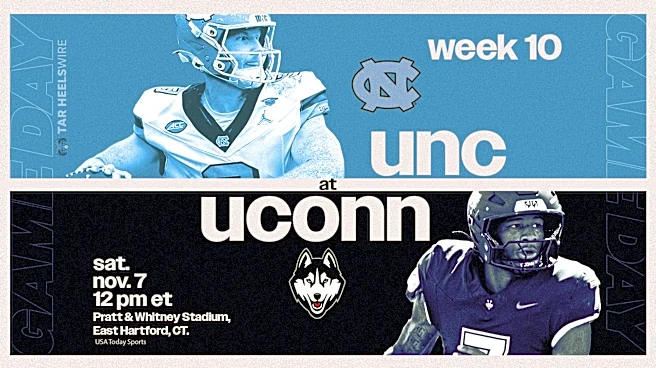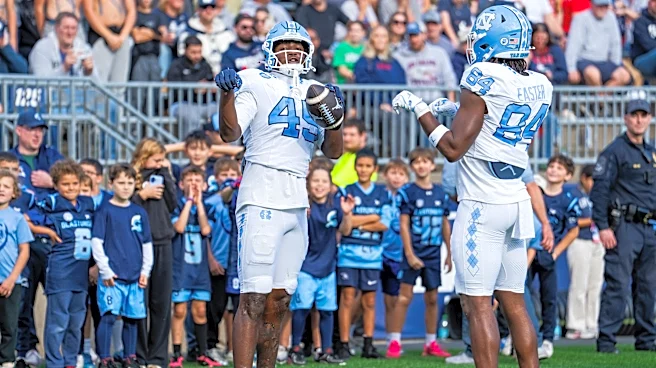

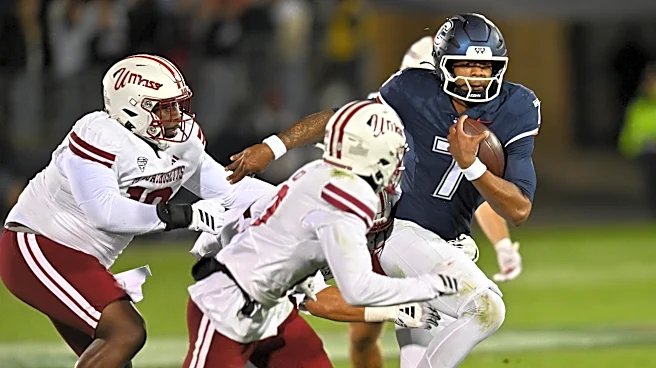

UConn came into the game against UNC as a seven point underdog, a team with an offense rated 57th and a defense rated 105th (F+). On the other hand, both these teams lost to Syracuse in overtime. After Carolina played Miami straight up for 60 minutes last Saturday, the question became whether UNC had turned a corner. Against an average G6 opponent, the bar for measuring that progress would be a dominating win against a much less talented team, one under construction with a new head coach. Any win,
no matter the style points, was mandatory for UNC to retain hopes for seven wins and finishing above .500 for the season.
UNC made some great plays at times and sputtered at others, on both sides of the ball. What did we learn about the Tar Heels Saturday afternoon in East Hartford?
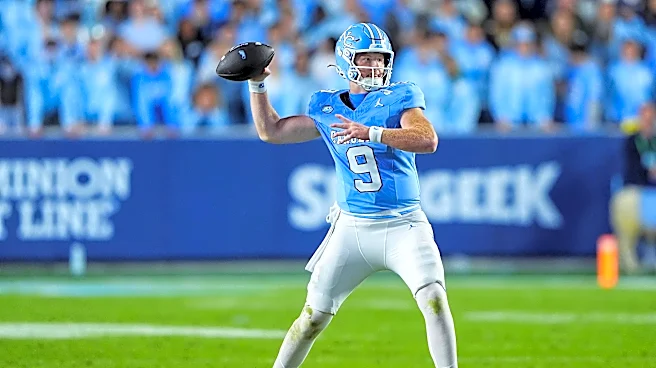
Billy Edwards Jr seems to play better in big games and struggles against weaker opponents.
Against Miami, UNC averaged 5 points per drive, scoring touchdowns on five of seven possessions. Against the worst FBS defense the Tar Heels will face this season, UNC managed 3.1 points per drive on 10 total possessions. The three opening possessions totaled 11 plays, 33 yards, two punts and one turnover. The following three possessions in the first half gained 183 yards on 27 plays, all ending in touchdowns. Jekyll and Hyde.
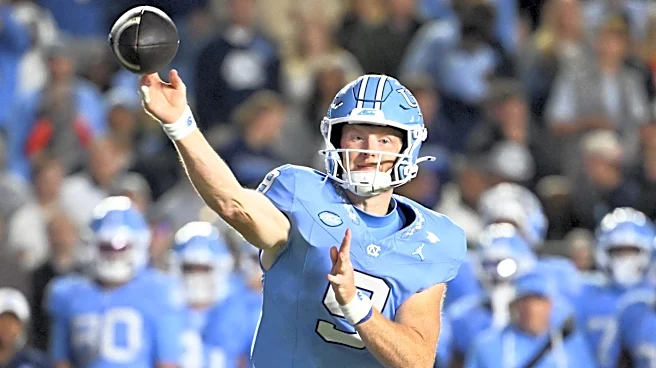
A big reason for that remains the up-and-down play of Billy Edwards Jr. Calm, cool, and collected against Miami, Edwards struggled to connect on downfield throws and struggled with accuracy, a pattern we’ve seen before this season. The first drive ended with a bad throw deep into misread coverage. The second drive ended on a completion to Jelani Thurman, but the throw forced a tough catch that caused Thurman to lose his balance and come up just short of the sticks. On the successful drives, UNC leaned on the run and short passes to its tight ends and running backs.
Measured by QBR, Edwards’ two best games of the season came against Notre Dame (86.1) and Miami (95.5). The Miami game will likely be the best game of his college career. Against Clemson and Syracuse, Edwards produced below average results of 55.5 and 48.9, respectively. Against ETSU and UConn, the two worst defenses UNC will face this season, Edwards managed a 60.4 and 66.4, respectively.
The defense can produce crucial turnovers after all — and even blitz occassionally.
While the UConn defense has been bad this season, the Husky offense has been mostly respectable. UConn QB Kalieb Osborne had thrown two interceptions all season long; UNC snagged two of his passes, one returned for a touchdown by Timir Hickman-Collins. Add a forced fumble and recovery by Timir to his total. Three UConn turnovers proved the major difference in the game. UNC has finished only two games this season in plus territory on turnovers: ETSU and UConn. UNC didn’t really need them against ETSU, but the Tar Heels did Saturday.
UNC has been reluctant to send pressure this season, preferring to rush four and drop seven almost invariably. Part of that has to do with worries about man coverage, and part of that has to do with, “Who do you send?” LB Derek McDonald is a tackling machine in a phone booth, but he lacks the twitch and speed to handle most QBs in space. Seelmann’s faster, but that leaves McDonald in coverage. Against UConn to open the second half, UNC’s coaches watched UConn rip down the field with a seven-play, 93-yard drive, carving up its preferred defensive approach. After that, UNC went against tendency and broke out the blitz early in drives and on standard downs. UConn never scored again.
UNC’s offense continues to improve on third downs and in the red zone.
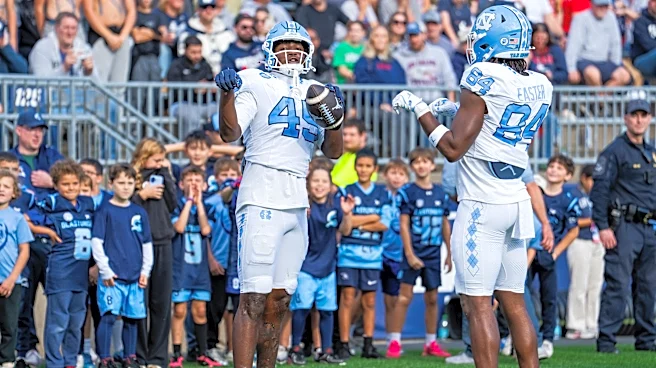
Red Zone: Jelani Thurman now has eight touchdowns on the season. Against UConn, both touchdown receptions combined for six yards, both on third and goal. Against Miami, both of Thurman’s touchdowns also came in goal-to-go situations, totaling sixteen yards. That’s 28 points on four catches totaling 22 yards. Teams know he’s getting the ball in those situations, and it just doesn’t seem to matter. Petrino’s play designs get him open again and again, and Thurman’s size and athleticism overwhelm anyone who ends up on coverage.
Third Downs: UNC converted nine of 16 third down attempts and went 2-2 on 4th downs, almost all of them work by the running backs. With Edwards’ issues connecting downfield, the offense has to lean into its efficiency, and for the second straight game, UNC came out ahead on more “stay on the field” downs than it lost. The lack of ability to score from distance likely proves a problem at some point this season, but for now, UNC’s offensive efficiency is by far the strongest component of this team. Kudos for that goes to the overall execution and especially the offensive line.
UNC now prepares to face a hyper-explosive Louisville team, an offense even more dangerous than Miami’s in that respect. The good news: UNC’s offense seems capable of keeping Louisville’s offense off the field, and Billy Edwards Jr seems to play his best against the toughest teams on the schedule.