
It has been a long journey since the Royals first began conversations in 2021 about moving to a new ballpark, but there may be light at the end of the tunnel. On Thursday, the KCMO City Council approved a plan to directs City Manager Mario Vasquez to negotiate a terms sheet, lease and development agreement with the Royals for a downtown ballpark. There are still many hoops to jump through, but the approved plan represents the most movement on a new stadium since voters rejected a plan for a ballpark in the Crossroads
in 2024.
Here is what you need to know about the potential new stadium and what happens next.
Where is this stadium going to be located?
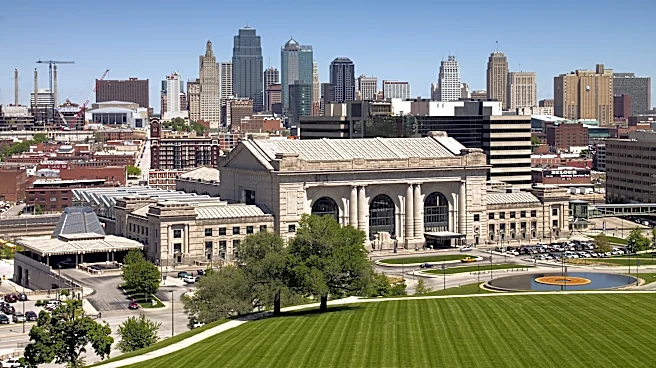
The proposed ballpark would sit at Washington Square Park, just north of Crown Center and east of Union Station. It would require demolishing a building that formerly housed Blue Cross and Blue Shield of Kansas City. It would be a tight squeeze, however, with the footprint of the park, the building, and the existing lot taking up just 11.6 acres, compared to current Kauffman Stadium’s footprint of 18.8 acres.

Has the team agreed to this?
The city will negotiate terms with the team, who has not yet fully endorsed the deal. The club released a statement following the vote.
“The Royals remain grateful for the work and attention of local leaders. We respect the process, which includes the City Council and Parks Board consideration, and the City Manager’s presentation of a term sheet for review and negotiation, with a long-term vision that we expect to include one of the largest private investments in Kansas City history. As always, our motivation is to find the best solution for our team, our fans, and our community. We’re excited by the possibilities this opportunity presents for our hometown.“
Reading between the lines, the city has been negotiating with the team on this proposal for months, but the team doesn’t want to fully commit until all the final terms have been worked out. Last month, John Sherman told the Kansas City Star said “I think we would want to have site control and certainly the public financing in place before we announce it.”
How is this being paid for?
The ballpark itself will cost $1.9 billion. The city will pay for $600 million of the costs, to be raised through tax-increment financing (TIF). A district will be set up around the proposed development, a baseline of current tax revenues will be established, and a portion of additional taxes that are generated by the project will be used to pay off bonds issued for construction. TIF has been used to finance many projects in Missouri, including the Power and Light District, but it can expose the city to financial obligations if there are not enough tax revenues raised to retire the bonds.
The state of Missouri could help finance the project, although those specifics have not been finalized. Missouri lawmakers approved a bill last year that would allow the state to pay up to half the cost of a stadium, although Mayor Quinton Lucas said they do not anticipate that much in funding from the state. The team would also be eligible for up to $50 million in tax credits for their portion of the financing. Jackson County could also contribute to the funding as well. Private financing will pay for 40 percent of ballpark costs, according to reporting from Sam McDowell, and a “bulk of the ancillary development” which is likely to include hotels, restaurants, and other retail around the ballpark.
When will this ballpark be open?
The proposal calls for the new stadium to be ready by the 2030 season, which would be the final year of the current lease at Kauffman Stadium.
Didn’t voters already reject a downtown stadium?
Yes, voters overwhelmingly rejected a proposed 40-year extension of the 3/8 cent sales tax to pay for a stadium at the site of the former Kansas City Star printing press in the Crossroads and a renovation of Arrowhead Stadium in April of 2024. That ballot measure was beset with problems, including tying the Chiefs and Royals together, an unclear funding plan, lack of support from then-Jackson County Executive Frank White, and displacement of Crossroads businesses.
Will there be a public vote for this proposal?
No, because the plan does not require any new taxes, it does not require a public vote. Mayor Lucas tried to address criticisms the city was sidestepping public approval of such a large project.
“I absolutely understand that, and I think there are public bodies under which they can weigh in,” Lucas said. “The people of Kansas City elect us to make sure that we can make important decisions for them. The public bodies absolutely will be engaging with the public, and that’s a promise, and not just a promise, it’s a legal requirement and regulation as we go forward.”
He also differentiated the project from the public vote in 2024, telling Sam McDowell, “This is something that is a lot more akin to the type of economic development deal that we have done in Kansas City (and) downtown in particular over the last 30 years,” adding that the project is “funded by proceeds from the project, proceeds from the ancillary development and perhaps, of course, state infrastructure funding.” The ordinance does direct a “public engagement plan” and a “commitment to community benefits.”
What happened to the proposals in Kansas and North Kansas City?
The Royals looked at sites in Kansas, primarily the site of the Aspiria Campus in Overland Park, and a location in North Kansas City, just across the river in Clay County. But they removed the Aspiria site from consideration after public outcry. Kansas officials also seemed to be less enthusiastic about luring the Royals across the state line after landing the Chiefs. Clay County officials also ended discussions earlier this year.
The ordinance would require that any term sheet include a “period of exclusivity” where the Royals will not solicit or accept proposals with other jurisdictions about a ballpark.
Why are the Royals moving downtown?
The Royals have played at Kauffman Stadium in the Truman Sports Complex since 1973. The stadium is now the fifth-oldest ballpark in baseball. The ballpark was renovated in 2007-09, but team officials insist that any further renovations would require replacing the concrete, pushing costs to more than a billion dollars. The population of the metropolitan area has also shifted more west and north than when the Truman Sports Complex was built, and the current site has had little ancillary development over five decades.
The Royals also say they need more player and fan amenities in the stadium to compete with other clubs. Many new stadium developments include ancillary real estate developments that include hotels, restaurants, and retail, that bring in additional revenue to the team. Owner John Sherman has praised The Battery, a development surrounding Truist Park, home of the Braves in the Atlanta-area.
What would a new stadium look like?
That has yet to be determined. The Royals unveiled renderings of the proposed ballpark in the Crossroads in 2024, and many of those elements could be retained. The footprint is smaller, which may require creativity, although Sherman wants a “symmetrical” ballpark. He also wants to retain the iconic fountains and the crown.
“And really they want the crown and they want the fountains, right? And when Populous shows me drawings without those, I say, ‘Earl, you need to put the crown and the fountains back in there.’ Because I think architects want to do something new and cool, but I think you can do something new and cool but still bring the tradition into the things that are special about the ballpark. That doesn’t mean build an exact replica, but I think the ballpark itself is pretty special.”
Official renderings will eventually be produced by Kansas City-based architecture firm Populous, but that hasn’t stopped fans from giving their take on what a ballpark could look like.
How will people get to the ballpark and where will they park?
More than half of MLB stadiums are located in a downtown, urban location, and have been able to handle inflows of parking. Mayor Lucas says the city estimates that 19,000 parking spots are available within a 10-minute walk of the proposed stadium.
The proposed site also sits on the light rail route that travels from the River Market to UMKC. City Council member Eric Bunch says the site requires less parking than the Truman Sports Complex.
“What this location offers that the current K does not, is having an option other than driving and parking your car.”
If there is a high demand for parking that the site is not able to meet, you can also expect the private market to fill that need. The site will likely require infrastructure improvements to upgrade highway access.

What will they do with Kauffman Stadium?
Kauffman Stadium will remain the home of the Royals for the next few years, but the last year of the current lease is 2030. The Chiefs plan to move into their new stadium in Kansas in 2031. The fate of the Truman Sports Complex after that is unclear. Jackson County Executive Phil LeVota has organized a task force to study what to do with the site.
So what happens next?
City Manager Mario Vasquez will negotiate the lease and development agreement with the teams. Officials will try to secure state funding, but the Missouri Legislature only has a month left in its session.
If this falls through, then what happens?
Good question! Sherman has said the team is not looking to move out of the metro area, and with an ownership group full of locals, it seems unlikely they would move the team away from the area.
“Those are other people talking about that, not me. My objective here – look, I love this city, I love this team, I love baseball. My objective here is to make sure that the Royals and Major League Baseball are here for the next 50 years and that they flourish here for the next 50 years.”
But other local options seem to be dwindling at this point. Officials in Kansas and Clay County could decide to restart talks. Other jurisdictions in the metro could get involved. Kansas City officials could try again with a new plan – the East Village and a site near 18th and Vine have been mentioned as potential locations.
Sherman has said the team will not stay at Kauffman Stadium past its current lease, although at Royals Rally in January he indicated staying could be a fallback position.
The Royals’ future in Kansas City took a step forward this week. The harder work of negotiating a deal with the team, securing state funding, and winning over a public that already rejected one stadium plan still lies ahead.