
If you’ve been living under a rock or don’t appreciate good television, you may not know about the latest sports show that’s captured the attention of pretty much everyone this month: Heated Rivalry. A
Crave original, now their most successful original show of all time, is adapted from a romance novel about two rival NHL players who embark on a steamy secret romance. The television adaptation is everything good about TV — brilliantly shot, well-written and poignant, with acting that is truly magnificent and fully immerses you into this world. Its distribution deal with HBO in the US has launched this show into the zeitgeist and has gotten better and better with each episode.
You may be thinking, Chelsea, what does this have to do with basketball? Well, my dear readers, did you really think that I, as the manager of this here blog site, who also has a graduate degree in screenwriting, would not do whatever it took to make this incredibly good show fit into the scope of this site? I’ve written about Bridgerton, Drag Race, and Dancing with the Stars on Raptors HQ, and after being hooked on Heated Rivarly, reading all the books in a matter of days, and consuming everything about this show like it’s air, I have thoughts.
While latching onto this show like it was the last drop of water in a desert, I’ve noticed something pretty spectacular — real hockey media are talking about it. Not just in jest, but truly watching and analyzing this show through the lens of their actual NHL coverage. It’s relevant, given the fact that the books and show examine the prejudices against LGBTQIA+ athletes, the pressures the athletes themselves feel to hide their identities, and the archaic culture of hockey as a whole. Arguably a little more in the sequel, to be honest, which is already greenlit to be turned into season two of the show by Crave.
I know hockey is probably a more male-dominated media space than basketball is, and that hockey as a whole is definitely a more conservative sport, too. Seeing guys like the What Chaos Podcast actually talking about this show authentically and endearingly has been really nice, and bridged a gap between television and sports that often doesn’t exist. Even more so when you think about the fact that the central romance of this show is between two men, a dynamic that very much has a “don’t ask, don’t tell” approach in all male sports.
There is also the fact that I myself watch the show from a different lens than a lot of people. As one of the only women in the Toronto Raptors media room, I understand the complexities and culture of a male professional sports team more than the average person. I can only use my experiences covering the Raptors as an example, of course.
The reality is, I’ve seen both sides of the themes Heated Rivalry explores in my time covering the team. If this show were to be about basketball instead of hockey, I know I would equally enjoy the coverage I would see from the guys I work with at Raptors games. It would be funny and insightful and honest without being hateful, because that’s what their normal coverage is like, and I know that’s who they are as people. Similarly to a lot of the hockey coverage I am currently seeing about Heated Rivalry.
Yet, male sports as a whole are still incredibly behind when it comes to LGBTQIA+ acceptance, and no, just having a “Pride Night” isn’t really enough. Especially because a lot of the time, male sports Pride Nights feel hollow and performative — I’ve been to my fair share. Also, the last time I attended a Raptors Pride Night, I had the pleasure of standing courtside before the game and hearing two employees have a very loud, very homophobic conversation about the festivities. Unfortunately, a little too on the nose when it comes to how behind male sports still are.
Does the undeniable success of a show like Heated Rivalry, which is both objectively good television and also explores a currently taboo topic like the existence of LGBTQIA+ players in male sports leagues, have the potential to change culture? Not just in hockey, but in all male sports? It’s possible, honestly.
Heated Rivalry spoilers ahead.
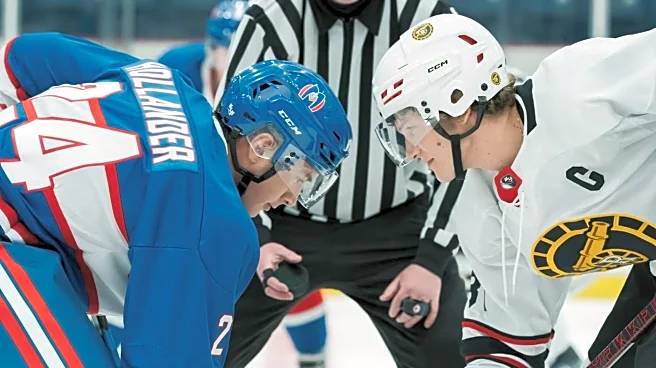
Let’s take episode five of Heated Rivalry, for example. The entire season has revolved around Ilya Rozanov of the “Boston Raiders” and Shane Hollander of the “Montreal Metros” keeping their relationship a secret for over a decade. Their reasoning is simple: they aren’t gay professional hockey players, none that are out, anyway. There is also the added layer that Ilya and Shane are “arch rivals” on rival hockey teams, and fans would very likely not accept their relationship, not because they are two men, but because they play for Boston and Montreal.
As someone who grew up in a Montreal Canadiens-obsessed household, the rivalry and disdain for the Boston Bruins really did stretch this far.
Episode three of the show revolved around a different relationship, Scott Hunter of the “New York Admirals” and Kip, a barista he meets. After falling in love, Scott and Kip struggle because Scott is struggling with the same issues Ilya and Shane are — there is no precedent for what would happen to a hockey player who is gay. They worry for their careers, the families they support, and more.
Episode five ends in a sequence where New York wins the championship, and Shane and Ilya watch at home as Scott calls Kip onto the ice and kisses him. In seeing all his teammates celebrating with their families on the ice, Scott realizes he wants the same, and in doing so, comes out as the first openly gay hockey player in the show. The ripple effect on Shane and Ilya is immediate, and the episode ends with Ilya promising to come to Shane’s cottage after previously thinking it wouldn’t be okay to do so. We’ll continue to see the ripple effects of Scott Hunter’s coming out for the rest of the series.
What does this mean for real-life sports, then? Well, take this ending scene from episode 5, for example. There could be athletes all over who watched that scene with the same feverish expressions that were displayed on Shane and Ilya’s faces. Sure, the show is fictional, but we all know that representation matters in all facets. It matters to see women covering male sports, women’s sports getting the fanfare they deserve, or seeing people who are relatable represented on a TV show.
Yet, I think some of the biggest impacts Heated Rivalry will end up having are the way it’s being talked about in sports media, especially. Not to pull the “I am credentialled media” card again, but these spaces are so heteronormative and male. The fact that hockey podcasts, ESPN writers, and sports pundits all over (mostly men, mind you) are talking about this show about two male hockey players in love is already a change in itself. It’s normalizing the idea that we can have a show like this that transcends sports and culture, and shows us that professional athletes are human, too. It’s normalizing talking about LGBTQIA+ issues in sports, a big talking point of the analysis of Heated Rivalry in sports spaces. It’s making people actually talk about what needs to be done to make male professional sports leagues a more inclusive space.
That’s the beauty of television, and of art as a whole, honesty. At its best, it acts as a channel for us to examine ourselves, culture, and society. A television show about two men on fake hockey teams is an enjoyable escape for your evening, sure, but it also gives us a reason to examine how our society is lacking. The idea that so many people immediately felt this attachment to this piece of art is because it gives a taste of what we are lacking in male sports. Acceptance, openness, authenticity, inclusion, and safe spaces to be exactly who you are.
Heated Rivalry has reminded us of the importance of art in a time when we need it most. With so much division in the world, the idea of coming together over a silly, frankly smutty, romance show about hockey players almost seems comical. Instead, it’s starting an incredible conversation about what it means to be human. A conversation that will likely make your parents side-eye you at the Christmas dinner table this week, but could cause a chain reaction of revolutionary acceptance for years to come.