




Nick Littlehales, a renowned sports sleep coach who has worked with elite athletes and football clubs, believes Manchester United’s preparation gave them the physical and mental reserves to produce their (brace yourself FC Bayern fans
) famous late comeback against Bayern Munich in the 1999 Champions League final.Littlehales developed a sleep strategy built around 90-minute cycles, arguing that managing a player’s energy throughout the day and across a match can make the difference in decisive moments.
“My entire technique regarding sleep was built around 90-minute clinical sleep cycles. Similarly, a football match used to be focused on 90 minutes but not anymore. You have to look at how to optimize a player’s energy journey through a game. The data might show that a player is wandering around or not doing much tracking back. But sometimes they need to retain that energy so that when they need to attack, burst forward, do something impactful, leap higher than a defender, or make a crucial decision, they have the reserves to do it, because a modern game could last a hundred minutes,” Littlehales told Ozoon. “This optimization also dictates tactical choices, like who should take a late penalty. Two players might both be good at them, but based on their chronotype, a player who is an evening person might be spot on late at night, whereas a morning person shouldn’t go near it. It is all about the aggregation of marginal gains, those little one-percent factors. The data started to prove that these small details were important and actionable.
“That’s really where you could see the impact. It was almost like the creation of ‘Fergie Time.’ It was a performance introduction that essentially said, ‘We are more prepared for those final minutes than you are.’ You can’t always control how much stoppage time is added, but you can prepare to make the most of it, and the game is changing even more now.
“We started off with 90 minutes, and now we frequently see 90 plus 30 minutes in extra time. You have to know that if there’s time left, even just an extra minute, you have the physical and mental capacity to score two goals if you need to. Just look at Manchester United playing Bayern Munich in Barcelona: that won them the Treble.”
And what about one of the biggest modern distractions for professional footballers? Video games. This topic becomes pertinent with the upcoming release of Grand Theft Auto VI. Littlehales acknowledges that gaming is not going anywhere, but believes athletes need to learn how to manage it rather than simply being told to stop.
“We know that almost every player who plays for us right now, male or female, also plays video games, and they love it. So why not? It’s an amazing piece of technology. They get lost in it, it’s an engaging distraction, and it satisfies their competitive edge, but just like mindlessly scrolling YouTube or social media, you need to put your own filters and blockers in place, otherwise you’ll find yourself doing something ridiculously stupid and playing for hours and hours, hurting your performance,” Littlehales remarked.
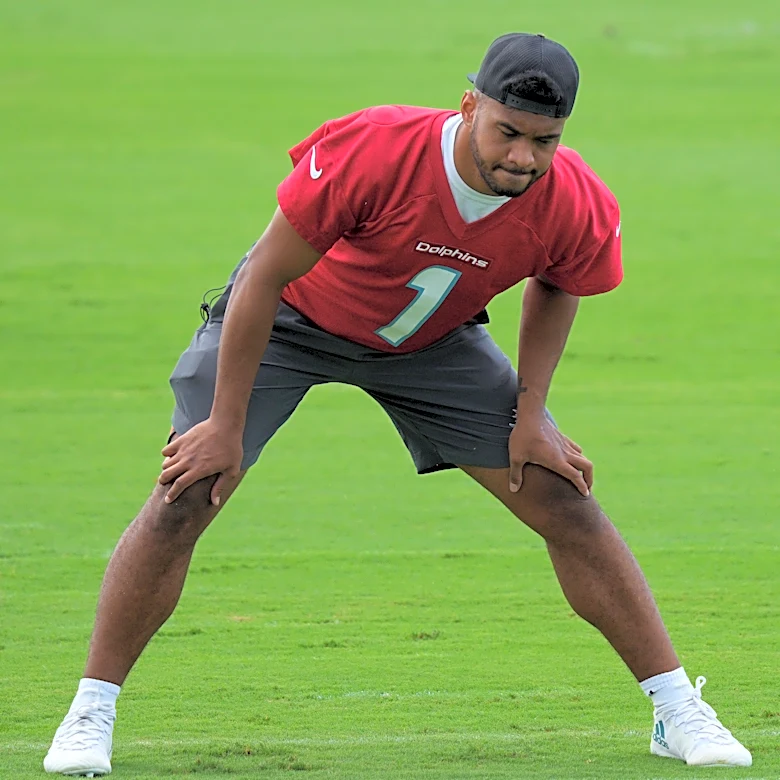
His recommendation? Build proper recovery time around gaming — which sounds easy in theory, but is not necessarily smooth to execute. You only have to go as far as looking former NFL player Quinn Pitcock, whose video game addiction ended his career early, or Kyler Murray, who gave his old team, the Arizona Cardinals, headaches due to his love of video games(and his rumored disdain for film work and studying).
Things can even get worse than those two examples, as the Philadelphia Phillies once has a locker room incident where a TV was smashed due to excessive video game play.
“We have to understand that we are not going to stop them from gaming, so we need to embrace it, work around it, and manage the impact it has on the rest of their day. You need to implement pre- and post-gaming routines. You can’t game intensely and then expect to immediately fall asleep. You really need 90 minutes of downtime before you game and 90 minutes to decompress afterward,” said Littlehales. “We know it’s unrealistic to expect a player to just stop after exactly two hours when they’re in the zone. You have to accept it and ask them: ‘Are you prepared to sacrifice your nocturnal sleep to be awake and stimulated? Is it worth it?’ If they insist on it, we look at scheduling it. Maybe they game late on Tuesdays, Thursdays, and Sundays. We look at the week and aim for, let’s say, 28 sleep cycles. If they don’t get any sleep cycles in on Tuesday night, that’s fine, because we compensate for it elsewhere and reset. As long as their next match is an 8:00 PM kick-off rather than a 12:00 noon kick-off, they have a chance to recover.
“You must have these open conversations instead of outright banning late-night gaming. If you just throw the book at them, they end up taking sleeping tablets, using snus, and taking unregulated supplements they don’t understand just so they can cope. When you help them manage their gaming, they usually start to self-regulate. They might decide to drop the Thursday night gaming session, or they’ll find friends in different time zones so they can game at 6:00 AM UK time when it is the evening in North America, rather than disrupting their own night’s sleep.”
Littlehales also advocates abandoning the traditional idea that athletes must get eight consecutive hours of sleep, instead recommending a more flexible, individualized approach.
“You have to abandon the idea of an eight-hour block of sleep at night to manage these intense schedules and rely on a polyphasic approach, grabbing 90-minute cycles back-to-back whenever they can, whether that’s on the plane or during layovers,” Littlehales stated. “You also need to control your sensory environments, using sleep kits, managing temperature, and blocking out light and sound to trigger sleep hormones naturally, rather than relying on things like sleeping tablets, which are no good at all.”
Cristiano Ronaldo is among the athletes associated with his polyphasic sleep philosophy, which involves distributing sleep and recovery periods throughout a 24-hour cycle.
“This individualized mindset leads to what I applied very early on, which is also what Cristiano Ronaldo is all about: polyphasic sleeping. Before the invention of electric lights, polyphasic sleeping was just what humans did. There is no evidence whatsoever that human beings naturally try to sleep in one long block. But then we invented electric lights and modern routines, leading to night-shift workers, multi-schedule demands, and frontline workers,” Littlehales said.
“To adopt a polyphasic approach, you might sleep two or three 90-minute cycles back-to-back in any 24-hour period to access deep sleep. Then, you consider the second phase of your day, the siesta. You find a period in the afternoon where you can nap for 30 or 90 minutes. If you look at a footballer’s week, you might aim for thirty-five 90-minute cycles over seven days. Some nights, those cycles will be back-to-back. But on a Wednesday, if a player doesn’t get home until 3:00 AM after an away game and has a recovery day ahead, they won’t get those continuous back-to-back cycles.
“To compensate, you look for short, distracted moments. Maybe just three or four minutes where you completely disconnect, like just looking out a window. That brief reset is really important for the brain. Then you add that afternoon recovery break. People used to say ‘snoozing is for losers,’ but once you change your mindset, you realize it’s just a sleep cycle. Just like physical training, the more you practice allocating that space and doing nothing in it, the easier it becomes to shut off, enter a sleep state, and wake up ready to make the most of the next phase of your day. You perform much better during and after games as a result.
“With a polyphasic mindset, a week could consist of thirty-five 90-minute cycles, which averages out to five cycles, or seven and a half hours, per day. Alternatively, you might find you are absolutely smashing it on just 28 cycles a week, which is four cycles (six hours) a night, rather than eight hours. If you can get four 90-minute cycles back-to-back of undisturbed, 25% restorative sleep, you’ve done it.
“Because players like Ronaldo and others have adopted this, it has become normalized. I’ve received pictures from NHL coaches showing their entire team lying down at the training facility to take 20 minutes of rest before going out on the ice to play hard against each other. You could never have imagined that in the past. It all comes down to viewing sleep as a rolling 24-hour period containing sixteen 90-minute cycles. You establish a consistent anchor point, like sunrise, to start your 24 hours. Don’t worry about when you go to sleep; just think, ‘Tonight is a four-cycle night,’ or ‘Tonight is a three-cycle night.’ It completely removes the anxiety of not getting a full night’s sleep in one go.”
From the drama of the 1999 Champions League final (sorry again FC Bayern fans!) to the modern demands of elite football, Littlehales’ central message is that recovery is not simply about how long a player sleeps, but how intelligently they manage their energy.
Join the conversation!
Sign up for a user account and get:
- New, improved notifications system!
- Fewer ads
- Create community posts
- Comment on articles, community posts
- Rec comments, community posts