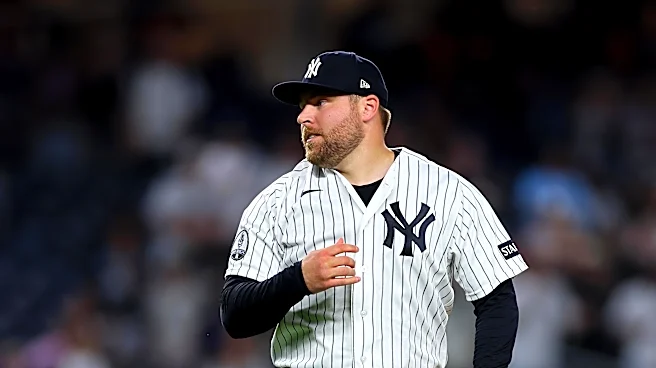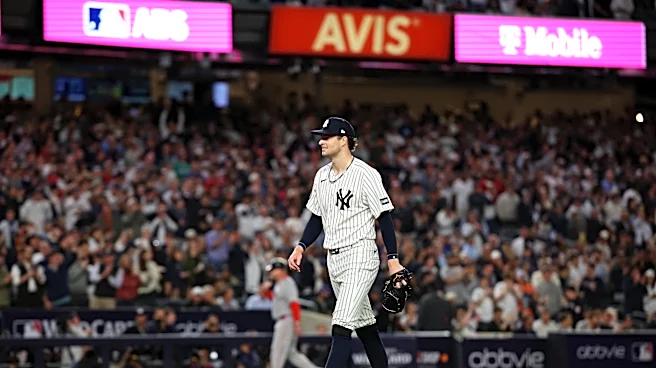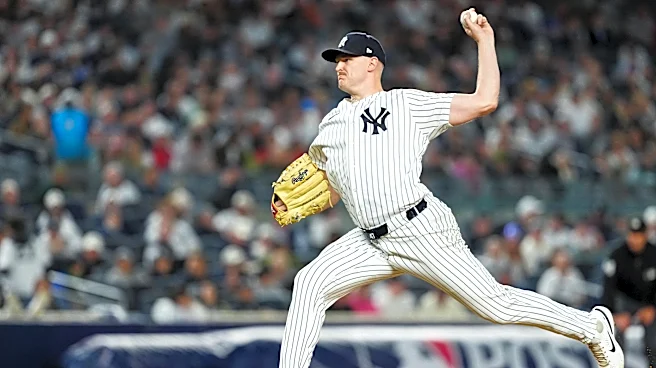



It has become a yearly tradition for the Yankees pitching coaches to identify other teams’ castoff pitchers, bring them into the fold, and then work their magic to transform said pitchers into high leverage relief weapons seemingly overnight. Clay Holmes, Lucas Luetge, Ian Hamilton, and Luke Weaver stand out as recent examples from the last half-decade. This trend continued into 2026, Brent Headrick the latest name to join the list of unearthed hidden bullpen gems.
Grade: A
2026 Stats (Yankees): 81
games, 78.1 IP, 2.18 ERA (193 ERA+), 2.46 FIP, 3.19 xFIP, 30.1 K%, 8.3 BB%, 2.1 fWAR, 2.6 rWAR
2027 Contract Status: Pre-arbitration
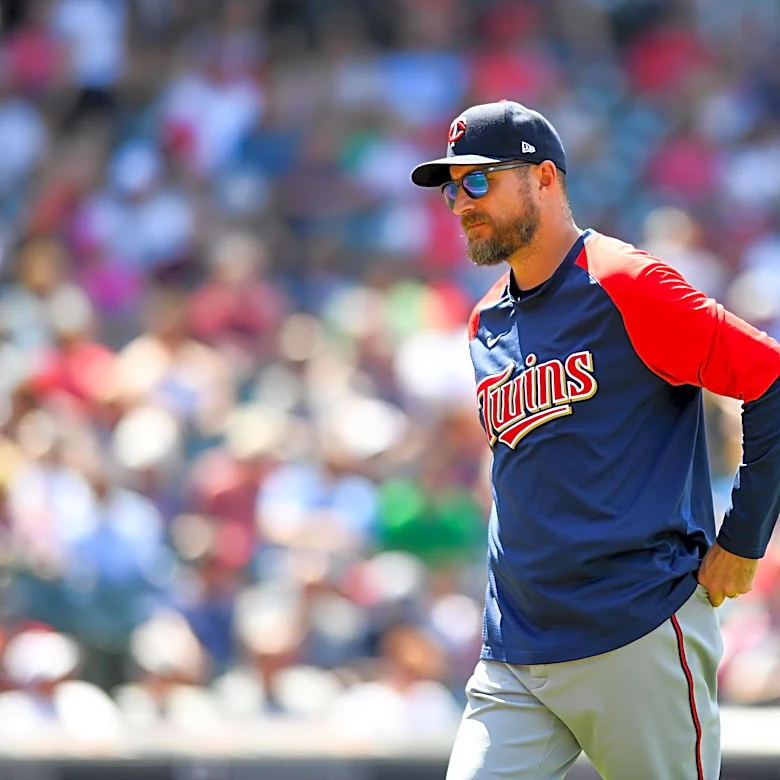
When Headrick broke camp with the big league team in 2025, he did so as a relative unknown to Yankees fans. Drafted by the Twins in the ninth round of the 2019 MLB Draft, Headrick has made just 15 relief appearances for Minnesota over the prior two seasons including just one outing in 2024, pitching to a 5.97 ERA and 6.11 FIP across 28.2 innings. Despite an impressive 35 strikeouts across that sample, an elevated walk rate and sky-high home run rate dragged him below replacement level, leading the Twins to designate the lefty for assignment following the 2024 season, the Yankees then claiming him off waivers in February of 2025.
He showed enough across a 17 appearance sample size in 2025 to merit a longer look in 2026, but no one could have predicted that he would finish among the nine relievers league-wide to accrue more than two fWAR. Prior to Tim Hill’s re-signing, Headrick was the lone healthy reliever under contract for 2027 and figures to reprise his prominent high leverage role in 2027.
Headrick was deployed as the team’s principal fireman, able to quell almost any inherited threat while also chipping in with multiple innings of work at a time. The first two-thirds of his season he was on an absolute tear, his 1.49 ERA through August 23rd the fourth-best mark among relievers in MLB while his 2.09 FIP wasn’t far behind in sixth place. The lone blemish on his record saw him give up three runs on four hits while recording just two outs in a back-breaking 9-7 loss to the Astros on August 25th, and while the subsequent results weren’t quite as lights-out as his first five months, he still finished as the Yankees’ most valuable reliever by fWAR. Headrick made three appearances in the Yankees’ abridged playoff run, allowing one unearned run in 1.1 innings.
His 81 appearances led all of baseball while his 78.1 IP was good for eleventh. He was one of just 21 qualified relievers to post a strikeout rate of at least 30-percent and one of just 24 qualified relievers to finish with at least a 20-percent K-BB%, the threshold that is considered elite. His 30-percent CSW% also just sneaks him into the elite category. His 2.18 ERA and 2.46 FIP were both comfortably top-20 marks among qualified relievers as well.
Despite fairly pedestrian velocity (94 mph) and spin rate (2,300 RPM), Headrick’s four-seamer plays way above its raw metrics. This is largely down to the 90th percentile extension Headrick has on his release. With seven feet of extension beyond the rubber, Headrick’s fastball gets on the hitter sooner than your average 94 mph heater and has less time for gravity to exert its influence, causing the pitch to drop less during its path toward home than you would expect thrown at that velocity. Add on top Headrick’s 96-percent spin efficiency on the pitch to create 17.5 inches of induced vertical break and you’ve got a fastball that seemingly jumps on hitters.
However, for me it is the combination of this surprising life and Headrick’s unique deployment of the pitch that really makes it stand out. It is generally accepted that you want to live on the top ledge of the strike zone with your “rising” four-seamer to keep the pitch above hitters’s swing paths. However, Headrick’s bread-and-butter is the low four-seamer. Hitters tend to give up on that pitch early based on they way they are used to seeing fastballs on that trajectory drop below the zone for a ball by the time they get to home plate, but the extension and “rise” on Headrick’s four-seamer allows it to maintain its altitude to land on the bottom shelf of the zone for a called strike. Check out all of the called strikes Headrick extracted on the four-seamer in 2026:

The vast majority of his called strike four-seamers are at the knees. In fact, among the 379 pitchers to earn at least 100 called strikes in 2026, Headrick was the fourth-highest in terms of the share of those called strikes that were four-seamers low in the zone — 30.6-percent of his called strikes were low four-seamers behind only Kevin Gausman, Trevor Richards, and Cade Smith.
It is for this exact reason why Headrick’s pair of secondary pitches — the slider and splitter — placed among the game’s very best. The low four-seamer for a called strike is the perfect setup pitch to induce chases and whiffs against breaking and off-speed pitches below the zone. Headrick’s slider induced the eighth-highest whiff rate (47.6-percent) and 14th-highest strikeouts rate (39.8-percent) of any slider in baseball while getting batters to chase 36-percent of the time. His splitter was even better, inducing the third-highest whiff rate (51.3-percent) and fourth-highest strikeout rate (48.6-percent) of any splitter in baseball while getting batters to chase 40.4-percent of the time.
Headrick and the Yankees pitching coaches seem to have zeroed in on precisely what makes him the most effective: low four-seamers early in the count to set hitters up to strike out on a slider or splitter below the zone. I expect this formula to continue to yield results in 2027 given the command Headrick exhibits with all three pitches. The Yankees bullpen may need serious reinforcements this winter, but they have an excellent starting point in Brent Headrick.