






The Spurs’ team for the 2026/27 season is mostly set. San Antonio extended Julian Champagnie’s contract, brought back Harrison Barnes, signed Tobias Harris in free agency, and added two rookie big men from the draft. All those moves got them close to the tax line and filled up 13 of the 15 roster spots available.
With the big transactions out of the way, all that’s left is deciding what to do with those two last roster spots. The Spurs could go in different directions there, so let’s take a look at some
of their options.
The continuity path: Jordan McLaughlin and Bismack Biyombo
Arguably the least exciting path, but we are talking about the fringes of the roster, so there’s nothing wrong with making choices that focus on stability instead of upside
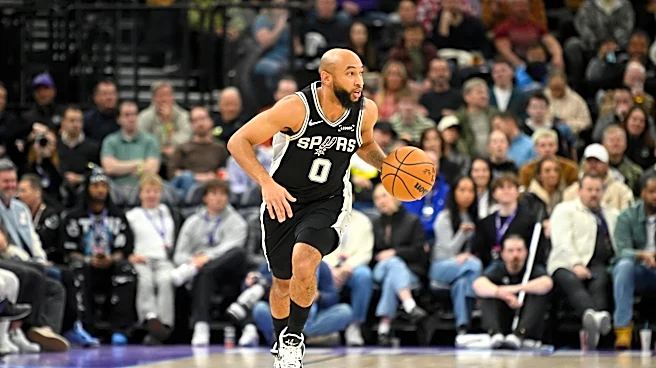
McLaughlin arrived in the De’Aaron Fox trade and impressed the Spurs enough that they brought them back on a minimum contract for the 2025/26 season. He suited up for 44 games, mostly in garbage time, but on the opportunities he got, he showed he can be a good deep bench guy who provides solid game management and steady spot-up shooting. The 30-year-old is a finished product, but he can play and fits San Antonio’s culture.
Unlike J-Mack, Biyombo shouldn’t really see the floor unless a game is decided at this point in his career. His athleticism is gone, and he was never known for his skill. What he brought to the table last season was leadership, as he was clearly respected by everyone in the locker room, including Victor Wembanyama. With how many big bodies the Spurs have, he could continue to be more of a coach than a player.
McLaughlin would likely command a guaranteed minimum deal, like last season, while Biyombo could likely be had for a partially guaranteed or non-guaranteed minimum.
The maximum depth path: sign the best veterans available
Signing the best talent available might seem like the obvious best choice, but the Spurs don’t really have a lot of minutes to offer, so the expectations of anyone coming in should be managed to avoid any potential locker room issues. Guys like McLaughlin know how things work in San Antonio. A talented veteran who is trying to get his career back on track or end it on a high note might want a bigger role than Mitch Johnson can offer them. But if Johnson is open to having everyone but the core guys earn their minutes through competition, it could work.
Now, we are talking about players who would take the minimum or close to it, since that’s all the Spurs can offer, which rules out any big names. But guys like Bruce Brown, Jordan Clarkson, or Cole Anthony, among others, could be in play. They would probably prefer a destination where minutes are readily available, but if they are assured they will have a chance to earn them, they could be interested in being in a contender.
Those guys could carve out small roles for themselves, but could also be unhappy if they don’t end up doing so. There is some risk attached to them, but they could help in case of an emergency.
The youth and upside path: no one over 25 allowed
Essentially, the opposite of the continuity path. The Spurs have their main guys, and with Barnes back and the Harris addition, they have their veterans. Why not use the last roster spots to try to find the next Champagnie?
A simple way to do it would be to canvas the undrafted free agent and G League talent pools. Summe League is perfect for it. While most teams would likely only offer Exhibit 10 (training camp) contracts, the Spurs could be more aggressive and offer a non-guaranteed or partially guaranteed standard contract to someone who shines. At this point, it’s hard to come up with a lot of names, but there are always standouts. San Antonio has a lot of youth already on the main roster, but they have a good developmental system in Austin that they can always rely on.
The issue with this direction is that it both hurts the overall reliable depth of the team, as by nature the signings would be somewhat risky and target players who could develop into but are not currently NBA talents, while also costing money and flexibility. And most projects don’t turn into Champagnie. Still, if the Spurs think they can get the veterans they are interested in to wait until after Summer League is over, they could be patient before making their signings and potentially use one or both of their spots on young players with potential.
The savings and flexibility path: keeping a roster spot open
Teams are allowed to carry just 14 players on their roster, so there’s no need for the Spurs to sign two more guys. They could simply elect to add someone and keep an open spot heading into the season, something they’ve done in the past.
The reason for doing that is to maintain some roster flexibility. They don’t have much room under the tax to take on money for assets, but they could do a two-for-one deal or eventually convert a two-way contract into a standard one without having to waive anyone. They could also have a spot in case someone they’re interested in gets waived. Essentially, they’d save up some money that otherwise would be going to someone unlikely to contribute until they feel they can find the right use for the spot.
The downside is the Spurs wouldn’t be able to add depth at two positions in this scenario. They would have their two-way guys to help in case of emergency, so anything other than major absences shouldn’t present a major problem, but there’s a case to be made for having a set roster that can work together and develop chemistry heading into the season. It would also be unwise to use the one roster spot with someone like Biyombo, who only provides leadership, instead of likely focusing more on potential productivity.
What path do you think the Spurs should pick? Could they mix and match, going for a veteran and a young player? What are some names you would like to see them pursue? Let us know in the comments.