




Mikhail Prokhorov famously said that his Nets would “turn Knicks fans into Nets fans.” The Nets owner, a confirmed bachelor, also promised that if the Nets didn’t win a title in five years, he’d get married. Spoiler alert: None of those things happened.
So Sam Zussman, now president of Nets parent Brooklyn Sports & Entertainment under Prokhorov’s successor Joe Tsai, has come up with a different, long term plan — generational fandom — essentially getting them while they’re young.
In a wide-ranging and
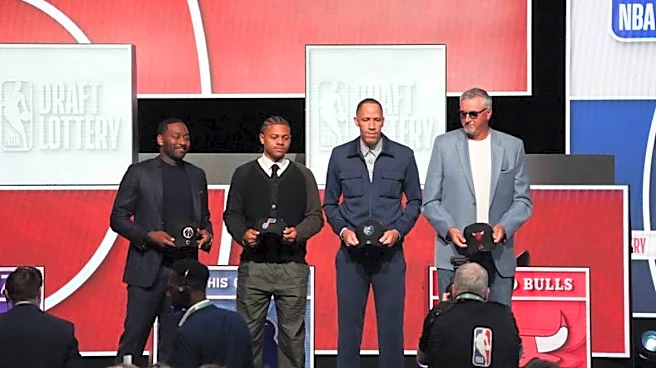
rare interview Monday with an Israeli business site, the Israeli-born Zussman laid out the plan in detail and suggested that the payoff may not come for a decade or more but could eventually pay dividends for a half-century or more. At a moment when the Knicks look like the Showtime Lakers and pundits as well as fans are lamenting the team’s bad luck in the Lottery — even suggesting the franchise is cursed — the comments have particular relevancy.
Zussman spoke as well about fandom in general, including how while you can’t control winning and losing on the court, you can control the experience off it.
In addition, the former IDF officer spoke about his relationship with the Nets’ two Israeli players and how he brought wounded Israeli soldiers to both a Nets game and practice last year as part of their recovery. Zussman has been active in raising funds for wounded Israeli soldiers.
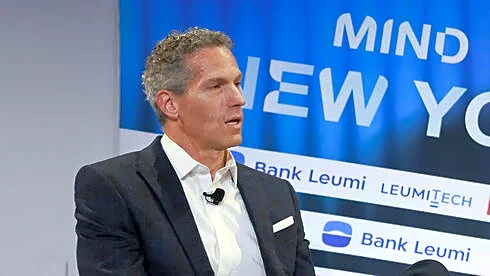
In the interview with CTech, which took place recently in New York at an Israeli tech conference, Zussman noted that the Nets relatively short stay in Brooklyn put them at a disadvantage compared to the the generational fan base of older franchises. Although he didn’t say, the obvious comparison is to the Knicks.
“We’ve only moved to Brooklyn 14 years and we’ve never won a championship. So, we don’t have this generational fandom of a grandfather or a grandmother taking … or you as a parent have gone to a game with with your parents and you’re now taking your son or daughter. And I realized that needs to change,” he said.
“And if you look at what happens and if all of you look back to to your childhood,” he added, motioning to the audience, “you became a fan of a team somewhere between the age of six and 10 and it was on account of a slightest touch. You went to a game, you met a player, you got a t-shirt, you went to a clinic. That is stickier than your bank account. That does not change!
“So I realized this is what we need to do. So we started a movement called Brooklyn Basketball. And we now not only have a facility but we also go to public school and we deliver clinics free to 40,000 kids a year and so, you would ask me, ‘you’re spending a couple of million dollars a year that yes has a community aspect but where’s the revenue? And the revenue is a stream of season ticket holders that could be season ticket holders for 50 or 60 years starting 10 or 15 years and that’s okay.”
The clinics and center are indeed but one part of the Nets’ community involvement that could ultimately reap rewards, things as diverse as refurbishing playgrounds or financing a Jean Basquiat art curriculum.
Once in the building, Zussman said, fans need to have “an incredible experience whether the team won or lost” to keep the connection. “I can’t control what’s on the court. I can’t control what happens on any given night, but what I can’t control is the experience around it,” he added, admitting there’s a level of frustration.
Moreover, he said, fans must be treated differently than just customers because of their level of commitment.
“Fans have a very different relationship with your product. They’re people who feel like a minority owner. They feel invested, ‘Now, I’m a fan of the Brooklyn Nets.‘”
As for the use of AI, Zussman — despite his boss’s obvious expertise and experience — said he does not focus that much on the technology that touches the actual consumer. After all, he’s selling a tactile experience inside the arena rather than on the screen.
“It’s a bricks-and-mortars experience,“ he argued. ”You already have a superior technological solution. You can sit at home and watch a game on a 75-inch screen. You can pause it. You can rewind. You can use your own restroom. You can have your own food.
“Yet people get in their own car, take the subway whatever. They spend a lot money on the tickets. They stand in line. They have a lot of people around them for better or worse, just to physically be there because there’s no substitute for the passion, the energy, the experience, the memory, of being there. People come to consume that! … ahead of a technology-driven experience.“
Zussman also talked about the Nets two Israeli players: native Israeli Ben Saraf and Danny Wolf who was born in Illinois but holds an Israeli passport and has played for Israel in international competition. They were taken back to back at No. 26 and 27 at the end of the first round in the 2025 NBA Draft. He said he didn’t influence the selection of the two, noting he was on a plane at the time. (In fact, say insiders, it was coach Jordi Fernandez who pushed Saraf in particular.)
“No, we make decisions on the merits in the board room,” he said. “and we make decisions on the merits in the Draft room. They were the two players that our general manager and our front office believed were the two best picks at those positions. They’re great. They’re great human beings. They also help with a lot of community activity.”
He noted as well that they attended a dinner of the Irgun Nechei Zahal in the United States a group that raises funds for wounded Israeli soldiers that Zussman champions.
“Being an Israeli, being born and raised in Israel and serving in the IDF, that’s a really important thing,” he said.
Indeed, Zussman disclosed how the leader of the group came to him two years ago and said he had promised a wounded soldier that he’d take him to an NBA game as part of his recovery.
“From that, there came a group of 22 wounded warriors with a few other people in the delegation and we brought them here for a week,” he recalled. “We took them to a closed practice of the team. We took them to a game and to the U.N. We made a whole week out of it. They branded it, ‘When Heroes meet Champions.’
“And you could see it just put a spark in their eyes. you could see they felt the warm embrace of the Jewish community. You could see that there could be life after … it was in March 2024 so you could see it was a few months after October 7 (the date that Hamas attacked across Israel, killing 1,200 Israelis.) At that moment, I realized that was something I needed to lean into.”
Since then, of course, the Israeli response has been declared a genocide by the U.N. with a death toll approaching 75,000, mostly civilian.