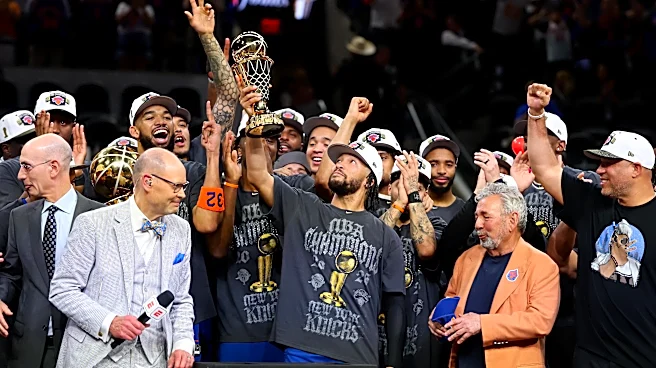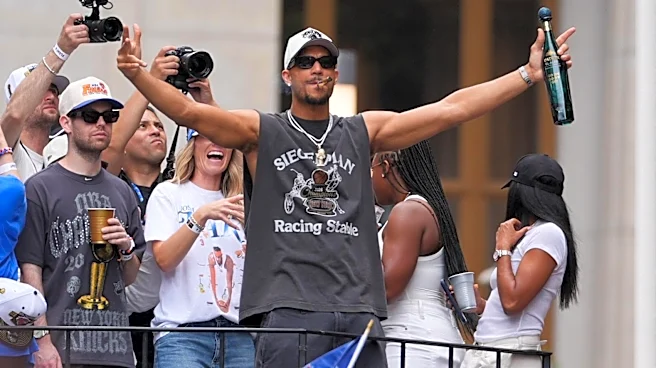



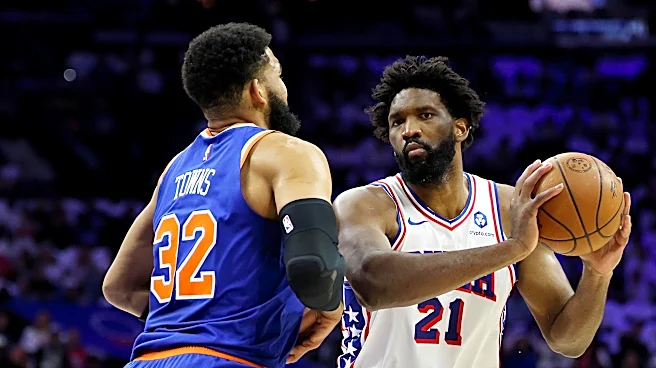
The Knicks’ historic championship run cemented Karl-Anthony Towns as one of the best big men in the league. So it’s only right that a lot of the offseason talks surrounding potential extensions have centered around the center, no pun intended. But it’s also important to note that Josh Hart also became extension eligible on August 10th.
Hart has continued to be a polarizing piece of the grander Knicks’ puzzle. He can inspire you to run through a wall just as easily as he can make you want to pull your
hair out and turn your screen off. His postseason run encapsulated that. Hart had some big moments, capped off by his emphatic game two performance in the Eastern Conference Finals and his three point, 15 rebound masterpiece in game one of the Finals. But sprinkled into those memorable games were letdowns of the same magnitude. He struggled mightily and was benched down the stretch in game one of the Conference Finals, and was a miraculous OG Anunoby tip-in away from having maybe the single most devastating miss in Finals history.
Despite the rollercoaster ride of emotions he insists on putting fans through, Hart is still an integral part of this team. And given his relationship to Jalen Brunson and his willingness to do the dirty work, it’s hard to imagine a world in which he doesn’t at least spend the next handful of years in New York. Whether he retires here or not remains unclear, but it’s safe to say that most fans would be incredibly surprised if he didn’t stay a Knick for the foreseeable future. So with that in mind, what does a potential extension look like?
James L. Edwards III of The Athletic revealed that an anonymous league source believes that a three-year extension for around $54-62 million would be a “happy medium for both sides”. That would put Hart at right around $18 to $20 million per season-very much in line with the four-year $80.9 million contract he signed three Augusts ago.
Hart, of course, could ask for more. As Edwards mentions in his piece, Derrick White and Dillon Brooks, two different but similarly important role players, make north of $20 million, with White raking in close to $30 million annually. Coming off a championship, it’s not unreasonable for him to want more, even if it’s just a slight pay increase. But Hart also has a lot of incentive to take what he’s making now, or even a slightly lesser contract.
The veteran guard has spoken about wanting to find a home, and in New York, he seems to have finally found one. While the fanbase has certainly been vocal about his play at times, there’s an underlying respect and love there for the most part. As a Knick, he’s not only been able to play with some of his closest friends, but he’s grown his brands, increased endorsement deals, and as previously mentioned, become a champion. Getting to continue doing those things in a familiar situation, and getting to avoid unrestricted free agency, may be a good thing for the 31 year-old.
The Knicks would likely pay Hart more if they could. But their offseason plans have proven that they are very wary of the second apron, as they should be. With Brunson’s big pay day on the horizon, Towns’ extension also coming up, and Anunoby owed $40+ million for the next three seasons, they need all the help they can get. New York is hoping that Hart, and eventually Towns, can follow in the footsteps of their captain and take a slight pay cut to help extend the championship window and maintain this core.
Edwards, other reporters, most fans, and I are all under the assumption that a deal eventually gets done. It just makes sense. But it will be an interesting negotiation to keep an eye on. On the Knicks’ side, it could reveal how badly they want to avoid the second apron and what other moves they may need to make to do so. And on Hart, as well as Towns’, side, it could give us an inside look at how they really feel about a potential pay cut. We’ve all heard rumblings that they would potentially be willing to take one. But if Hart chooses he wants to maximize his last big negotiation and make as much as possible, it could be a sign that the core actually isn’t going to retire into the sunset as some had hoped.