




“Injuries aren’t an excuse.”
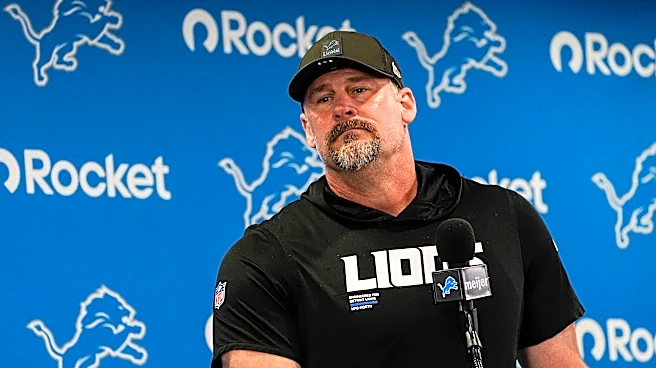
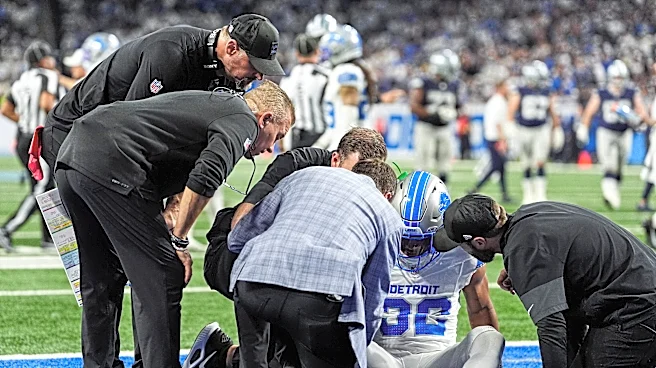
It’s a line that’s often parroted by fans, analysts, and even NFL coaches and general managers. We heard Dan Campbell say it in the midst of an avalanche of defensive injuries after their blowout loss to the Bills in 2024.
“I’m not buying it [injury excuse],” Campbell said. “I’m not. I don’t buy it. We can be better. We should’ve been better. We know how good they are, but that team was more urgent than us today, overall.”
We heard Brad Holmes say it after the 2024 season,
admitting they had poor luck, but taking responsibility in his role to add appropriate depth to weather the injury storm.
“The injuries happened, you can’t pout them back to health. Again, you hate it for the players, but what are you going to do about it?” Holmes said in his end-of-season press conference.
But I’m going to say what they were unwilling to say: injuries are an excuse. Very few teams in recent history have been able to overcome a massive amount of injuries. Health doesn’t guarantee you a Super Bowl, but it is damn hard to even be in the conversation without it. There are already plenty of studies out there showing the correlation (and suggesting causation) between injuries and team success.
Let me provide some further proof that doesn’t require reading an entire scientific study. For the purposes of simplicity, I’m going to measure a team’s health using FTN Fantasy’s “Adjusted Games Lost” (AGL). This statistics is described as follows:
Adjusted games lost doesn’t just add up total injuries. It accounts for both absent players and those playing at less than 100%, and it gives more weight to injuries to expected starters and situational players than to expected backups. As such, AGL estimates the impact of injuries on teams and provides a comparable total that often succinctly explains why teams improved or declined from one year to the next.
Like any statistic, it’s not a perfect measurement. For example, it doesn’t weigh injuries to more impactful positions, so an injury to your starting quarterback is measured the same as an injury to your tight end.
But using this dataset allows for a snapshot of every team’s health each season. And since 2020, it has been critical for teams to stay healthy if they want to make a Super Bowl run. Here’s a look at the teams in each of the last six Super Bowls, and where each team ranked in AGL (1st being least injured, 32nd being most injured):
2025:
- Seahawks: 3rd
- Patriots: 1st
2024:
- Eagles: 2nd
- Chiefs: 14th
2023:
- Chiefs: 6th
- 49ers: 4th
2022:
- Chiefs: 4th
- Eagles: 3rd
2021:
- Rams: 5th
- Bengals: 8th
2020:
- Buccaneers: 1st
- Chiefs: 11th
Nine of the 12 teams who have played in a Super Bowl in the last six years have ranked sixth or higher in AGL, including all six Super Bowl winners. Every single team who has played in a Super Bowl since 2020 has finished in the top half of the league in AGL.
The Lions? They’ve had some of the worst injury luck over this exact same span. Here are their AGL rankings per season:
2025: 31st
2024: 25th
2023: 18th
2022: 27th
2021: 30th
2020: 17th
In none of the past six years—including all five years under their current regime—have the Lions been in the top half of the league in injury luck. I’m not here to argue whether there’s something the Lions are specifically doing (or not doing) that has caused such bad injury luck. There are too many factors that go into it to make any definitive, logical deductions there, but the fact remains: the Lions have had terrible injury luck, and it’s certainly one of the reasons Detroit has yet to make a Super Bowl.
That said, talent matters more than anything in the world. If you have a healthy squad, it won’t matter if the talent isn’t there. So, if the Lions had better injury luck over the past few years, was their roster talented enough to win a Super Bowl? That’s a very hard thing to prove, but one thing to consider is their unparalleled success in the face of injuries.
As pointed out by the creator of AGL Aaron Schatz, posing winning seasons with the amount of injuries the Lions have had to deal with—particularly on defense—over the past two seasons is unheard of. Schatz listed the 12 most-injured defenses over the past 25 seasons. The 2025 (second) and 2024 (seventh) Lions defenses both made the list, and those were the only two teams among the 12 who posted winning records that season.
While I admire both Campbell and Holmes falling on the proverbial swords for Detroit’s lack of success over the past two seasons, the truth of the matter is injuries have been a significant reason for the Lions’ relative struggles. And if they can change their fortunes in 2026, it may give them their best shot at a Super Bowl ever.