
When it comes to the fundamental principles of my sports fandom, I really am a very simple guy. There is one basic tenet. The Golden Rule. The First Commandment. To Hell with Boston. In all sports. Then.
Now. Forever. At the inevitable heat death of the universe, only my loathing of Boston sports will remain. So as you can imagine, I was very, very conflicted when the Yankees signed Johnny Damon after the ‘05 season.
Perhaps luckily for my mental health, I had yet to come into my Yankee fandom a decade earlier when the Bronx Bombers poached another Red Sox legend. When Wade Boggs signed with New York in December ‘92, I was still motivated more by players than by teams. Rickey Henderson, Robbie Alomar, and Jose Canseco were my guys. But as an avid baseball card collector, I knew Wade Boggs was an amazing hitter. There were a lot of big numbers on the back of his baseball cards. And I hated him. Because he played for Boston.
In the end, the signing was a great move for both Boggs and the Yankees. Boggs played five seasons with the Yankees, winning his first and only World Series as part of the ‘96 team that kicked off the most recent Yankee dynasty. Meanwhile, the Yanks got a third baseman who, though much closer to the end of his career than the beginning, averaged 4.9 bWAR/162 games while a Yank, compiling a .313/.396/.407 (112 OPS+) regular season slash line, won two Gold Gloves, and used his legendarily good eye at the plate to draw an historically clutch walk in the 1996 World Series.
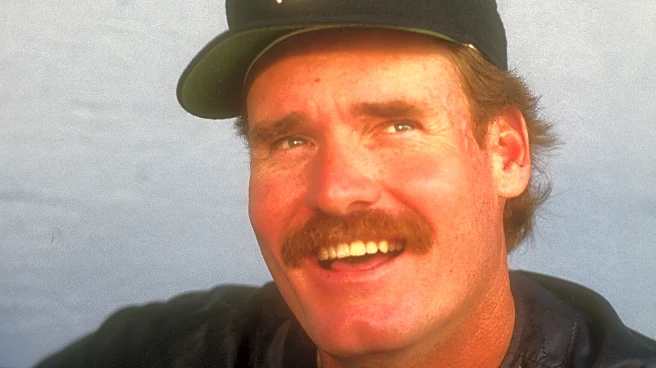
Wade Boggs
Signing Date: December 15, 1992
Contract: 3 years, $11 million
Boggs hit free agency at the worst possible time. After hitting .352 through his first eight seasons (lol), he slipped a bit in 1990 and 1991, before cratering in 1992, hitting .259. Of course, with his keen eye at the dish, he was still almost a league average hitter that season (96 OPS+), but his struggles inarguably hurt his value. Worse, rumors of a bad back had clubs worried he would never regain his form. Worse still, Jean Yawkey, the Red Sox owner, passed away in February ‘92. She’d promised Boggs a five-year contract.
Instead, Boston offered Boggs a one-year deal. Insulted, Boggs looked elsewhere. And on the other side of The Rivalry, the Yankees were interested. The club had lost Charlie Hayes to the nascent Colorado Rockies in the expansion draft and had an obvious hole at the hot corner.
Yankees managing partner Joseph Molloy, who had just personally negotiated the deal that brought Jimmy Key to the Bronx, turned his attention to Boggs. Three days before Boggs ultimately signed, Jack Curry reported that the two sides still had daylight between them. Boggs and his agent Alan Nero were looking for a four-year deal while the Yankees preferred to ink the free agent to a two-year pact if possible. Despite that gap, Nero was hopeful something would get done.
“We think they’re very serious about getting Wade signed,” Nero told Curry in a telephone interview. “We exchanged proposals, and we’re waiting for them to get back to us after their partnership meetings. They seem to want to get it done.”
Days later, they got it done. As usually happens, both sides had to compromise. Boggs settled for a three-year, $11 million deal. He got fewer years than he wanted and the Yankees signed up for more than they preferred.
The move paid immediate dividends. Boggs hit .298 in his first two-plus months in pinstripes, while drawing 26 walks in 45 games. He capped his early tenure by going 4-for-4 in his return to Fenway Park, as the crowd showed its appreciation for his time in Boston.
Boggs made the ‘93 All-Star Game, the ninth straight Midsummer Classic of his Hall of Fame career and won his seventh Silver Slugger award. One year in, the juice was definitely worth the squeeze.
He was even better in the strike-shortened ‘94 season. Boggs authored his finest season in pinstripes, hitting .342, walking more than twice as often as he whiffed (62:29), and putting together a 142 OPS+, his best such mark since 1989. Not bad for a 36-year-old with a bad back. He finished 13th in MVP voting and, for good measure, won his first career Gold Glove. Alas, we’ll never know what could have been for that ‘94 Yankees team.
When play resumed in ‘95, Boggs was back at it. In the third and final season of his deal, he made yet another All-Star Game, won another Gold Glove, and finished 17th in MVP voting. In the ALDS against Seattle, Boggs flexed some power, with a pair of doubles, and a two-run home run in Game 1 that gave New York a 2-0 lead, though the Yanks were ultimately unable to take down the Mariners.
Boggs’ performance was enough for owner George Steinbrenner to reward him with another contract after the ‘95 season, this time a two-year deal worth $4 million. All Boggs did to reward The Boss was be Wade Boggs. Though his contact skills had eroded somewhat, those and his eye at the plate were enough to keep him a league-average bat who played solid defense at the hot corner.
When the playoffs came around in ‘96, Boggs struggled to the point where Joe Torre briefly benched him in the Fall Classic in favor of Charlie Hayes. But his vaunted plate discipline paid off when it mattered most.
In Game 4 of the World Series against Atlanta, with the score knotted at six apiece in extras, manager Joe Torre sent the future Hall of Famer to the plate to pinch-hit with the bases loaded. Boggs worked the count full before taking ball four from Steve Avery. The seventh Yankee run, the game-winning one, crossed the plate. New York held on to tie the series at two games apiece and, after two more wins the club had its first World Series in 18 years. It was Boggs’ first and only Fall Classic win, a well-earned reward for a magnificent career.
Boggs played out the final season of his contract with the Yankees in ‘97 before moving on to Tampa Bay for the final two seasons of his career when the Yanks elected to give Scott Brosius a shot. While there, he notched his 3,000th hit, gaining admission to one of baseball’s most hallowed clubs.
Depending on what you are reading, one WAR is worth somewhere around $8-10 million in the current day. I know inflation is ridiculous, but if the vibes of Boggs crossing enemy lines to help bring a World Series to his former archenemy after a nearly two-decade drought aren’t enough to convince you he’s an all-time great Yankee free agent signing, how about this?
By bWAR, he provided 12.9 WAR for the $11 million the Yankees originally paid him. By fWAR, he “only” gave the Yanks 11.5 WAR. All that, from a guy who played his ages 35-37 seasons at third base with a bad back. It’s enough to make this rabid Boston hater forget he ever donned the Crimson Hose for Beantown. And we’ll always have Boggs riding that police horse to celebrate the ‘96 title win.
References
“Basketball; For Boggs, Pinstripes are In.” New York Times. December 22, 1992.
Brody, Peter. “Pinstripe Alley Top 100 Yankees: #82 Wade Boggs.” Pinstripe Alley. November 10, 2023.
Curry, Jack. “Baseball; Yanks Place $11 Million Bet on Boggs’ Revival.” New York Times. December 16, 1992.
Curry, Jack. “Yankees And Boggs Pursuing Each Other.” New York Times. December 12, 1992.
Wade Boggs. Baseball-Reference.
West, Steve. “Wade Boggs.” SABR.
See more of the “50 Most Notable Yankees Free Agent Signings in 50 Years” series here.