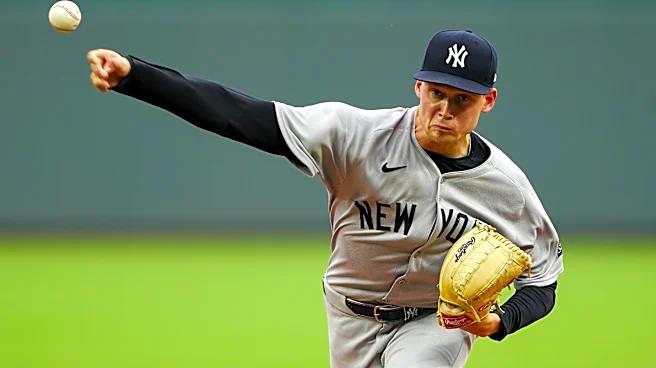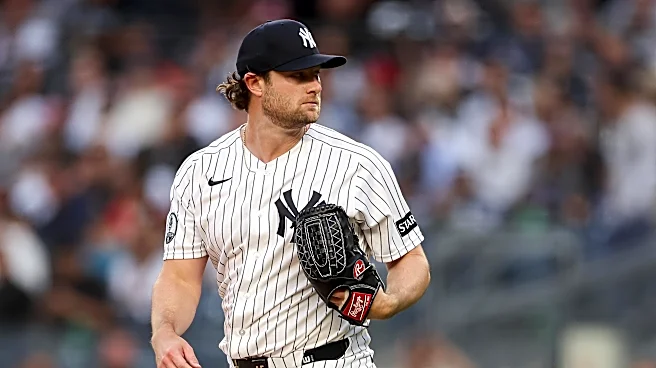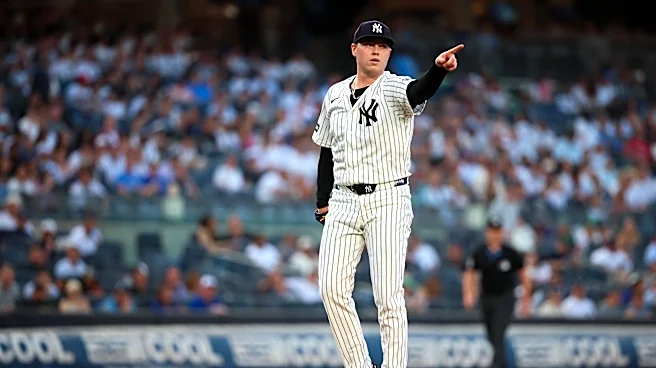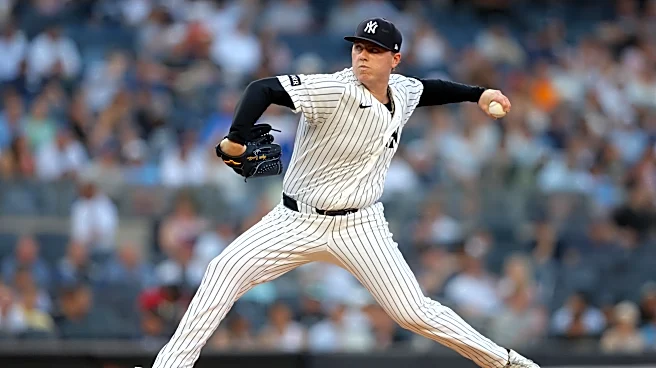




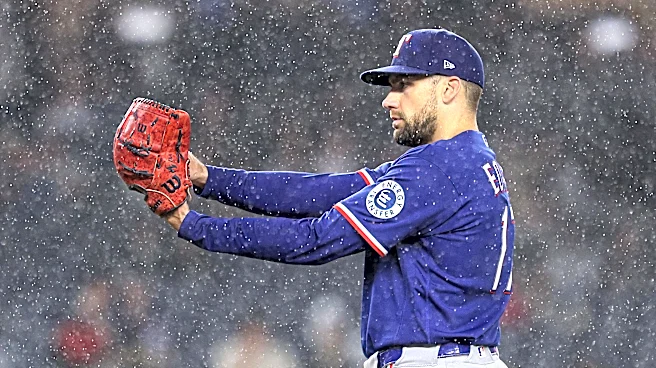
The starting rotation has been the strength of the Yankees in the season’s first third, even as it’s dealt with its own share of chaos. Luis Gil didn’t last long in the starting five, Elmer Rodríguez has shown that he’s not quite ready for MLB, the team has had to manage the returns of Gerrit Cole and Carlos Rodón, and of course Max Fried has been placed on the IL. Somehow the player we had the least information on at the start of the year has had a remarkable stabilizing effect as pitchers move
in and out around him, and Ryan Weathers has already surpassed his preseason fWAR projection.
Everyone pitches backwards these days — well, everyone but Cam Schlittler — with fastball usage at the lowest level it’s been in 20 years. Truth be told it’s probably at the lowest level that we have pitch tracking data for, I just went back 20 years because it was a nice round number. Pitchers have accepted that the bendy stuff is harder to hit than the straight stuff, and that’s been key to Weathers’ strong start.
Offering his four-seam just 30 percent of the time, bang on league average, Weathers mixes a pair of breaking balls and a changeup alongside a sinker, and he’s probably best off to drop the four-seam fastball entirely. It boasts an ugly .641 xSLG, nearly double the same metric for each of his “secondary” offerings. The sinker is slightly more effective, mostly against right-handed hitters with traffic. The slider, sweeper and offspeed though, all run whiff rates north of 30 percent — all while he has also been able to pitch reasonably deep into ballgames.
Normally we see a tradeoff with this kind of stuff; batters swing and miss a lot but that drives up pitch count. Weathers runs those whiff rates while making it into the sixth inning in 40 percent of his starts so far. Yes, there’s a collection of folks who will scoff at that being an impressive rate, but Weathers’ 5.71 innings per start is a step above the MLB average, 5.12.
It’s this combination that has made me rethink the perpetual discussion around which pitcher in the rotation is destined for some bullpen time. Weathers’ experience as a swingman and the power of those breaking pitches has had me thinking about an Andrew Miller-esque role out of the rotation, but then again when Andrew Miller was Andrew Miller he simply had a better fastball than Weathers boasts. Will Warren has a much better fastball, and through his 11 starts, Memorial Day inclusive, goes 5.27 innings per start.
Of course these problems eventually work themselves out — a week or so ago we were hemming and hawing about this exact dilemma, only for Max Fried to bump his elbow and need an IL stint. When Fried is ready to come back, unfortunately someone will likely have an ache or pain of their own, or performance will make the decision an obvious one. In the season’s first third though, the Ryan Weathers trade has to be considered a remarkable success. Maintenance of this pace now becomes the goal, rather than raw improvement.