





A few days after Juventus’ shocking 3-2 loss against Sassuolo last month, the BWRAO Slack channel noticed a sudden spike in activity in the comment section of the post that had debuted that week’s episode of The Old Lady Speaks Podcast.
Now, we’re very proud of The Old Lady Speaks in these parts, but we also know that those posts don’t tend to have a whole ton of comment traffic — often none at all — so we were somewhat intrigued to see what was going on. A quick glance at the news gave us the answer:
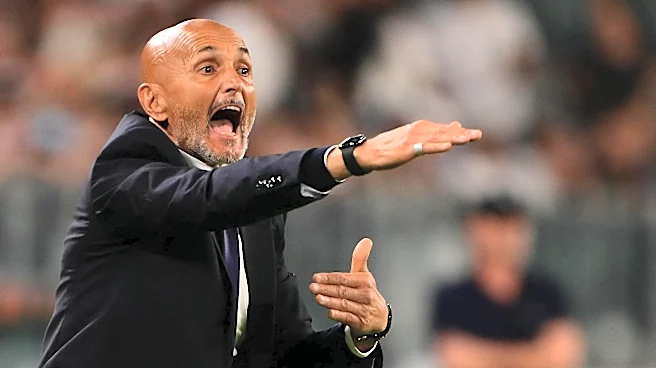
a media report that indicated Luciano Spalletti was going to change from his standard 4-2-3-1 to a back three for the Bianconeri’s Europa League opener against NEC Nijmegen.
That one report saw many of you gravitate to the most recent post they could find to discuss. Indeed, there’s little that can spark more discourse than the subject of tactics, something that’s probably true of many of our sister SB Nation soccer pages.
The change did indeed occur, and the results were rather stark. Juve keelhauled NEC 5-0 and then swept Atalanta aside with a relatively workmanlike 2-0 victory. They allowed a total of five shots on target between the two games, while finding the target 12 times themselves. After a shaky period that saw the Sassuolo loss and the last-gasp draw with AC Milan before that, it felt like a revelation.
Of course, we’ve been here before, albeit a little bit in reverse. When Spalletti first took over from Igor Tudor a year ago, he decided not to alter Tudor’s three-man defensive system right away, giving Juve a chance to acclimate to any tactical changes in training before gradually converting to a 4-2-3-1 as the season wore on. That change also proved beneficial, until the team’s late-season swoon when nothing seemed to go right the last four weeks or so of the fixture list.
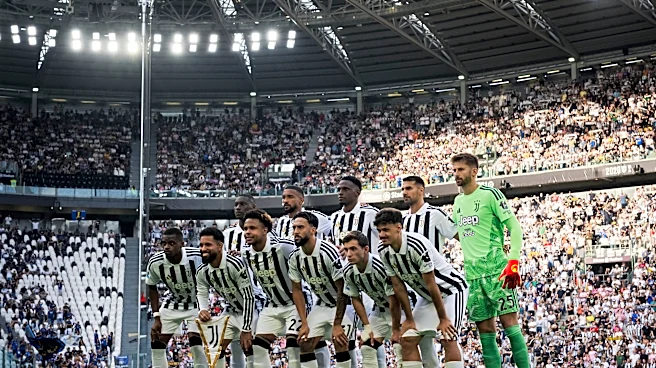
Now, it looks like we’ve reached another tactical inflection point. Spalletti has players that can fit the bill for both systems. The 3-4-2-1 has a small sample size this season — just two games — but what a sample size it is. Even when accounting for the fact that NEC was a vastly inferior team, the team simply looked far better with the back three as opposed to a back four.
So as we close in on the return of club football after the extended international break, the question is simple: What tactics should Spalletti use going forward?
The chief difference for me over the last two games before the international break has been in the attacking setup, specifically the support line behind the striker. I’ve always been partial to having two attackers in the hole behind a single striker. It’s why the 4-3-2-1 formation has always been my personal favorite. That particular wrinkle is unlikely for the purpose of this exercise — Spalletti is far too attached to a double-pivot midfield to go with a Christmas tree, and the depth issues in the middle of the park probably preclude a three-man mid anyway — but a 3-4-2-1 brings similar qualities to the attack.
I believe having a “2-1” attacking setup is the most versatile there is. You can group your attackers in multiple different combinations based on the opponent and how they’re playing you. You can stock up on nimble playmakers who can take on their man and pass. You can use players that gravitate more toward wide play if you need balls into the box. Or you can add in a player with some more physical attributes to compliment the striker if you need some more oomph.
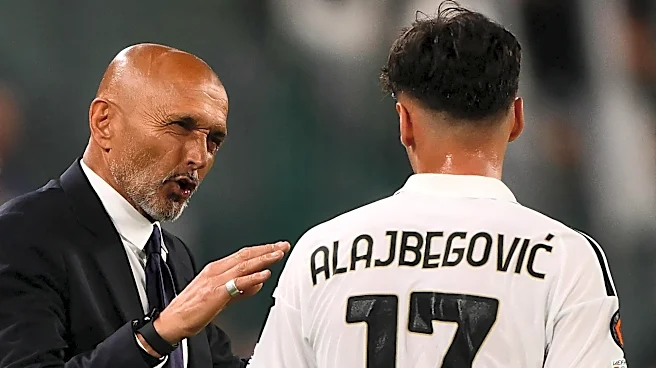
It fits Juve’s personnel grouping especially well because neither of Juve’s top strikers, Randal Kolo Muani and Nick Woltemade, are No. 9s in the most traditional sense of the term. Using a “2-1” attack can keep players like Francisco Conceição and Kerim Alajbegovic — and, eventually, Kenan Yildiz when he returns from his foot injury — closer to the strikers to play off of them, as opposed to welding them to the wings where their crosses may not be as effective. Swap someone like Nico Gonzalez or Weston McKennie into the mix, and crosses suddenly become something that the defense needs to account for again, given the well-documented aerial prowess of the two. All of Juve’s attackers are good enough moving without the ball to be able to peel the defense apart in inventive ways if they’re playing on their game, opening up space for one of them — or a midfielder or wing-back — to find the space they need for a shot.
Having an extra man at the back isn’t a terrible thing, either.
Bremer is great in any defensive setup, but he grew up in the middle of a back three at Torino. Pierre Kalulu and Jhon Lucimí are excellent defenders, and both have shown the ability as outside center-backs to push upfield and help the attack, the way Simone Inzaghi used Alessandro Bastoni and Benjamin Pavard. Kalulu’s ability as a crosser is etched in the record, and Lucumí had an assist and two key passes against NEC, showing that he can absolutely provide for the attack when called upon. It’s a luxury to have two players who can sneak up and create overloads when the opportunity presents itself.
But Spalletti’s tactical change — which, as you might have guessed by this point, I hope stays permanent — carries the most weight in the attacking phase. The 3-4-2-1 gives Juve’s slightly non-traditional attacking options a lot more versatility and freedom, which in turn can help unlock recalcitrant defenses that shut up shop and dare the Bianconeri to break them down.
Of course, we could all be drawing too many conclusions over a pair of matches three weeks ago. Time will be the ultimate decider.