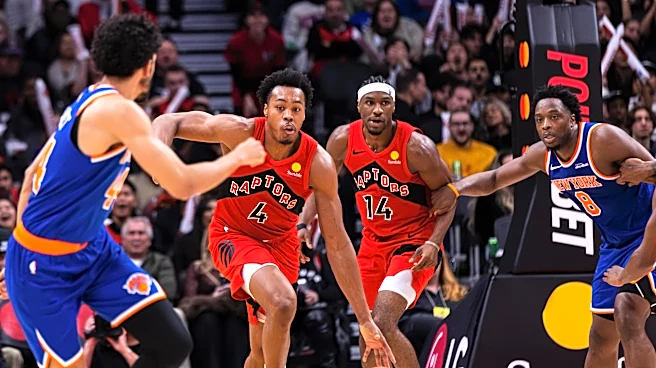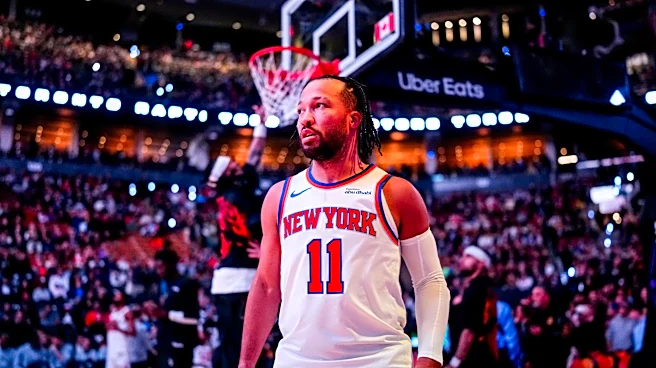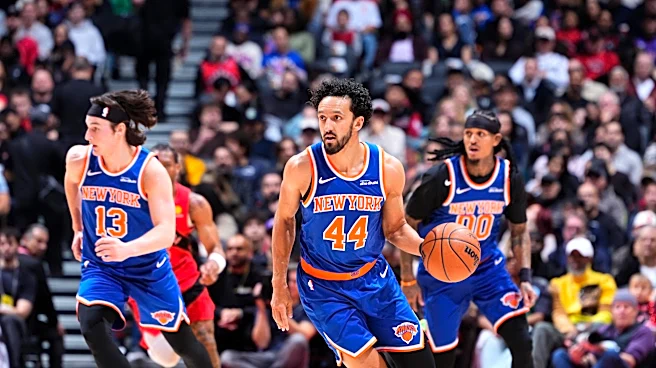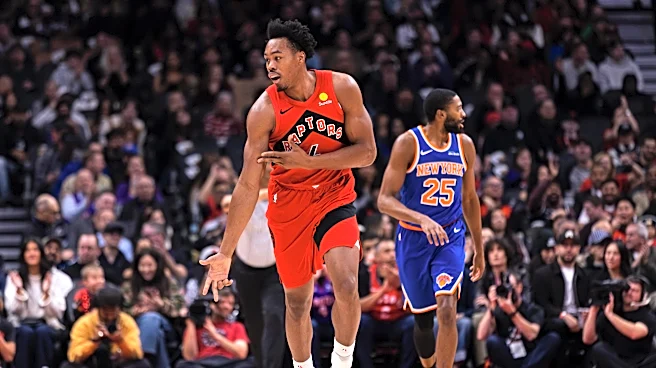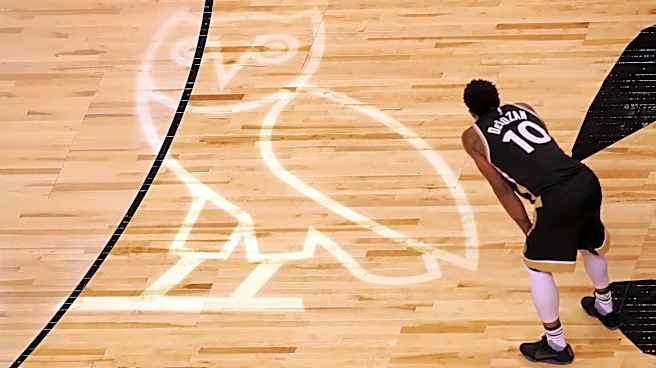

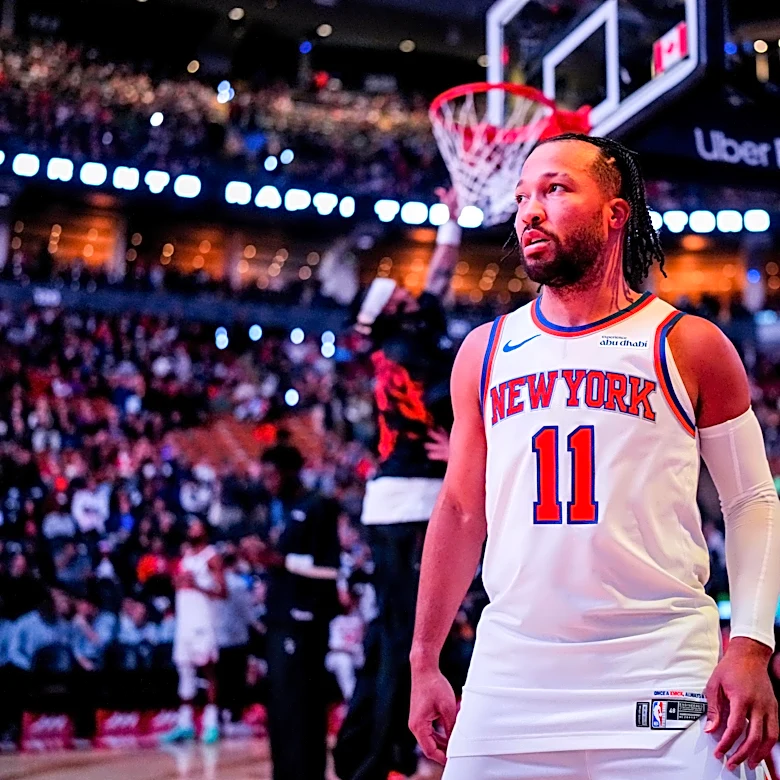

It was OVO Night at Scotiabank Arena last night, and personally, I was not a fan of what I saw on the court, which was ultimately, a whole lot of nothing. Considering that the Raptors have had a long history of collaborations with October’s Very Own for their team uniforms, the absence of the owl, and the black and gold tonight was noticeable, and highlights an ongoing disconnect between the Raptors’ onetime global ambassador Aubrey “Drake” Graham, and the team’s place as a cultural force in the city
of Toronto.
I conclude that Drake has overstayed his welcome in this role, as he remains the last holdover from the We The North era, which the Toronto Raptors seem to have put behind them in every way except this. It’s time for the organization to part ways with Drake and OVO, and either wait for a new “ambassador” to emerge organically, or to put that role behind them entirely.
The history behind the connection
Drake was an ongoing presence at Raptors games throughout the 2010s, coinciding with the height of his cultural presence in the music industry. 2011’s Take Care and 2016’s Views both went six-times platinum, and in the ‘10s, Graham won all five of his Grammies. Throughout this period, Drake maintained an official association with the team as their “ambassador,” and became a part of the team in an even more visible way by contributing his OVO branding to the team’s jerseys, including their very first City Edition.
What does it mean to be a team’s ambassador? In a 2013 story by the Associated Press and published by ESPN, the ambassadorship was defined as a two-way street. Essentially, Drake would use his fame and cachet to both generate hype in the city, and to create an environment conducive to high-end free-agency signings. In exchange, Drake would be given the highest level of access possible to the world of NBA.

13 years ago, this relationship makes perfect sense. The Raptors were in the last year of their playoff drought, hadn’t won a championship yet, and were still “othered” in the city.
In the Canadian Encyclopedia article about the Raptors, former RHQ head Adam Francis wrote that “regardless of their performance on the court, local media tend to give other teams, like the NHL’s Toronto Maple Leafs and MLB’s Toronto Blue Jays, top billing.” This was written in 2019, so clearly, six years beforehand, the Raptors were in even more dire straits regarding their public perception. Tying themselves to Drake so as to boost their public credibility was a sound marketing strategy.
But that was then, and this is now.
Since 2013, the Raptors have made it to the Eastern Conference Finals twice, won a championship, got the Rookie of the Year in Scottie Barnes, and now have their Finals MVP back on the team. The need for an ambassador to the team within Toronto has lessened severely, as the Raptors are a household name in the 6ix, and in regards to high end free agents… Drake or no-Drake, the Raptors have had little to no success in that regard.
In 2019, the Raptors’ practice building was renamed “The OVO Athletics Centre,” and in years since, OVO branding remained a regular presence as a part of the Raptors’ overall aesthetic. Going into the 2020s, things would change, however.
The catalyst for change
Drake is 40 years old now, and is far removed from the position of superfan turned team fixture that he was in his 20s and 30s. It would be one thing for Drake’s role to slowly fade out of importance, but things came to a head during the 2024-25 season, five years after the championship, when former Raptor DeMar DeRozan became embroiled in Drake’s feud with Compton MC Kendrick Lamar. DeRozan, a fellow Los Angeles native, appeared in Lamar’s music video for the song “Not Like Us,” a number one hit single.
The beef between Lamar and Graham got messy, fast, and in this song, Lamar not only tells Drake that DeRozan was “undeserved” by him, and by extension, Toronto basketball fans, but went so far as to accuse Graham of being a “certified pedophile.” Lamar was potentially referring to Drake’s murky history with young women, punctuated by an instance in which the rapper was caught on video behaving inappropriately with, and making lewd comments about a 17-year-old girl at one of his shows.
DeRozan becoming connected to this feud coincided with Vince Carter’s jersey being retired, and when Drake made an appearance on the jersey retirement game’s broadcast, he had this to say about a potential DeRozan honour: “If you ever put a DeRozan banner up, I’ll go up there and pull it down myself.”
The melt
The 2023-24 season marked the end of a long stretch of OVO black and gold adorning the Raptors’ City Jerseys, and since then, there has been no indication that they will return.

As a part of the rollout for his album Iceman, this April, there were two courtside seats at Scotiabank Arena adorned with ice themed decorations, a nod to Drake’s newly adopted title.
Yesterday’s game was an “OVO Night.” But, as aforementioned, it proceeded without much fanfare from the Raptors. No different jerseys, and no sea of OVO t-shirts in the crowd. They played snippets of Drake during the game, and the fans really seemed to get into it, more than usual, singing along to “Know Yourself.”
Clearly, Drake is neither a pariah, nor a central part of the Toronto Raptors’ experience like he used to be. He remains a part of the Raptors’ history, while appearing incompatible with one of the greatest Raptors of his era. He’s disappeared from team branding, but remains a tied to the organization’s buildings. He appears at games; sometimes. Something has to give for there to be any consistency.
Considering the allure of retaining Drake’s cultural cachet, Graham at 40 years old cannot be said to be developing himself much from a musical perspective. While he still has hits, Graham’s cultural relevance — along with hip-hop as a whole — is far from what it once was.
He no longer brings the same competitive fire and energy that he did in the 2010s, nor has he transitioned into the role of a mentor, or elder statesman of rap. Over the past ten years, he has signed to his label no acts of any real relevance to Toronto, or to music in general, and has done little to engender the next generation, or to reinvent himself with age as some of his peers have.
So, a team that is trying to reinvent itself around a newer, youthful identity, is maintaining weak ties with a stagnant part of their former identity, who seems far less invested in his old role, an ambassador job that is no longer needed for the team. In the same way that the Raptors had to move on from championship mainstays like Pascal Siakam and OG Anunoby to bring about a new era of Raptors basketball, so too do the Raptors need to cut their ties with Aubrey Graham to move into the next era of cultural presence within Toronto.
Being half-in a rebuild and half-out of a rebuild is what send the Golden State Warriors into two-timelines hell, and the Toronto Raptors would be making a mistake keeping Drake around. What comes after We The North for the Raptors? Nobody knows, because the team is simultaneously mired in nostalgia, while without a clear team or brand identity to face the present day with. Moving on from Drake would be a big first step towards establishing the latter.
6 Gods
Back in 2016, basketball bible SLAM Magazine featured Drake, Kyle Lowry, and DeMar DeRozan on the cover of their magazine. The two All-Stars posed next to Drake, with the lettering below them branding the three men as “6 Gods.” And at the time, that would have been the right thing to call them.

Ben Osborne of the mag wrote that Drake was “the hottest rapper in the world”, and again, at the time, he might have been right in saying that. But it’s not 2016 anymore. It’s barely 2026, at this point. And the Raptors need to accept that there are different 6 Gods in Olympus these days. It might be time for everyone to stop worshipping at the old temples.