




Men lie, women lie, and numbers lie too.
Well, people use numbers to lie. Guns don’t kill people. People kill people with guns, and it’s harder to kill people without guns, so guns are still part of the problem.
Some NBA fans have an almost instinctively negative reaction to numbers. They’re quite sure that statistics are a pox upon basketball analysis. “Watch the games”, goes the refrain.
As if we’ll reach the same conclusions.
There’s been a statistical analysis making the rounds on X lately that does
not look kindly upon the Udoka-era Houston Rockets. Analyst David Lee has compiled a study suggesting the Rockets have the worst offensive environment for player development in the NBA over the last two seasons.
Firstly, a caveat: I have some issues with Lee’s framing. It’s not a methodological complaint (although I’d be lying if I said I knew what Moreyball % was, but Lee is generally smart and I’m sure it means something)*. It’s not about the findings.
*Probably it’s threes and layup volume?
I just don’t understand how this isn’t a broader analysis of each team’s offensive environment. It seems to me that Lee is extrapolating under the assumption that a better offensive environment is a better developmental environment. To that end, there are relevant measurable variables – available on-ball reps, average age of roster, probably more – that I’d like to see factored into the study.
Nonetheless, I won’t throw the baby out with the bathwater (which is one of my favorite expressions, because what an egregious mistake it would be to discard a human baby in the process of throwing out bathwater). Any Rockets fan with working eyes knows that there’s something here. If we take Lee’s study to broadly analyze offensive environment, it shouldn’t be a surprise that the Rockets are at the bottom.
What’s to be done?
Rockets must improve offense
Here’s where it gets tricky: By the numbers, the Rockets’ offense under Ime Udoka has been good.
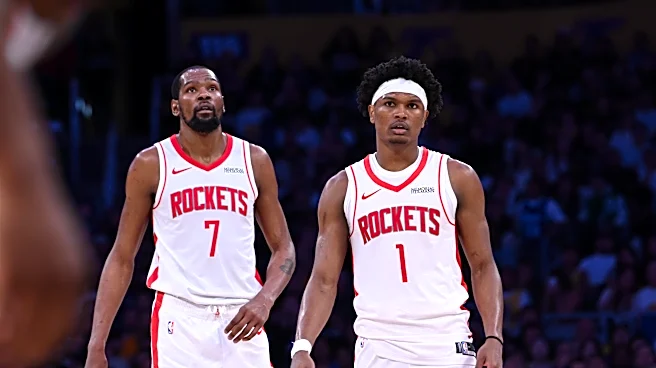
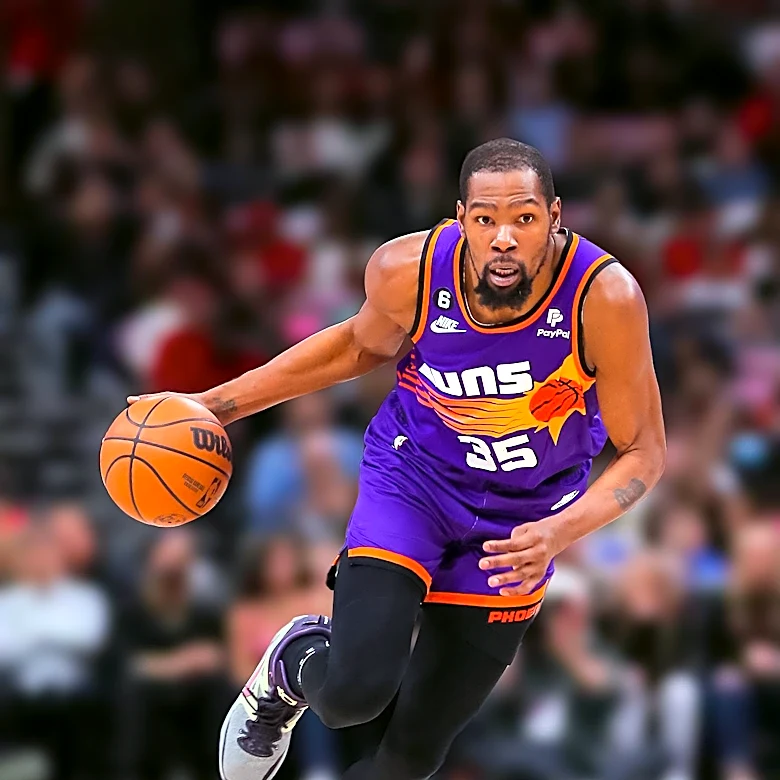
Last year, their 117.5 Offensive Rating was 8th in the NBA. Their 2024-25 114.9 rating was 12th. It turns out that replacing Dillon Brooks and Jalen Green with Kevin Durant will bolster your offense even in the absence of your starting point guard.
A system’s complexity shouldn’t be mistaken for its effectiveness. The Rockets’ playbook is bare-bones. We all know that offensive rebounding buoyed the team’s rating. Their 52.3% Effective Field Goal Percentage (eFG%) ranked 23rd.
Does it matter how the sausage is made? Well, it depends on what’s in the sausage. Put differently, it depends on whether we think an NBA offense can be largely carried by isolation reps and offensive rebounding.
Frankly, it probably can – with the right roster. Therein lies the issue. On a points per possession (PPP) basis, the Rockets’ best isolation player last year was 37. Durant’s 1.02 PPP landed in the 78.8th percentile. Alperen Sengun was in the 50.5th, and Amen Thompson in the 68.7th on lower volume.
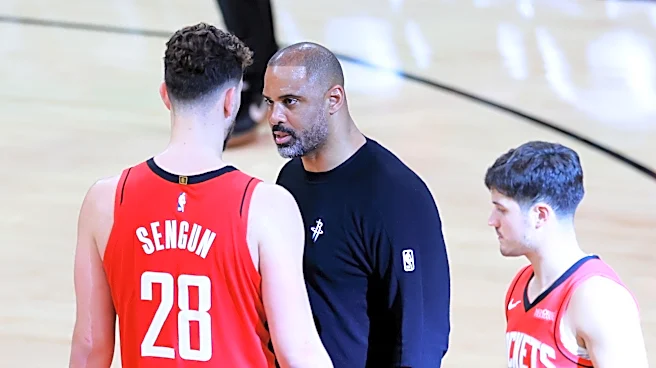
Out of all Lee’s stats, Assist Percentage feels like the most significant. The Rockets don’t care much for moving the ball. A more sophisticated system would leverage Sengun’s surplus positional playmaking to use motion to create open shots.
So, we arrive at a crossroads. The Rockets can reshape their roster in Udoka’s image, find a coach who’s going to build a system around Sengun and Thompson, or at least impose on Udoka (and/or his staff) to throw some wrinkles into the game plan).
This piece isn’t designed to advocate for either direction. It’s simply saying that building an offense around isolation and offensive rebounding isn’t going to work if you don’t have elite isolation players.
There’s no sense in crunching many numbers to come to that conclusion.