






Sometimes in history and folklore, players can be forgotten; their deeds and heroics faded in time, with no-one to tell of their contributions.
Others, legends as they become, have their names whispered and passed on in clippings, journals, biographies and ceremonies, sometimes creating a person larger than life.
Behind every statue standing outside a football stadium is a line of ghosts in ankle high brown boots. “I was as good as him you know,” they mutter — and one such player whose light still
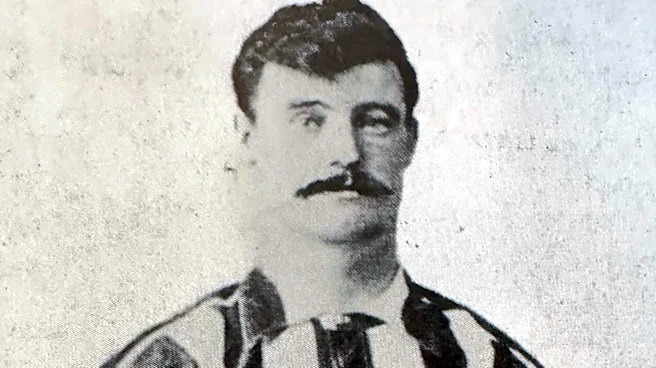
glimmers in the annals of history at Sunderland AFC is John Edward ‘Ned’ Doig.
By general consent, he should be counted amongst one of the game’s greatest keepers. Today marks 107 years since he was laid to rest, in Plot 1477 at Anfield Cemetery.
For many years, the plot was unmarked and unheralded; yet now, chiselled into the stone, is a gleaming plaque. Either side of his name are the crests of Sunderland AFC and Liverpool FC – above the inscription Scottish International Goalkeeper. Family and friends don’t forget.
Born in Letham, Forfarshire in Scotland on 29 October 1866, Doig started out as an outside right for junior side St Helena. But the desire to keep the ball out of the net soon took over, although his footwork would still come in handy.
He begged three beams from a shipyard, and made his own goal frame. Using a nautical rope, he attached a leather ball to the crossbar and would punch the ball so hard it would loop over twice.
Many adults would attempt this and could only manage one rotation, yet despite his relatively small frame for a keeper (5”9) his weight training and dedication to fitness made him a powerful, stocky athlete with an impressive physique — he could even thump the ball to teammates standing on the half way line.
Doig signed for Arbroath in 1885 as a youngster, and as the story goes, during one match they were without a goalkeeper and a wag in the crowd shouted “Let Ned Doig play!” The rest as they say, is history.
His powerful stature came in very useful during the Victorian era, when it was perfectly legitimate to barge and shove a goalkeeper.
In 1887, at the tender age of just twenty one, he received a telegram from the Scottish selectors and made his international debut during a 4-1 victory over Ireland. Partly because of his outfield talents, he was often putting his footwork to good use and acting almost as a sweeper, as is the modern day trend.
It wasn’t long before Doig was on the radars of some English clubs.
He actually first signed for Blackburn Rovers in 1889, only appearing once. Whether it was due to a disagreement or homesickness, he returned to Scotland before Sunderland came in for him in 1890.
In those days, the Black Cats were Scottish in all but location, so it was much easier for him to settle — sometimes things are just meant to be, and Sunderland and Doig were just meant to be, although there were initially some problems.
Doig was officially still a Blackburn player and this oversight led to Sunderland being docked two points — the first time such a punishment had been issued. Secondly, it had a knock-on effect for his international prospects, as the Scottish selectors looked dimly upon players moving south of the border to earn a “grubby living” in England.

The ‘team of all talents’, as it came to be known, only wanted the best, and Doig was certainly one of the best.
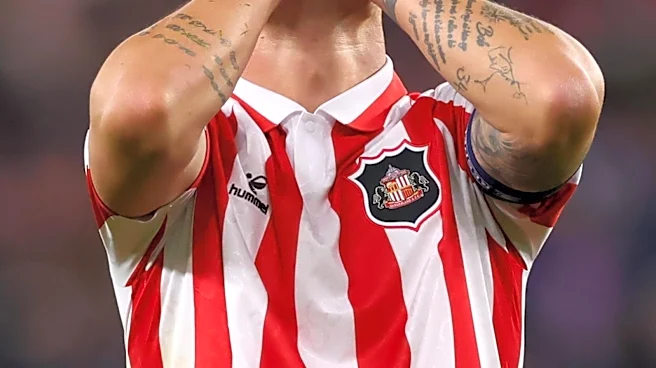
Contemporary match reports use adjectives such as ‘heroic’, ‘brilliance’, ‘cat-like’ or ‘daring’ to describe his performances. Four league titles and 456 appearances for the Lads tells its own story, and the fans dubbed him The Prince of Goalkeepers.
Another noteworthy point about the man is probably linked to his strength of character and fitness — during fourteen seasons on Wearside, seven of them were as an ever-present.
Former Sunderland boss Tom Watson took him to Liverpool in 1904, where he was also an ever-present in his first season, helping the Reds to become Second Division champions and adding a final medal to his collection of four League titles and four Scottish caps.
Of course, but for the policy of the time of not selecting players who had decided to play south of the border, that tally would undoubtedly have been so much higher. At the age of forty one, he is still Liverpool’s oldest ever player.
One apocryphal tale tells of his dislike of losing his hair and going bald (I can certainly relate to that). Doig would wear a cap and if it ever came off during a game, his first thought was to retrieve his cap rather than to go for the ball! Indeed, opposition players would try to rile him by knocking his hat off.
After Liverpool, he made one more move, playing for St Helens Recreationals for two years. He retired aged forty three and died in Liverpool in 1919, after being taken ill during the Spanish flu epidemic, at the age of fifty three.
One of the Sunderland legends, our Crown Prince of goalkeepers in the team of all talents. We will remember.