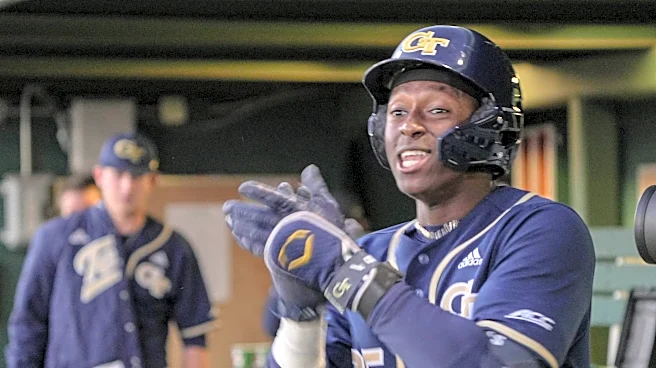





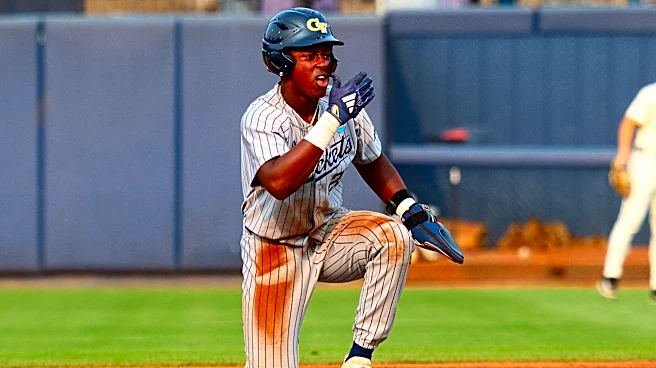



The White Sox kick off the 2026 MLB draft by making the No. 1 overall selection at noon CT on Saturday, and will choose among three plum prospects: UCLA shortstop Roch Cholowsky, Georgia Tech catcher Vahn Lackey and shortstop Grady Emerson from Fort Worth Christian (Texas) H.S. We’re digging deeper into all three players in anticipation of the third No. 1 overall pick in White Sox history.
Vahn Lackey wasn’t even close to being the favorite to go No. 1 when the spring began. Four months later, after
one of the best seasons in college baseball, the Georgia Tech catcher capped one of the biggest rises in the 2026 draft. That’s placed him on the White Sox radar, with word going around that he is the preference of the White Sox brain trust in the front office.
Chicago entered draft day linked to several legitimate candidates for the top pick, and bucking the shortstop trend and grabbing Lackey lands it on the player the team believes could make the biggest long-term impact at one of baseball’s most demanding positions. Lackey combines an advanced offensive approach, standout defense behind the plate and uncommon athleticism, giving Chicago another premium talent to build around.
Taking a catcher with the first overall pick isn’t a move organizations make lightly. But when teams identify the right one, the payoff can be enormous. That’s exactly how the White Sox see Lackey — a player capable of changing a franchise at one of baseball’s most valuable positions.
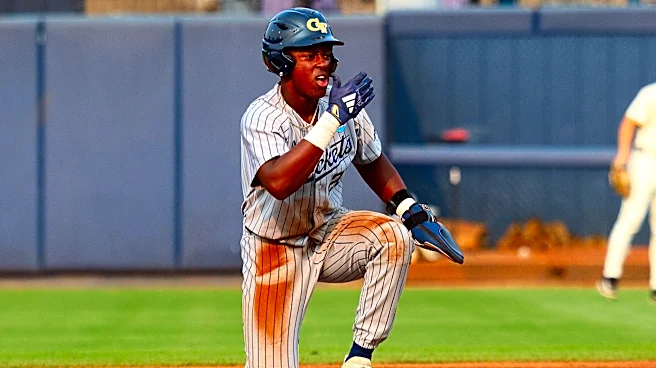
For an organization that has prioritized athleticism, premium defensive positions, and high baseball IQ throughout its rebuild, the selection would make perfect sense. The White Sox wouldn’t be drafting a mere catcher, but one of the best all-around athletes in the class. Despite spending his collegiate career behind the plate, many evaluators believe Lackey has the athleticism to play elsewhere if needed. To wit, he not only routinely fields balls throughout the infield flawlessly in pregame drills and shags flies in the outfield, but played all eight positions besides pitcher in a March 10 game against West Georgia. Oh, and he didn’t lay his bat down while picking a bunch of different fielding gloves up on that day, as he went 3-for-4 with a double, triple and homer in the win.
Lackey’s path to becoming the nation’s top catcher wasn’t a typical one. He didn’t receive his first Division I scholarship offer until his senior year of high school, after a late growth spurt transformed both his body and his long-term outlook. That development continued at Georgia Tech, where he had a mediocre freshman season but quickly established himself as one of college baseball’s premier backstops from there. By entering the draft after his junior season, Lackey will become the fifth Georgia Tech catcher selected in the first round.
The 6´2´´, 215-pound junior put together a remarkable 2026 season, slashing .397/.519/.772 with a 1.291 OPS, 20 home runs and 78 RBIs, with 50 walks against just 38 strikeouts. He’s also got the wheels of a middle infielder, swiping 15-of-16 bases in 2026 (and 34-of-38 in his college career).
What sets Lackey apart isn’t one standout trait — it’s the complete package. MLB Pipeline graded his hit, power, and arm as 60-grade tools, resulting in a 60 overall grade, and FanGraphs sees his cannon as a 70 grade. Lackey controls the strike zone, drives the baseball with authority and continues to add power without sacrificing the disciplined approach that made him one of the NCAA’s best hitters in 2026. If that profile sounds familiar, it should. It’s become the blueprint for the type of player GM Chris Getz and his front office have prioritized throughout the rebuild.
Defensively, Lackey has developed into one of college baseball’s premier catchers. He paired a .993 fielding percentage with Atlantic Coast Conference Defensive Player of the Year honors and the Johnny Bench Award for catching, while earning praise from scouts for his receiving, leadership, game management and above-average arm. It’s the type of defensive foundation the White Sox value as they continue shaping their roster.
Lackey would join an emerging young core that already includes Colson Montgomery, Kyle Teel, Braden Montgomery, Noah Schultz and Grant Taylor, giving Chicago another premium talent to build around. Despite the White Sox having two blue-chip catchers on the 40-man roster in Kyle Teel and Edgar Quero, the franchise doesn’t have a true defensive presence behind the plate and could well use a fast-moving Lackey in the majors ASAP.
Although Lackey is foregoing his senior season to begin his professional career, catchers traditionally require more development time than players at other positions because of the demands behind the plate. Even so, his advanced offensive approach, defensive polish and athleticism have some evaluators believing he could move through the White Sox system faster than the typical college catcher.
Lackey would arrive in Chicago with one of the most complete résumés in the 2026 draft class. If his all-around game translates to professional baseball, he could storm to the fore as the de facto captain of the next great White Sox team.