



There are landmark moments in the histories of baseball teams that signal the shift in the organization’s trajectory. Years of poorly-assembled starting rotations squandered the primes of Don Mattingly, Dave Winfield and Rickey Henderson, contributing to a 17-year World Series drought and multiples seasons of playoff-less baseball in the Bronx.
The 1990s brought a renewed focus on returning the franchise to respectability. The fab-five core of Derek Jeter, Mariano Rivera, Bernie Williams, Jorge Posada,
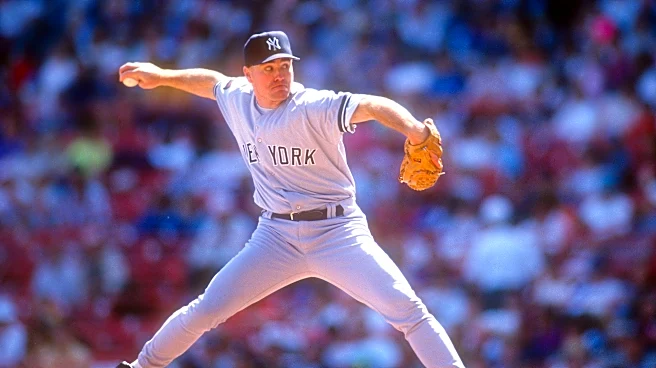
and Andy Pettitte were still several years away from truly stamping their mark on the major league team, but you could feel that the front office sensed a shift in the tides. They therefore looked toward the 1993 class of free agents and trade candidates to add several experienced veterans on the roster in advance of the arrival of the youth movement. Paul O’Neill and Wade Boggs joined on the position player side, but it was the arrival of starting pitcher Jimmy Key who truly signaled the opening of a new era.
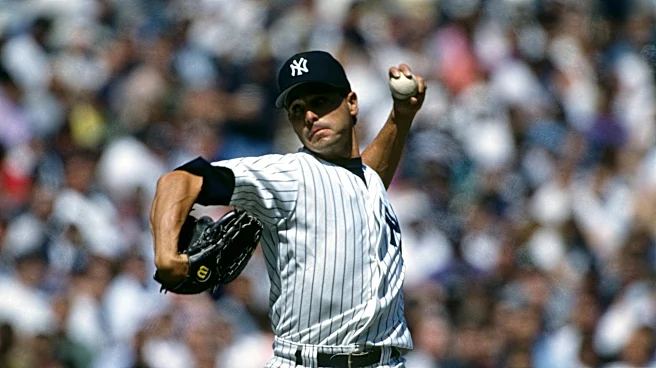
James Edward “Jimmy” Key
Born: April 22, 1961 (Huntsville, AL)
Yankees Tenure: 1993-96
James Edward “Jimmy” Key was born April 22, 1961, in Huntsville, Alabama to Carol — a 30-year employee for NASA — and Ray Key, a US Army Engineer for 35 years. He inherited his father’s avid baseball fandom, and by high school he was the ace of the pitching staff. As a senior, Key went 10-0 with nine shutouts and a 0.30 ERA while also batting .410 with 11 home runs and 35 RBI as the team’s DH.
Though the White Sox selected Key in the 10th round of the 1979 amateur draft, Key honored his commitment to play for National College Baseball Hall of Fame coach Bill Wilhelm at Clemson University. As a sophomore, Key pitched seven complete games and logged a 2.79 ERA while also batting .359 with a then-school record 21 doubles along with four home runs, 49 RBI, and eight stolen bases to become the first Clemson player to be receive All-ACC first-team honors at two positions: pitcher and DH.
This performance earned him a much higher draft position, the Blue Jays selecting him in the third round of the 1982 amateur draft, one round after they selected David Wells. After just two seasons in the minors, Key was handed his major league debut on on April 6, 1984, after breaking spring camp with the major league team — 3.1 innings of scoreless relief to close out an 11-5 victory over the Angels.
Despite finishing the year with a 4.65 ERA in 63 appearances, Key did enough in the eyes of manager Bobby Cox to earn a spot in the starting rotation. There, he joined a unit led by veterans Dave Steib and Doyle Alexander — the perfect environment for a young pitcher to gain experience. In that debut season as a starter, Key went 14-6 in 32 starts, with a 3.00 ERA (141 ERA+) and 85 strikeouts in 212.2 innings to earn the first of his five All-Star selections. The season ended on a sour note, however, as Key gave up five runs on 15 hits across his Game 2 and Game 5 starts in the ALCS, the Blue Jays squandering a 3-1 lead in the series to the eventual World Series champion Royals.
After a decent showing in 1986, Key authored his best season in the big leagues. He went 17-8 in 36 starts, striking out 161 and posting 5.6 fWAR in 261 innings while posting the best ERA (2.76 ERA (164 ERA+)) and WHIP (1.057) in the majors to finish runner-up in AL Cy Young voting behind Roger Clemens. The effort would prove for naught, Toronto suffering a seven game losing streak to narrowly miss out on the playoffs.
Key remained consistent over the next five seasons, making his second postseason appearance in 1989. His second All-Star nod came in 1991, Key going 16-12 in 33 starts with a 3.05 ERA (139 ERA+), 125 strikeouts, and 5.3 fWAR in 209.1 innings. Toronto won its third AL East crown, but Key gave up two runs in Game 3 of the ALCS, the Blue Jays losing, 3-2, in extras and getting eliminated by the eventual World Series champion Twins.
Tired of narrowly missing out on a Fall Classic appearance, the Blue Jays were aggressive that offseason and Trade Deadline, adding World Series winners Jack Morris and David Cone to form a formidable postseason rotation. Key made just one relief appearance in the ALCS, but Toronto advanced to the World Series in six games over the A’s to face the Braves. Key out-dueled Tom Glavine — winner of the previous year’s NL Cy Young Award — in Game 4, twirling 7.2 innings of one-run ball to put his team on the cusp of its first World Series title. After the Braves stayed alive with a Game 5 victory, Key completed a scoreless tenth inning to become the pitcher of record in Game 6, Winfield’s two-run double in the 11th making Key the winning pitcher of the Blue Jays’ first championship.
These gutsy performances by Key caught the attention of George Steinbrenner, determined after years of mediocrity to restore the Yankees to respectability. He missed out on his top targets — Barry Bonds spurning New York for San Francisco, Greg Maddux taking a $6 million discount to pitch for Atlanta, and Cone returning to Kansas City. Steinbrenner had to pivot, and on the advice of general manager Gene “Stick” Michael, made an offer of four years and $16 million to Key. New York’s offer was an improvement on Toronto’s strict policy of never offering more than three years to a pitcher, and after Key requested an extra $1 million in the third year of his contract, the deal was finalized on December 10, 1992.
“Michael called Key, ‘The best control pitcher in the game. When you think about an artist painting a picture or a genius on the mound, he is it. Obviously, he’s smarter than the hitters’”
His debut season in pinstripes was his best on an individual basis, Key establishing himself as the ace of Buck Showalter’s staff by going 18-6 in 34 starts with a 3.00 ERA (139 ERA+), 5.2 fWAR, and AL-best marks in walks per nine (1.6) and strikeout-to-walk ratio (173:43) across 236.2 innings — good for a third All-Star appearance and fourth place finish in AL Cy Young voting. The only downside was that, after a second-place finish, he had to watch his old team become the first franchise to secure consecutive World Series titles since the 1977-78 Yankees.
He followed it up with more of the same in 1994, pitching to a 3.27 ERA (140 ERA+) with 97 strikeouts, 4.0 fWAR, and an AL-best 25 starts, 17 wins and 0.5 home runs per nine in 168 innings to finish runner-up again for the AL Cy Young — this time behind Cone — and sixth in the AL MVP race. However, the next 12 months were full adversity, the Yankees first missing out on their best shot at a World Series appearance under Mattingly’s captaincy and Key making just five starts in 1995 before his season was ended by left rotator cuff surgery.
Key returned from his fourth major arm injury and had to take over as veteran leader of the staff after Cone’s season was cut short by an emergency surgery to remove a right arm aneurysm. He was so-so on the mound — 12-11 with a 4.68 ERA (107 ERA+) in 30 starts totaling 169.1 innings — but far more important in the clubhouse, mentoring a young Pettitte on his pickoff move. Powered by their young, explosive offense, the Yankees won 92 games to secure their first division title in 15 years.
In Game 3 of the ALDS against the Rangers, Key dueled with Darren Oliver, tossing five innings of two-run ball as his offense rallied in the ninth to take a 2-1 series lead. His next appearance was against the Orioles in Game 3 of the ALCS with the series knotted at a game apiece. Squaring off against the AL’s best pitcher in Mike Mussina, Key completed eight innings allowing two runs on two hits to stake his team a 2-1 lead, New York going on to sweep Baltimore in the three games at Camden to advance to their first World Series since 1978.
It would be a different test against the juggernaut Braves in the Fall Classic. After getting blasted in Game 1, 12-1, Key coughed up four runs on ten hits in six innings in Game 2 while Maddux twirled eight shutout innings to seemingly put the Bombers in an unsurmountable hole, down 0-2, with the next three games in Atlanta. The Bombers somehow rallied to win all three games, setting up Key’s seminal moment in pinstripes and indeed his entire 15-year career.
Handed the ball for the potentially decisive Game 6, Key opened the game with three scoreless innings before facing a huge jam in the fourth. However, he got Terry Pendleton to roll over an inning-ending double play to leave the bases loaded. Key made it into the sixth inning with a 3-1 lead intact, Torre then calling on David Weathers, Graeme Lloyd, Mariano Rivera, and John Wetteland to toss a scoreless final 3.2 innings to secure the Yankees’ 23rd World Series title.
Upon the expiry of his Yankees contract, Key signed a two-year deal with the Orioles, with whom he would go 22-13 with a 3.64 ERA (122 ERA+) in 59 appearances (45 starts) totaling 291.2 innings. He came within two games of returning to the World Series in his first season while arm injuries limited him to 79.1 innings in 1998, convincing the 37-year-old southpaw to hang up his cleats.
Key was by no means the splashiest addition to nor the best pitcher on the Yankees squads of the mid-90s. However, his arrival signaled the dawning of an era that would blossom into a dynasty. His professionalism, routine, and precision pitching set an invaluable example for a team full of young players. He may have only been around for the first of an eventual trio of titles, but his legacy remains as one of the foundational pieces needed to launch that dynasty.
References
Jimmy Key. Baseball-Reference.
Jimmy Key. Baseball Almanac.
Addis, Sean. “Jimmy Key.” SABR.
Curry, Jack. “Yankees Finally Get it Right and Land a Lefty.” New York Times, December 11, 1992.
Curry, Jack. “Jimmy and Cindy Key Are Co-Stars in ‘Honey, I Blew Up Your Salary’.” New York Times, January 24, 1993.
Curry, Jack. “Jimmy Key: The Man in Control.” New York Times, June 26, 1994.
Heyman, Jon. “While Key Pitches, His Wife Controls Money in Family.” Los Angeles Times, August 4, 1993.
See more of the “Yankees Birthday of the Day” series here.