




Going into the series against the Sixers, the Celtics had to wait to see which coverage Nick Nurse would pick on ball-screen actions. As most modern basketball plays start with a screen for the ball-handler, the chosen coverage tells a lot about a team’s philosophy and its capabilities.
If Joël Embiid was healthy (so a pretty big if), the Sixers would probably have been in drop coverage, with the former MVP staying low under the screen, waiting for the Celtics to attempt a drive or forcing them into
pull-ups. But, as often, the big man from Cameroon is out. Nurse has to make do with either Adem Bona, Andre Drummond, or sometimes Dominick Barlow.
With these bigs, it makes less sense to go for drop coverage, as their rim protection isn’t elite. Plus, they are a little more mobile than Embiid, offering an opportunity to switch and try to contain the ball-handler, or hedge and apply pressure. With Nurse being an adept of aggressive coverages and defensive playmaking, it was somewhat expected to see a hedge coverage… and the Celtics totally exposed it.

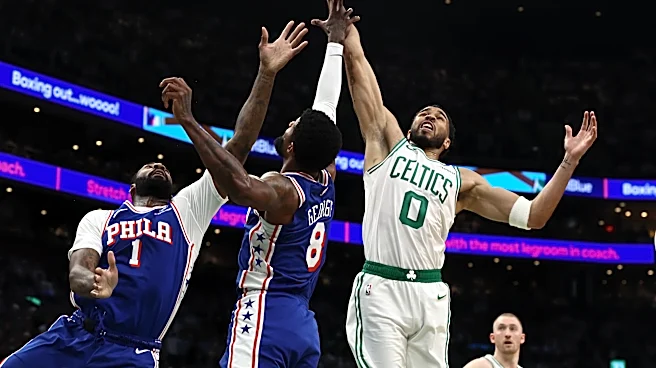
With this approach, the Sixers wanted to force the ball out of Tatum’s hands and also create some chaos in the Celtics’ offense. However, JT has improved so much as a playmaker that he has learned how to deal with these coverages.
On this first example with Neemias Queta, he finds him on the short roll around the free-throw line, as he expects him to be free from his matchup. Because of his size and basketball IQ, this coverage doesn’t work if nobody comes to tag the roll man, like here.
However, basketball is like an onion and has many layers. So what happens if the Sixers tag the roll man (here Nikola Vucevic) when executing a hedge coverage? To do so, you need a third defender, who will have to leave his man open for a second to contain the roll. This takes away the paint but creates an open shot beyond the line. Here, for one of the best shooters alive, Sam Hauser.
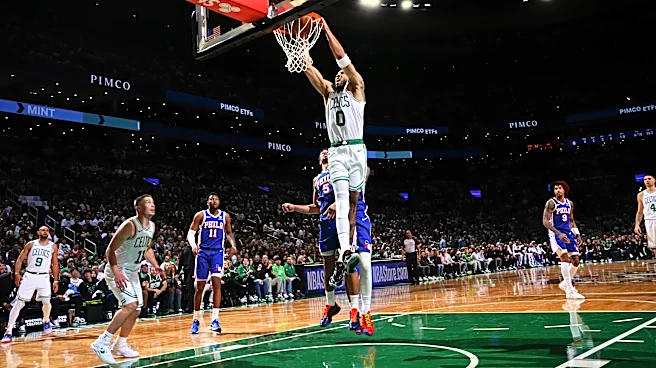
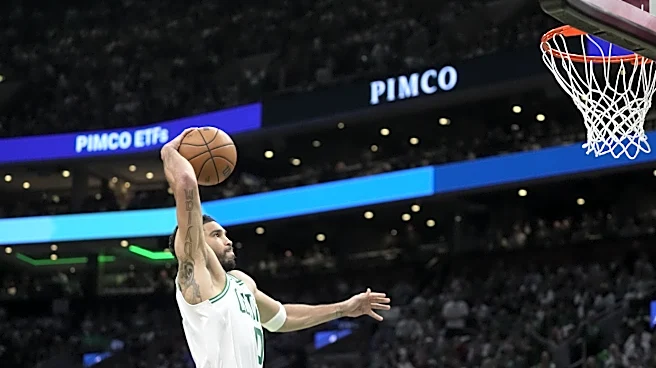
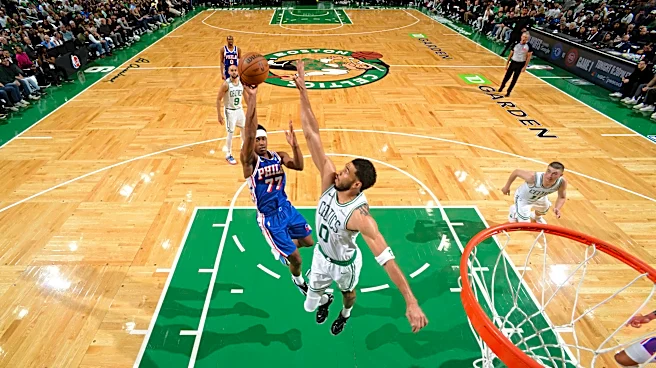
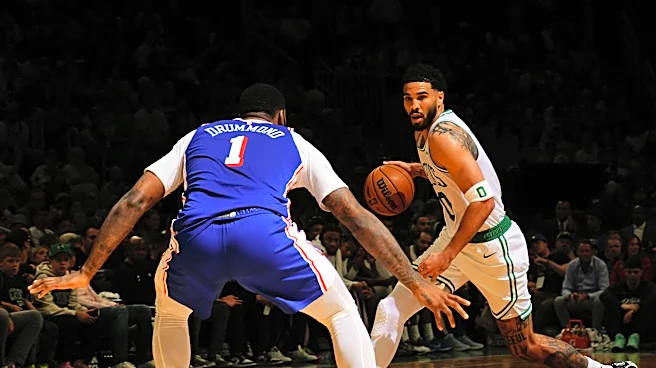
While this approach makes Jayson Tatum’s passing shine, at least it takes away his scoring. At least a little. On this next play, Barlow is too slow to step up on the ball screen and leaves space between him and the screener. JT’s handle is sharp enough to split the defense as he crosses in front of the defender and finishes at the rim. This is a great example of why the Sixers coaching staff would rather put two on the ball so these drives don’t happen.
The other limitation of this coverage is how much the screener’s defender can anticipate the ball direction. Here, Drummond is getting ready for Jaylen Brown to go left and commits to that play too early. JB sees it, rejects the screen, and can drive with his right hand into an open paint. Bad coverage and bad execution.
Once everybody saw how bad the Sixers were at hedging the pick-and-roll, it became a playground for the Celtics’ offense. Here, Payton Pritchard beats it himself with patience, great vision, and good timing to find Queta alone below the rim, as Drummond is once again behind the play.
This coverage is also going poorly due to the elite spacing that the Celtics have. On this play, with Derrick White as the ball-handler, the secondary rim protector and low man is supposed to be Paul George. However, PG is forced to choose between protecting the paint or covering Hauser in the corner—an impossible decision leading to another shot at the rim.
Overall, the Celtics had elite rim efficiency, and it was largely due to poorly chosen and executed coverages. Now, the Sixers have a couple of days to adjust their approach to slow down the Celtics’ avalanche.