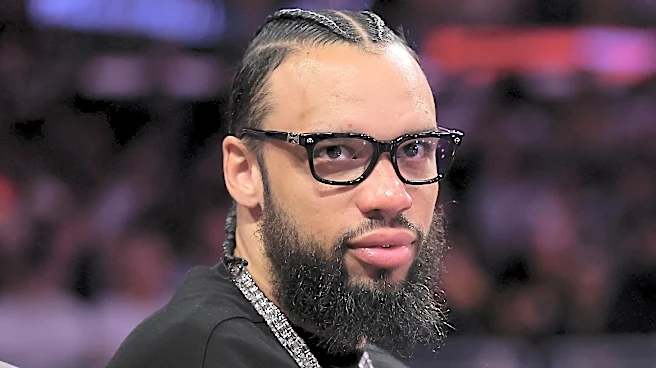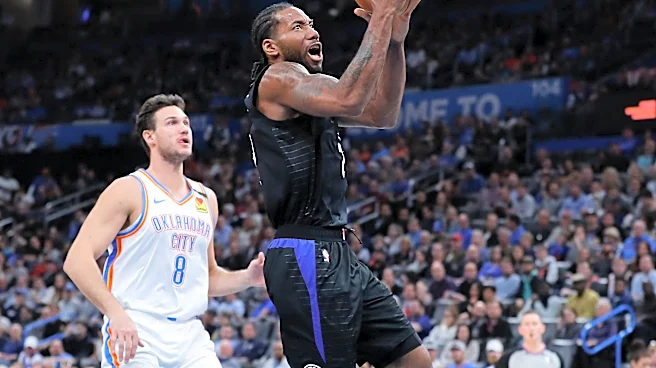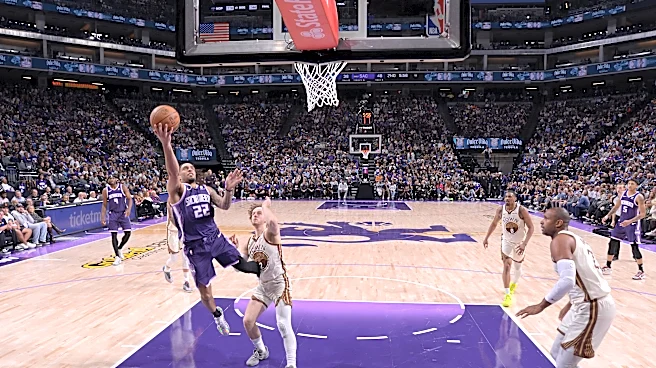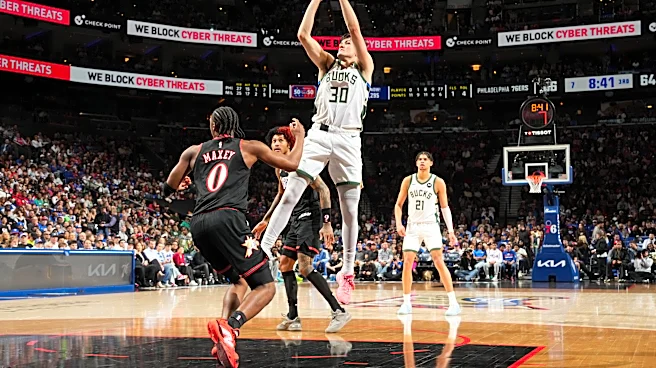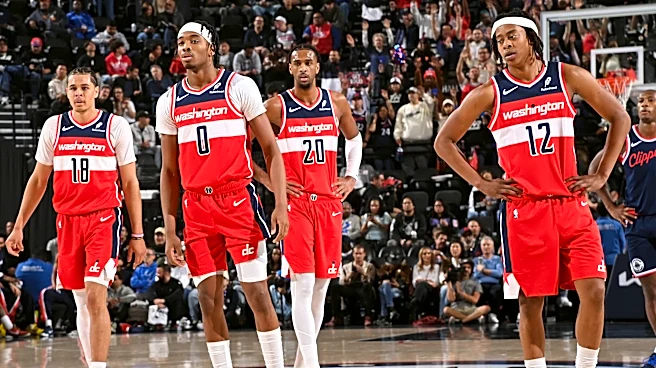


When the Washington Wizards started their rebuild in 2023, rotation debates centered around Deni Avdija versus Corey Kispert for a starting spot and whether Mike Muscala or Danilo Gallinari would back up Daniel Gafford.
Three years later, Bilal Coulibaly is the lone holdover from a roster that’s undergone a complete overhaul. Washington’s new-look squad of talented veterans and ascending young players presents head coach Brian Keefe with several questions surrounding his starting lineup and rotation.
But considering the team’s 50-196 record since the start of the 2023-24 season, Keefe’s dilemma is one Washington appreciates the ability to solve.
While Keefe hasn’t formally spoken on his 2026-27 rotation, an educated guess would tab Trae Young, Anthony Davis and Alex Sarr as likely starters when Washington opens against the Milwaukee Bucks on Oct. 21.
AJ Dybantsa, the team’s No. 1 selection in June’s draft who general manager Will Dawkins hinted could play both shooting guard and small forward, likely slots into one of the openings. That leaves three players — Kyshawn George, Bilal Coulibaly and Tre Johnson — vying for one starting spot.
Each player boasts a compelling case. The decision comes down to what Keefe values most: elite defense, knockdown shooting, or the best combination of both.
Bilal Coulibaly
Over the last two seasons, Coulibaly has started all 115 games he’s played in.
The French wing is the team’s best perimeter defender. His 86.5-inch wingspan, which ranks in the 99th percentile among NBA guards, allows him to disrupt passing lanes and deny shots. His 1.3 steals, 1.0 blocks and 3.1 deflections per game all ranked in the 90th percentile or better at his position last season.
Coulibaly’s ability to defend the opponent’s top offensive threat could best complement Young, whose elite offensive production often overshadows his lackluster defense.
As the primary defender, Coulibaly held Giannis Antetokounmpo to just seven points on 2-for-7 shooting in Washington’s 129-126 win over the Milwaukee Bucks last December. For reference, Antetokounmpo scored 19 points on 8-for-10 shooting against all other defenders.
(Video via Youtube.com/Byvarunshankar)
Coulibaly’s 41.4% 3-point clip in five games alongside Young provides some additional promise.
But the sample size next to Young — just 29 3-point attempts — is small compared to a relatively poor body of work. Coulibaly is a career 31% 3-point shooter whose inconsistent jumper presents potential spacing issues when paired with other non-shooters like Davis (27% 3PT), Sarr (33.3% 3PT) and Dybantsa (33.1% 3PT).
If Coulibaly outduels George and Johnson, Washington’s starters wouldn’t include a single player who shot over 34% 3PT last season.
Does Coulibaly’s defense outweigh his offensive limitations and the spacing issues those might bring? That’s a question for Keefe to assess and eventually answer.
Tre Johnson
Johnson is a lethal outside jumpshooter who struggles on defense. He’s essentially the opposite of Coulibaly.
The 6-foot-5 guard shot nearly 40% from three before a hip injury sidelined him in November. His percentage dipped after that setback and further dropped following a January ankle injury. He finished his rookie season at 35.8% 3PT.
Johnson’s jumper would solve Washington’s spacing issues. But his 125.7 defensive rating, which would’ve ranked dead last in the NBA if he played enough games to qualify, suggests a vulnerable defensive backcourt between him and Young.
Alex Sarr defended the most rim attempts per game last season in part because Washington’s poor perimeter defense funneled many drives into their 7-foot center. A starting backcourt of Young and Johnson wouldn’t necessarily solve that problem — if anything, it could worsen it.
While starting Johnson remains possible, it wouldn’t align with the franchise’s goal of overhauling one of the league’s worst defensive units. Starting Coulibaly or George better supports that objective.
Kyshawn George
George is the perfect middle ground.
The third-year wing offers the best combination of size (6-foot-8), shooting (38.1% 3PT), offensive creation (4.5 assists per game), and defensive ability (1.9 stocks per game) among this trio. And unlike the other candidates, George’s game doesn’t include a major deficiency.
After an offseason of growth — in both strength and skills — George’s physical defense holds up against guards, forwards and possibly some smaller centers. He offers the defensive versatility that Wizards general manager Will Dawkins preaches.
His 42.8% clip on catch-and-shoot threes last season showed he can space the floor. In a lineup with Young, one of the league’s prolific passers, that percentage could solve potential spacing issues.
The argument against starting George centers around a few things, none of which are indictments of his game. One of those arguments: George’s on-ball play was so promising last season that bringing him off the bench to run the second unit makes more sense.
According to databallr.com, George created 25.4 points per game last season. While impressive, his 2.6 turnovers per contest showcased room for growth in both court vision and decision-making.
Washington’s lack of a true backup point guard has opened the door for George to assume similar offensive creation responsibilities, which might overlap with Young if deployed in the same lineups.
But after acquiring Tre Mann to presumably compete with Bub Carrington for the backup point guard role, George’s on-ball duties no longer appear as vital to the second unit’s success as some previously imagined.
The decision
Keefe’s philosophy will show through this choice.
Are Washington’s spacing or defense concerns so great that it warrants leaving the team vulnerable on one of those ends? Or are those holes so vast that a partial fix to both is better than completely solving one?
The former favors Coulibaly and Johnson. The latter sides with George.
Keefe’s decision looms as training camp approaches.