


For those who went into this week hoping to be greeted by a slew of transfer rumours and advancements, I’d imagine Monday, Tuesday, Wednesday and Thursday marked yet more disappointing days.
Over the last week or so, much has been made of Sunderland’s incoming transfer activity, or rather the lack thereof. As debate has ignited, it’s clear that nobody is particularly in the wrong on either side of the argument.
By now, many would have assumed that, after a previous summer of revolution at Sunderland,
the club would fully embrace their European standing and, by this stage of the summer, would have added at least two or three of Europe’s latest up-and-comers to the summer’s solitary signing, Thomas Meunier. Of course, this has not been forthcoming, and with the departures of both Eliezer Mayenda and Lutsharel Geertruida from the first team, amid a slew of others from the fringes, some fans may well deduce that Sunderland’s squad, as it stands, is weaker than that which finished last season with such flourish.
Sunday’s news tidbit that the club are seemingly happy to proceed with Alan Browne as a midfield option, whilst making sense in some cases, has sufficed to keep pulse rates at a low.
But why is this the case? After all, last summer showed how proficient Sunderland can be in the global transfer market and, aligned with their now European pull, should the club not be doing and have done more? For those answers, see below.

The first and most obvious issue is Sunderland now being between a bit of a rock and a hard place – almost victims of their own success. The model that has brought Sunderland to this point is a model the club are very clearly wedded to, with the proposition of leaving that model behind a daunting one. Those at the club will point to the success of that model and the absolute dedication from the club to stay as true to that as possible.
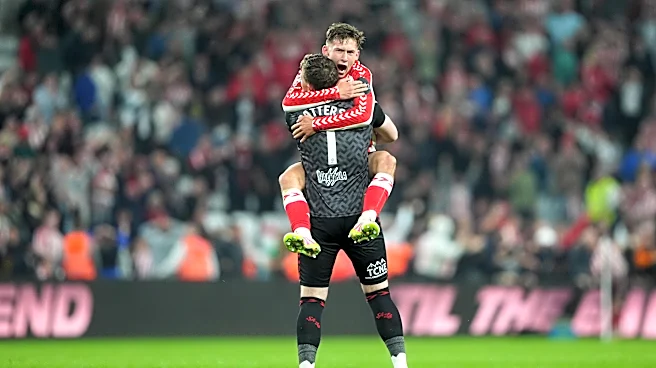
The issues come when stepping up the quality of recruit (that isn’t to say last season’s recruits weren’t objectively quality). Sunderland are now shopping in a market where some of Europe’s biggest clubs are also perusing and, with that, comes a price tag. This isn’t a case of Sunderland not being able to afford it, and even less so when the sale of Anthony Patterson will take the club past generating £30m in sales from fringe players, but from the club perhaps being unwilling to be eyeballed or placed into bidding wars where the model that has served them so well must fall by the wayside, just to pay above the clubs’ valuations.
Of course, this is nothing new in football and many other clubs will be falling foul of similar permutations, but it is clear that maybe more than most, Sunderland are willing to keep their powder dry to be, as Régis Le Bris put it, “precise” with the players they target and therefore acquire.

This issue leads neatly into the next – the inflated market. I’m very much a “yer da” now, so I can’t profess to know of every up-and-comer from all four corners of Europe and beyond, but a cursory glance over some of the transfer dealings conducted already this season shows just how inflated the current market is, another factor undoubtedly slowing Sunderland down.
Again, this is completely understandable, as clubs race to sign their targets, income across Europe will have to be generated and, short of paying inflated prices early in the window, it seems many Premier League clubs are happy to sit on their hands so as not to overpay on talent, especially in the dawn of the SCR era.
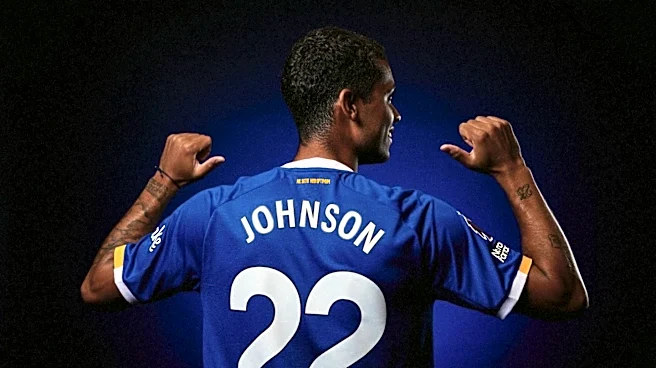
This is no criticism of these players, but when Shea Charles (~£30m), Anthony Gordon (~£75m), Elliot Anderson (~£116m) and Morgan Rogers (~£117m) are moving for exorbitant fees, it clearly shows where the market is at and the SCR shapes perils ahead should a transfer not meet the expectations their transfer fees would suggest. Brennan Johnson’s recent swap deal to Everton in return for Dwight McNeil serves as the first cautionary tale of this particular financial window.
The third and perhaps final reason for this lack of activity is staring us in the face.

Whilst not one to get overly pent up about World Cup or pre-season performances, it is somewhat a folly to ignore the improvement made by a host of last season’s recruits. Whilst still raw, we are only a month or so removed from Nilson Angulo putting German defenders in a spin cycle akin to being on a Waltzer for a solid hour; Chemsdine Talbi has also returned looking a more direct and confident player, and that’s before we touch on Diarra rebuilding his match fitness and sharpness, as well as Chris Rigg’s continual transformation.
Therefore, it isn’t beyond the realms of possibility that Sunderland are not drawn into the market in certain areas not because they do not want to, but maybe more through a sense of not needing to. This taps neatly into the overarching model, in which buying players for relatively cheap is only half the story, with developing that talent to reach their full potential being the other.
It is clear on the evidence so far that many players have progressed as a result of this and, with more minutes inevitably on offer next season, Sunderland’s lack of activity may be for good reason.
Overall, there is no need to panic, and the assumption remains that at least a handful of players will be brought in through the door. Whilst the potential transfers of Geny Catamo and Dayann Methalie remain unusually protracted, it is maybe overlooked that the club are not being drawn into being panicked by both market forces and the bargaining tactics of European sides well versed in dealing with clubs similar to Sunderland in position or stature. Perhaps this is due to the feeling within the club being one of self-respect and quiet confidence in what we are doing, and regardless of whether fans think the approach is correct or otherwise, staying true to the values that brought us so far should be understood and commended by all.