

Last offseason, the NFL considered banning a play made famous by the Super Bowl champions: the Tush Push. The measure was hotly debated both by team owners and in the press, and banning the play gained support among owners despite loud opposition from fans. Twenty-two owners voted to ban the play, enough for a majority but two votes shy of the threshold needed for adoption. The play stayed.
One year later, after a season filled with controversial instances of the play, the proposal to ban it was nowhere
to be found in the league’s rule change discussions.
A change in the balance between risk and reward may be behind the shift.
Last offseason, NFL owners stated that injury risk was their motivation to ban the play. This confused fans, largely because owners could provide no proof of an increased risk.
I think it is worth exploring why owners may have been concerned about an injury risk despite the data. To do so, we must look at three aspects of the play: the force of the players involved, the value of the players involved, and the chance for the play to be successful.
Let’s start with the force.
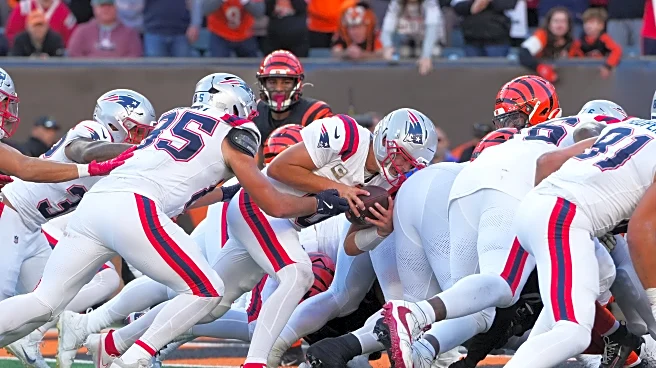
In most running plays in football, the schematic goal of the play is simple: the offense’s heavy players try to move the defense’s heavy players out of the way so that someone fast can run through the gap. The Tush Push inverts this. The goal is for the offense’s heavy players to get behind the person with the ball to push them through the defense’s heavy players. In most plays, force is relatively isolated; it is the strength of one or two players on one side against the strength of one or two on the other. In the Tush Push, it involves the combined strength of ten offensive players against the combined strength of eleven defensive players, all through one ball carrier used as a pawn in the middle who is also trying to generate some force of their own.
As a result, the amount of force applied to the ball carrier from both directions is abnormal in the sport. And while there was no pattern of injuries on the play, the amount of force involved creates risk that any injury could quickly become severe.
Unlike most running plays in football, the Tush Push typically features the quarterback, not the running back, as the ball carrier. Quarterbacks are longer and less muscular athletes, making them susceptible to being bent in odd directions. More importantly, they are each team’s most valuable asset, their ticket to relevance.
If your team is going to run the Tush Push, you have to be willing to put your most valuable and irreplaceable player in the middle of a pile featuring the strongest players on each team pushing as hard as they can. This player is one who is not accustomed to facing this level of physicality in most games, and being pushed in the back or shoulder at the wrong angle could ruin their season, if not career. An injury to a star quarterback is the kind that can alter the direction of a franchise.
If you’re an owner of a team that just guaranteed $100 million to the player that puts your team in primetime games, sells jerseys, and gets you to the playoffs, I think it is easy to see why you would not want to put them in that pile regardless of what any past injury data says. You don’t want to be the one team that gets unlucky.
Now of course, there’s an easy solution here: if you aren’t comfortable with the risk, don’t use the play! That’s where the success rate comes in.
As of September of 2025, the Philadelphia Eagles had converted on 96.6% of 4th downs when using a Tush Push. At that conversion rate, the Eagles were effectively starting each set of downs with a 1st and 9. That is a sizeable advantage to say the least.
If other teams were able to replicate that, it set up a tough decision for teams. Either you can subject your franchise player to what may be a substantial injury risk, or you can allow opponents to play with a yard of advantage on each set of downs.
The advantage of the Tush Push is just too good to pass up on, even with the possible injury risk. But few owners were happy with a balance of risk and reward that put their best assets in harm’s way that often just to maintain competitive balance.
And yet, one year later, there is no proposal to ban the play that more than two-thirds of owners wanted to do away with a year ago. What gives?
Let’s walk through all three aspects of the risk-reward profile, updated with what happened in 2025.
The first concern was simple: it was only a matter of time before someone suffered a serious injury running the play. The NFL went the entire 2025 season without a ball carrier being injured on the play with increased adoption of the play across the league. As the sample size of usage increases, hypothetical concerns about injury risk have failed to present themselves in the results.
As for the second concern, player value: many teams have found a simple hack to get around this. According to tushpush.fyi, four different teams got around the issue of putting their franchise quarterback into the pile by using a tight end instead. Seattle’s A.J. Barner, Pittsburgh’s Connor Heyward, Houston’s Cade Stover, and Baltimore’s Mark Andrews combined for 32 Tush Push attempts in 2025, representing 28.1% of attempts across the league. They converted 25 of them for a 78.1% conversion rate.
The third aspect here may be the most important, however: teams got worse at it. Including pre-snap penalties, the success rate of the play dropped from 80.9% in 2024 to 73.8% in 2025. The play simply wasn’t automatic anymore, especially for the team that created the play. Philadelphia’s success rate dropped to 64% last season.
The drop is even more pronounced on 4th downs. Teams converted on all 23 4th down attempts in 2024. They converted on just 32 of 42 4th down attempts in 2025, good for a rate of just 76.2%.
Data through 2024 suggested that teams may be forced to put franchise quarterbacks into dangerous situations as to not be at a serious competitive disadvantage compared to opponents. Another year showed that the play really isn’t that dangerous, that you don’t have to use your quarterback to be successful with it, and that the advantage just isn’t as big as we thought.
There are still arguments against the play. A new development in 2025 involved controversy in how the play was officiated, with uncalled false starts, players not lined up correctly, and the questionable use of forward progress all drawing ire of the fans. And there’s the history of the play: for most of the history of the sport, assisting a runner from behind was illegal. This play is truly an invention of the 21st century, and whether or not pushing a runner from behind is a “football play” to you will vary.
For owners, it appears that these concerns are not that significant. To them, it’s about protecting their investments in their quarterbacks. Another year of the play showed that you can protect them and not be at a disadvantage on the field relative to the rest of the league, which seems like it was all they needed to see.