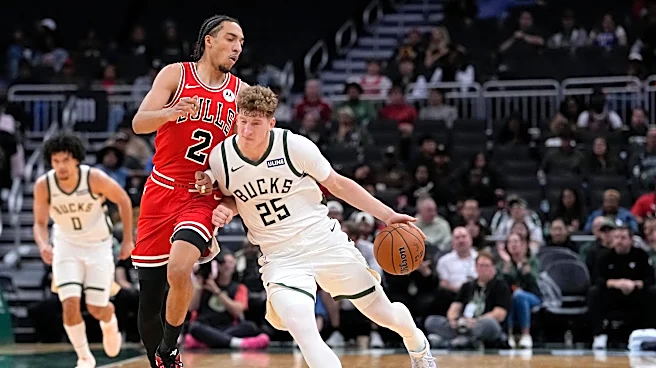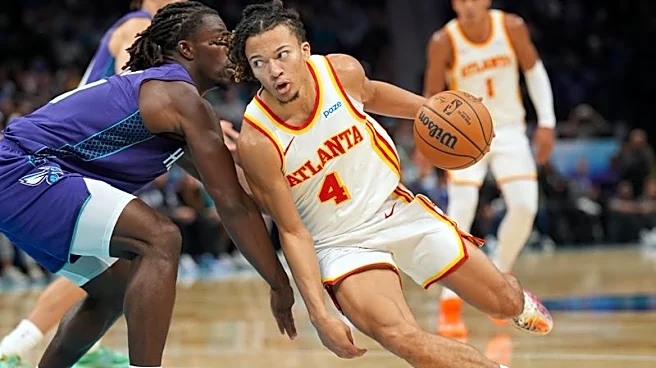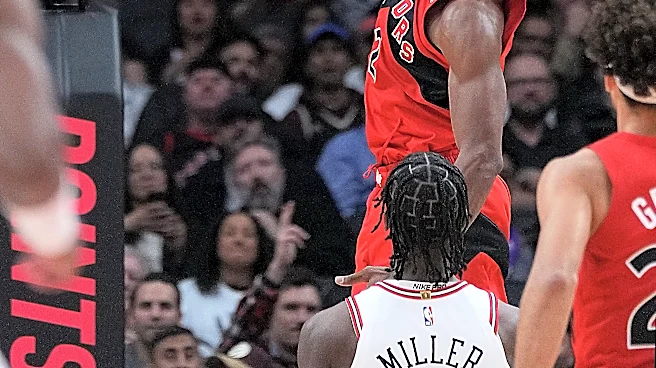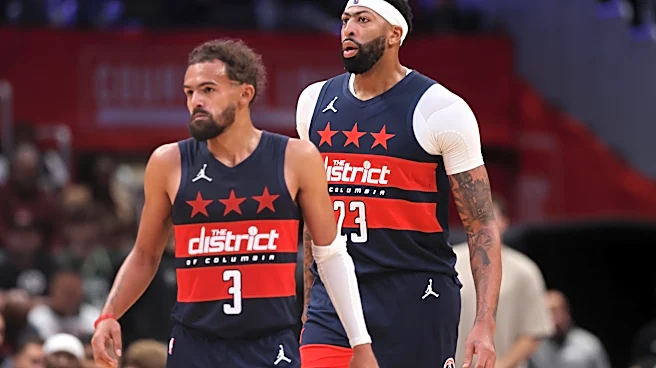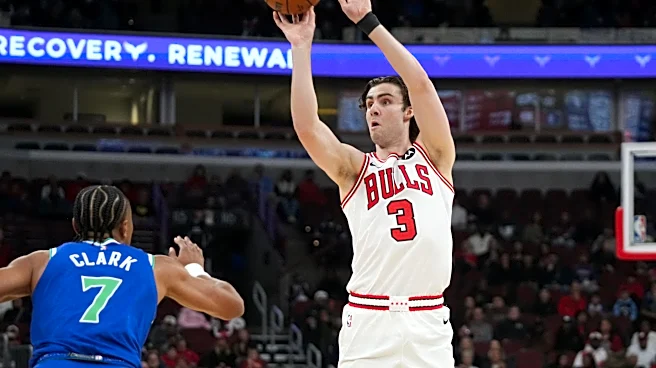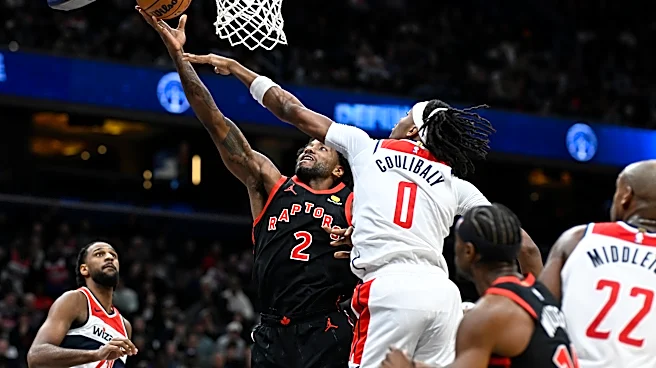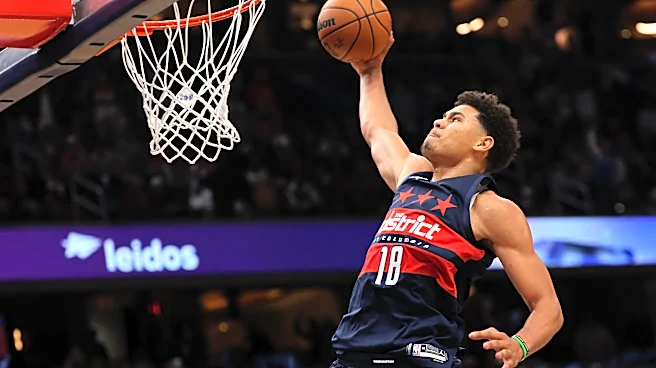

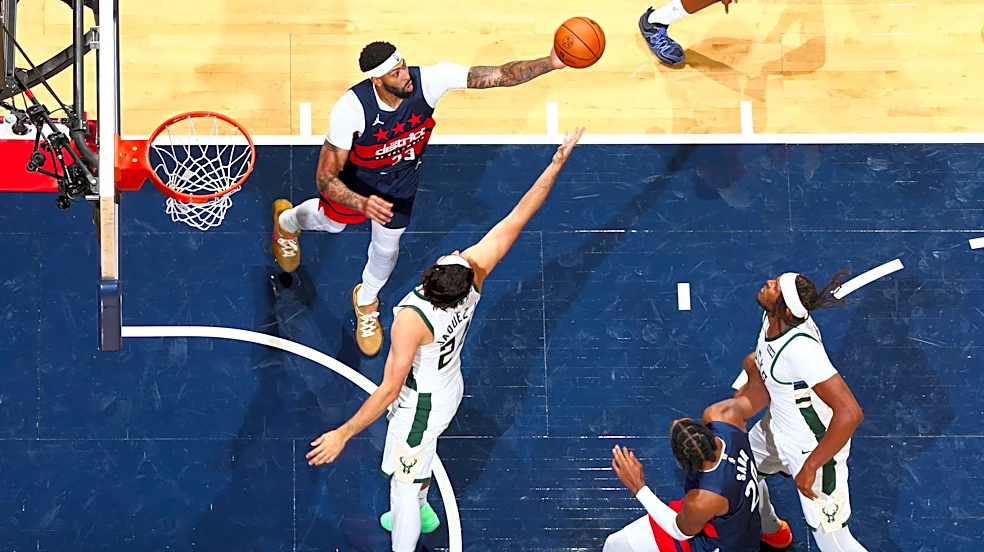

The game turned out to be more of an adventure than seemed likely when the Wizards took a 21-point lead early in the fourth quarter, but they prevailed in the end, outlasting the Chicago Bulls, 124-120, for their first road win of the season.
The Wizards built that lead with a heady third quarter blitz in which they outscored the Bulls 40-20. After falling behind by 21, the Bulls cut into Washington’s lead, but the Wizards maintained what seemed to be a comfortable double-digit advantage. Chicago
rallied over the final three minutes. Washington’s lead dwindled to as little as three points with 23 seconds to play.

Trae Young and Anthony Davis made their free throws at the end to ice the game and escape the Windy City with a victory.
Thoughts & Observations
- It’s only three games, so it’s too soon to worry (or celebrate) just about anything, but…I have my eye on Davis’ inefficient offense. He’s been efficient throughout his career and almost certainly will be again. I don’t love the subpar shooting (which might be at least partly attributable to his shot selection) and turnovers.
- Last night’s game generated a pace factor of 112, which is pretty doggone high. Washington averaged 101.4 possessions per 48 minutes last season. The only game with more possessions was when Bam Adebayo went for 83 points, and there were shenanigans deployed to help him get there.
- This was the best game of the season for Kyshawn George because of 9 rebounds, 5 assists, and 4 blocks. The offensive efficiency wasn’t there (101 offensive rating — about -10 points per 100 possessions relative to league average), and he did have three turnovers (too many). But he defended without fouling excessively and contributed all over the floor.
- Bilal Coulibaly is a menace to opposing ball handlers. Or passers. Or those who attempt to shoot near the basket.
- There’s a not small part of my brain that thinks when the team is playing its most important games this season, the guy who will be out there with Young, Davis, Alex Sarr, and AJ Dybantsa will be Justin Champagnie. He’s tough, physical, and relentless. Last night, he had 14 rebounds in 26 minutes.
- If Tre Johnson ever finds a magic lamp, I hope he uses one of his wishes on an all-around game. His offensive package looks good, and I think he’s going to be a helluva good shooter. I worry that his lack of non-scoring contributions will keep him nailed to the bench.
- This was Young’s most in-control and steady all-around game despite getting a technical for flopping. (Which he didn’t deserve, in my opinion. He did fall intentionally, but it looked to me like he was trying to be sure he landed safely with a defender close to him than foul grifting.) Still, 4-10 from deep, 4 rebounds, 9 assists, and just 2 turnovers.
- Caleb Wilson looks like he’s going to be terrific soon and have a great career. His score in my stat-based pre-draft analysis was consistent with being the No. 1 pick in nearly any draft. It just so happened that he was in a historically good draft, so he landed fourth. I can’t recall the last time I saw one player attempt so many dunks on opponents, and I loved his athleticism, effort, and joy. The biggest thought I had watching him: I can’t wait to see Dybantsa in action.
- The Chicago Bulls were -21 in Isaac Okoro’s 14 minutes.
- Just think: The Bulls were +14 in Wilson’s 38 minutes. A bit of math shows the team was -18 in his 10 minutes off the floor.
Four Factors
Below are the four factors that decide wins and losses in basketball — shooting (efg), rebounding (offensive rebounds), ball handling (turnovers), fouling (free throws made).
The four factors are measured by:
- eFG% (effective field goal percentage, which accounts for the three-point shot)
- OREB% (offensive rebound percentage)
- TOV% (turnover percentage — turnovers divided by possessions)
- FTM/FGA (free throws made divided by field goal attempts)
Stats & Metrics
PPA is my overall production metric, which credits players for things they do that help a team win (scoring, rebounding, playmaking, defending) and dings them for things that hurt (missed shots, turnovers, bad defense, fouls).
PPA is a per possession metric designed for larger data sets. In small sample sizes, the numbers can get weird. In PPA, 100 is average, higher is better and replacement level is 45. For a single game, replacement level isn’t much use, and I reiterate the caution about small samples sometimes producing weird results.
POSS is the number of possessions each player was on the floor in this game.
ORTG = offensive rating, which is points produced per individual possessions x 100. League average so far this season is listed in the Four Factors table above. Points produced is not the same as points scored. It includes the value of assists and offensive rebounds, as well as sharing credit when receiving an assist.
USG = offensive usage rate. Average is 20%. Median so far this season is 17.7%.
ORTG and USG are versions of stats created by former Wizards assistant coach Dean Oliver and modified by me. ORTG is an efficiency measure that accounts for the value of shooting, offensive rebounds, assists and turnovers. USG includes shooting from the floor and free throw line, offensive rebounds, assists and turnovers.
+PTS = “Plus Points” is a measure of the points gained or lost by each player based on their efficiency in this game compared to league average efficiency on the same number of possessions. A player with an offensive rating (points produced per possession x 100) of 100 who uses 20 possessions would produce 20 points. If the league average efficiency is 115, the league — on average — would produced 23.0 points in the same 20 possessions. So, the player in this hypothetical would have a +PTS score of -3.0.
Players are sorted by total production in the game.