

It was difficult to gauge where Sunderland actually stood in the summer of 1991.
Denis Smith had worked wonders to drag the club from the Third Division up to the top tier of English football in three years, but in so many ways, his progress was too quick for the club to keep up.
The promotions were achieved on a shoestring budget and were supplemented with a long list of names that Smith had brought through the ranks and fast-tracked into the first-team squad. Names such as Gary Owers, Paul Williams,
Richard Ord, Brian Atkinson, Kieron Brady, David Rush and Warren Hawke were all given opportunities, and there’s probably more, as those are just off the top of my head.
Smith’s budget following promotion to the First Division in 1990 was set at £500,000, but it didn’t include an increase in the wage budget. This resulted in one-in, one-out, so Peter Davenport replaced Eric Gates and Kevin Ball took the place of John MacPhail. It maybe didn’t come as a surprise that, in a season where only two sides went down, we were one of them.
So, in 1991-92, we found ourselves back in Division Two and we were one of the favourites to go up – but without funds once again, Smith was unable to freshen up the squad and there were no new arrivals ahead of the opening day of the season.

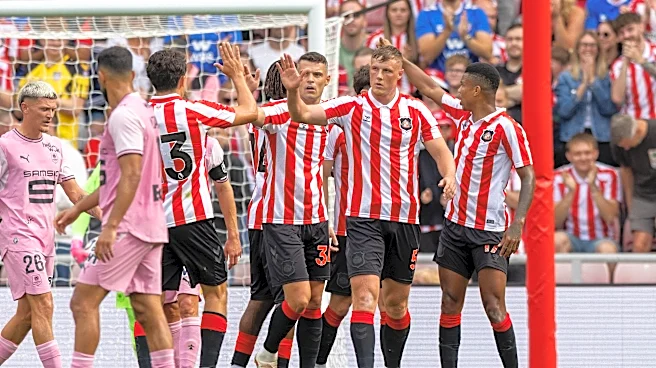
The opening day of the season saw the two relegated sides pitted together at Roker as Arthur Cox’s Derby County arrived on Wearside. The sides shared the spoils on a wet opening day as Gordon Armstrong cancelled out Mick Harford’s opener.
A few days later, it looked like Sunderland were living up to the billing of promotion favourites with a routine 3-0 win away to Barnsley, and ahead of our next fixture at Millwall, it was beginning to look like the start of a fun season back in the second tier.
Smith’s Sunderland faced a Millwall side that not only contained five debutants on this day in 1991, but also had three future Sunderland players in their ranks – Colin Cooper, John Colquhoun and Alex Rae.
The day could have gone very differently had Thomas Hauser finished off a flowing Sunderland move in the 11th minute, but he gave Aiden Davison in the Millwall goal an opportunity to save his effort when it was maybe easier to score.
Moments later, one of Millwall’s new acquisitions put the home side ahead when he struck a low drive past Tony Norman to make it 1-0. Sunderland attempted to bounce back immediately and looked threatening, but looked all over the place at the back and Mark Falco made it two five minutes later.
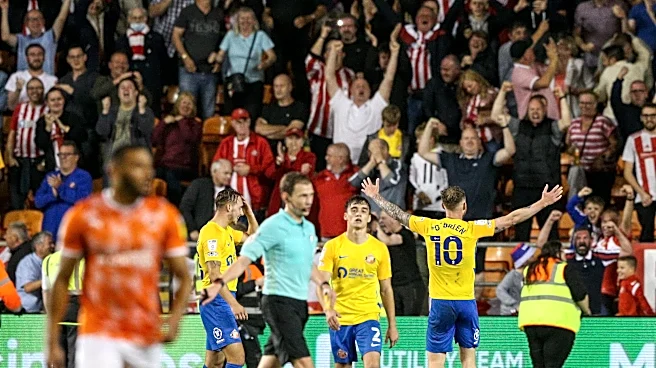
On the half-hour, it looked like it was game on when Marco Gabbiadini was pulled down by Alan McLeary and referee John Carter pointed to the spot.

Gary Owers, maybe surprisingly, stepped up and saw his effort saved, but was handed another crack at it as the referee had judged the Millwall players were already in the area as he struck the ball, and he made no mistake with his second attempt.
This hope lasted all of three minutes as Paul Kerr made it 3-1 after following up an impressive point-blank save from Norman to deny Barber again.
It remained this way until the break, when Smith showed the first sign of being unhappy with the opening forty-five as youngsters Richard Ord and Brian Atkinson made way for Ian Sampson and Colin Pascoe. In the era of two substitutes on the bench, this was a definite sign the manager wasn’t happy.
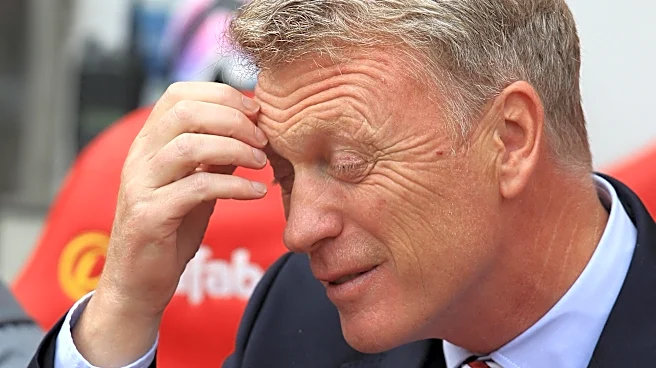
With twenty minutes left on the clock, Barber scored his second to kill Sunderland off completely and left Smith thinking it might not all go their way in the second division, as the manager discussed his side’s defending at The Den:
You have got to question the players’ ability to defend. We never got off the ground and I can’t understand why they can put in two different performances in as many games. Possibly we have got to look at the difference in the opposition from last Tuesday’s win at Barnsley. But we gave Millwall a couple of goals early on and they took full advantage of it.
I only had one defender on the bench. I could have taken them all off if I had been able to. I would look a good player if I was given that much room. I thought I might have got away without Kevin Ball for the first three matches, but it gives me no pleasure to bring him back.
We had our chances in the first half, but once we got behind, people start doing things that we have not worked on and all of a sudden you have got a disjointed performance. We hit the woodwork twice with the score at 3-1 and if either of them had gone in, they were both good chances. All at once, you can get at the opposition psychologically.

In other news…
Murray vs Super League…
The project to create the Premier League rolled on for a number of years before it actually became a reality, and one of its biggest opponents throughout that struggle was our chairman Bob Murray – and you could probably provide good arguments as to whether or not he was right.
But on this day in 1991, as his Sunderland were getting hammered at Millwall, Murray was on the verge of a small victory in his fight.
The Sunderland owner and chairman needed twelve clubs from Division Two to join his vote that would block the bid from going to the next stage, in a meeting that was scheduled a few weeks later, and on this day, he received the news that Oxford United were the seventh club to join his crusade.
Plymouth Argyle, Barnsley, Tranmere Rovers, Blackburn Rovers, Bristol City and Bristol Rovers were the clubs already confirmed to be planning on voting against the proposal from the second tier, and all 47 clubs from the Third and Fourth Divisions were also unanimously voting no.
If a few more clubs could be convinced, Murray’s campaign would mean that enough votes could be made to overturn the proposal that would mean First Division clubs would not have to wait three years after stating their resignation from the Football League and then actually leaving. By removing this rule, they could finish a season in the Football League, resign from it immediately and form a new Super League without delay.
With more votes needed, Murray continued to campaign for other clubs to vote against the proposal:
In view of the League appointing a receiver, I would ask them to reconsider. If clubs leave the League it will go bust. It’s just a matter of time. The League accounts to the year ending in January show that on a turnover of £29½ million it made £14,000 profit. That’s obviously of concern.
If the super league goes ahead and clubs don’t get promoted this season they possibly won’t get the chance again. We will have fallen out of the plane without a parachute. It’s such a foolish situation. And if the First Division clubs resign and the Third and Fourth are upset then Second Division clubs could be isolated.