

The hot stove has combusted into an inferno with less than a week to go before the expiration of the CBA at 11:59 pm ET on December 1st. Tarik Skubal was the first domino to fall, igniting a flurry of subsequent moves that has seen teams guarantee well over $1 billion in a three-day span. The Yankees, meanwhile, prefer to wade in the shallow end of the pool, committing modest outlays for relievers Jonathan Loáisiga, Tim Hill, and Brent Suter after receiving confirmation that closer David Bednar would
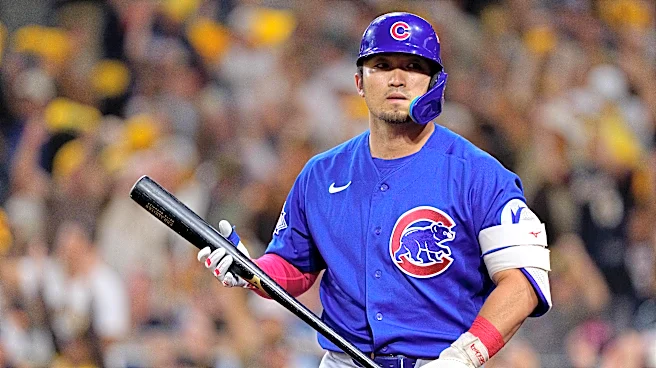
return on the qualifying offer. There have been only wisps of smoke behind rumors linking them to additions on the position player side, recent comments from Brian Cashman hinting at a level of comfort to run it back with the in-house offense yet again. While corner outfield is certainly not an area of need, Seiya Suzuki represents one of the best available bats in a barren class of free agent hitters.
2025 Statistics: 143 games, 634 PA, .270/.368/.473, 26 HR, 31 doubles, 86 RBI, 131 OPS+, 134 wRC+, 14 DRS, +5 OAA, 4.5 fWAR, 5.1 rWAR
2026 FanGraphs Depths Charts Projections: 149 games, 644 PA, .256/.346/.448, 24 HR, 30 doubles, 82 RBI, 120 wRC+, 2.7 fWAR
At the beginning of the week, my colleague John analyzed Randy Arozarena’s prospective free agent fit. It is actually uncanny how similar the two corner outfielders profile to each other. The pair were born within six months of each other and have generally been well below average with the glove (2026 notwithstanding in Suzuki’s case). They both hit 26 home runs in 2026, sport a 128 wRC+ for their careers, and posted nearly identical triple-slash lines — .270/.368/.473 from Suzuki and .281/.381/.484 from Arozarena. FanGraphs Depth Charts projects nearly identical outcomes for the pair in 2027 — a 120 wRC+ and 30 doubles for each and a rounding error difference in home runs and fWAR. Arozarena will steal you more bags while Suzuki is a slightly surer bet in the field.
Suzuki has been a remarkably consistent threat on offense since coming over from NPB prior to the 2022 season. Not including that debut season where he was limited to 111 games by injury, Suzuki has appeared in at least 130 games, hit at least 20 home runs, walked over ten percent of the time, and posted a wRC+ above 120 in each of the last four seasons. His pitch recognition is impressive, placing him at or above the 90th percentile in walk and chase rates. He does most of his damage against the fastball — particularly those on the inner half that he can pull in the air — but more than holds his own against off-speed pitches like the changeup and splitter.
This season was a both a career year and a weird outlier campaign of sorts. He posted a career high 4.5 fWAR thanks largely in part to his first ever above-average season on defense — he generally is among the league leaders when it comes to the value he produces with his arm strength and accuracy but typically grades out as slightly below average overall until experiencing a massive improvement in his reaction time in 2026. That being said, Suzuki also regressed in key offensive areas. This season saw him lose about three mph in average and max exit velocity and was the first season since his rookie year that he posted a sub-40-percent hard-hit rate and a sub-.400 expected wOBA on contact despite his average bat speed remaining stable. He has also appeared in over 150 games just once in five seasons and you can likely bake in about a month of missed games given his history with knee, neck, and oblique injuries.
I’m not sure how much I buy the improvement with the glove. That a trio of free agent position players in Suzuki, Brandon Lowe, and Luis Arraez posted their first ever solid defensive seasons on the cusp of or well into their thirties says as much about the noise and fickle nature contained within current defensive metrics as it does any tangible improvements in their defensive capabilities. Projections systems unanimously expect each of the three to regress back closer to their career norms going forward, which relegates Suzuki from All-Star level to solid starter level.
It is hard to see the fit on the Yankees roster. Most projections expect Suzuki to sign in the neighborhood of four years and $100 million. New York already has over $80 million committed to their corner outfielders in 2028. They need a starter in center with Cashman noncommittal on Spencer Jones’ grasp on the job. Suzuki has just 133.2 innings of major league experience in left field under his belt, so you would be asking him to effectively learn a new position in the more difficult Yankee Stadium left field while sliding the best defensive left fielder in MLB in Cody Bellinger over to center, where he’s been merely average since 2020. As much as the Yankees would benefit from slotting his power righty bat into the middle of their lineup, they are better saving their likely limited funds for more pressing needs in center and in the infield.