





Occam’s razor is attributed to a 14th-century friar named William of Ockham. He doesn’t seem to be widely remembered for much else. The simplest explanation is: his idea that the explanation with the fewest elements is probably the most logical one was by far his best work.
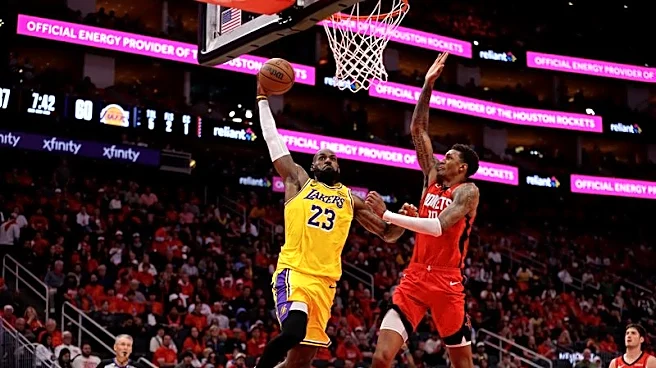
The Houston Rockets had a disappointing 2025-26 season. It culminated in a disappointing first-round exit. Now, it’s time for explanations, diagnoses, and plans.
Here, the focus is on the playoff exit. There’s minimal value in considering
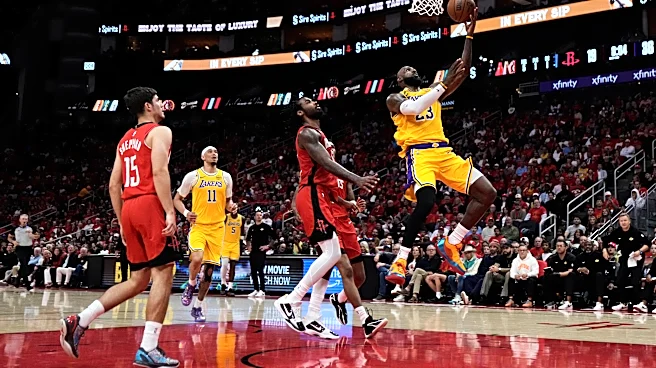
plans that will bolster the team’s regular-season record if they aren’t playoff viable. So, why did the Rockets lose to a Lakers team that was without Luka Doncic and largely without Austin Reaves?
There are likely multiple Occam-friendly explanations, which may disqualify the razor from being applied. Firstly, and most obviously, the Rockets were without Kevin Durant. That’s a sound explanation, but it’s not very satisfactory. With Doncic and Reaves (mostly) sidelined, the Rockets’ young core should have taken care of business.
So, the task becomes explaining why they couldn’t. Here’s where the razor cuts:
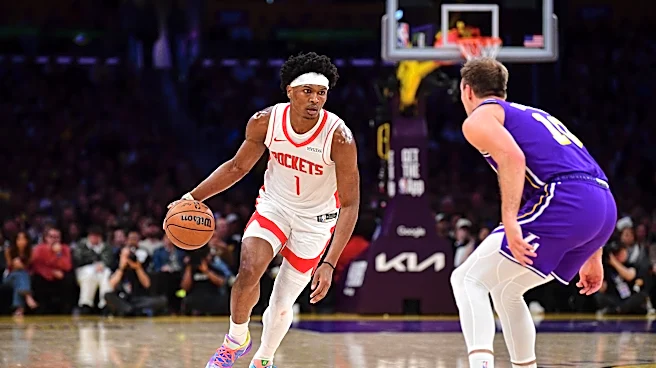
Having two non-shooters in the same starting lineup is likely the primary culprit.
People don’t like that explanation. They’d prefer to believe there are multiple ways to build an NBA contender. It’s a reaction to the NBA’s optimization movement. It’s disheartening to think that team-building concepts are so rigid.
Here’s the issue: Everyone else is optimizing. The only other would-be contender to feature two non-shooters in the starting lineup would be the Detroit Pistons. As of this writing, they’re due to face the eighth seed in the weaker conference in a do-or-die Game Seven in seven hours.
So it’s not going well for them either (Editor’s note: The Pistons won last night, but doesn’t take away from James’ point).
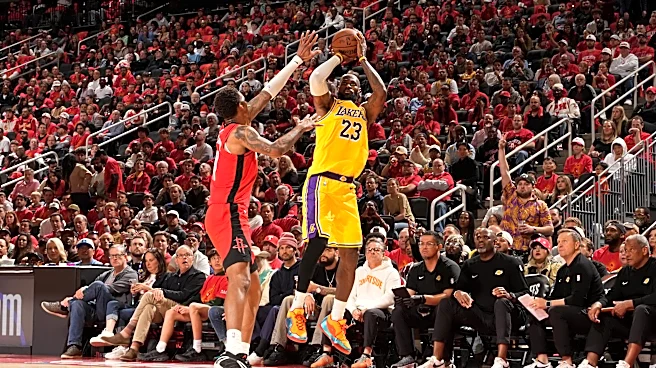
Otherwise, go look at the playoff bracket. Every other serious team’s starting lineup features four, if not five, players whose three-point attempts must be defended. This is reality. The Lakers predictably packed the paint, and that’s the primary reason why the Rockets lost. When the paint isn’t available, it’s easier for defenses to guard the entire floor.
So what’s the solution?
Rockets have to explore three options
Let’s start with one option that shouldn’t be an option (even if it’s the most probable course of action):
Running it back.
Rafael Stone: Please. You cannot run this back. This is not a team that’s a Fred VanVleet and Steven Adams away from accomplishing anything substantial. Even adding a Tim Hardaway Jr. or a Gary Trent Jr. or a (wait, why are you throwing a tomato) Luke Kennard won’t be enough to move the needle.
Why? The explanation is, thematically enough, simple. The Rockets will still be starting two non-shooters. That’s still going to be tremendously easy to exploit in the playoffs. Adding bench shooters would allow them to stagger Sengun and Thompson, but if they can’t both be on the floor when the stakes are high, the problem persists. The Rockets will be choosing between keeping their best playmaker and best defender on the floor.
Put differently: It’s not just about shooting, it’s about spacing. You could surround Sengun and Thompson with the best shooting trio that could be assembled. Thompson’s defender will still sag off of him to put an extra man in the paint, which will result in the same problem.
That leaves two obvious options (spoiler: There’s a third): Trade Sengun, or trade Thompson. Full disclosure: I lean towards moving Sengun.
*I dug my own grave on this, but I can no longer say anything about Alperen Sengun other than “Nikola Who?” without becoming painfully self-conscious. Yet, when I was telling whoever would listen that a non-shooting, non-defending big man was a tough sell in 2024, I was a pariah. Now, the notion of moving Sengun is much more fashionable. I’ll credit myself for being early and move on.
This is less about Sengun himself and more about roster construction and market scarcity. Sengun is Houston’s primary playmaker. It’s more feasible to find a better primary playmaker than it is to find a better defensive wing than Amen Thompson. Thompson’s skillset is rarer, and that’s one of two reasons why I’d lean towards keeping him between the two.
The other reason? Sorry, but Sengun hasn’t hit 60% True Shooting yet in his career (yes, he hit 59.9% in 2023-24, but 60% isn’t even an especially high bar, and that’s one season). You can blame spacing, but Sengun had ample one-on-one opportunities with Deandre “Don’t call me Gobert” Ayton in this year’s series. When he doesn’t have a strength advantage, he has a tremendously difficult time scoring, and that has nothing to do with spacing. There is a legitimate concern that Sengun just doesn’t have great touch.
If the Rockets go this route, they don’t need to push chips in for a superstar. It could be wiser to retool. Trading Sengun for a lesser five who’s a better stylistic fit with the rest of the roster and future assets could put the Rockets in a better overall position.
That could mean a stretch five. Could Myles Turner and two first-round picks be had in a multi-team deal? Bobby Portis and picks? A non-Buck and picks?
Yet, it doesn’t have to be a stretch five. A lower usage big man with defensive value who can comfortably be benched could work. What about Yves Missi and two unprotected future firsts? In that permutation, you’re relying on Jabari Smith Jr. at the 5 minutes to be viable.
And yes, you could just flip Sengun and a bunch of other stuff for Giannis Antetokounmpo. You’re still running two non-shooters, and almost certainly not winning a title, and totally berift of assets, but…yeah, you could.
Alternatively, you could build a high-octane offense and live with the defensive shortcomings by pairing Sengun and Kevin Durant with a third star – but it has to be the right star. It can’t be a paint merchant, or even a midrange maestro. This player would need to be a high-volume three-point shooter.
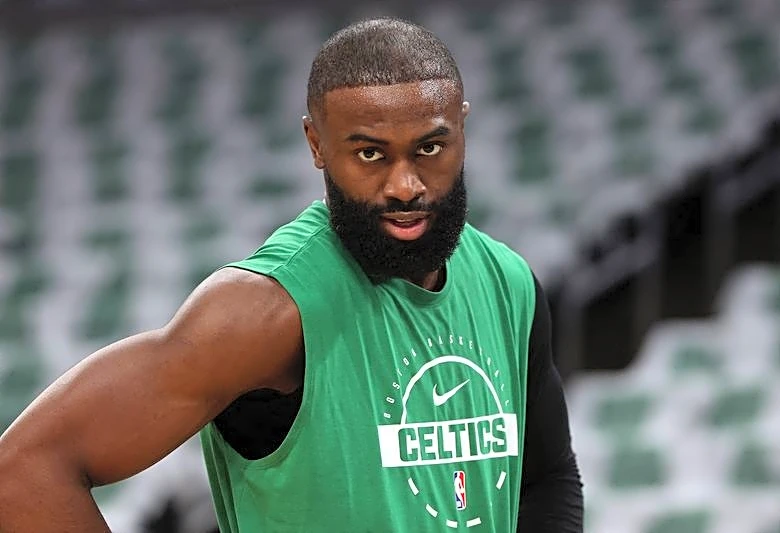
Who might be available? Jaylen Brown feels like an obvious candidate given his ties to Udoka, but he’s one of those players whose reputation as a three-point shooter doesn’t quite align with reality. Donovan Mitchell is a thought, but pairing him with Fred VanVleet (and if he’s not in the deal, Reed Sheppard) makes for two small guards in a defense that’s still anchored by Sengun. No bueno.
We don’t need to identify the specific star. The simpler point is that if the Rockets want to test the theory that Sengun would thrive with better spacing, they’d need to bring in a third star who’s a significant three-point threat. Even if Sengun’s scoring efficiency never improves, his passing processing would surely improve with three-point threats around him.
So, those are the obvious routes. There is a third one:
But it almost certainly won’t happen.
Rockets could trade Kevin Durant
A starting lineup featuring two non-shooters isn’t championship viable in 2026.
If you don’t have championship aspirations, that’s a moot point.
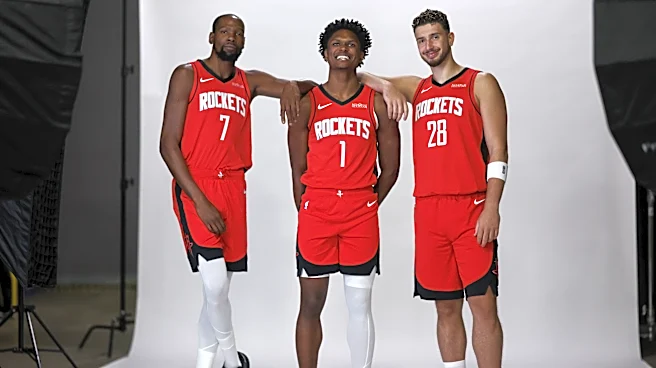
Why did the Rockets acquire Durant? Was it to make a championship push? Or, was it to get off Jalen Green expeditiously and bring in a veteran who, at least in basketball terms, should elevate the rest of the core?
If it’s the latter, there should be no qualms about moving the guy with the burner accounts. If the Rockets could flip Durant for complementary players (ie, shooters) and a future first, they’d buy themselves some time. Time to build around the sneaky superstar they grab in the 2027 or 2029 draft.
Time to see if one of Sengun or Thompson makes a shooting leap. Time for Anthony Edwards to shake loose to pair with Sengun.
I love this option, but it’s likely a tough sell for ownership. That’s why it’s being treated as an addendum here. Assuming that it’s not an option, the Rockets should move one of their non-shooting starters this summer:
It’s the simplest solution.