


As the buzzer sounded against the Lakers last week to hand the Bucks their fourth straight drubbing, a range of feelings came over me: sadness, helplessness, anxiety, and, quite frankly, anger. It wasn’t because the team was losing; I fully expected that. The first year of any rebuild always includes heaps of losing. No, it’s *waves arms wildly* everything else that’s going on—the bigger picture.
You see, what keeps supporters of a rebuilding team going is the future, but when you look at what the post-Giannis
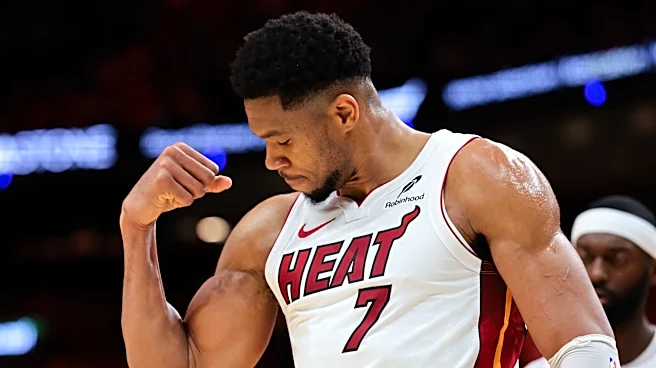
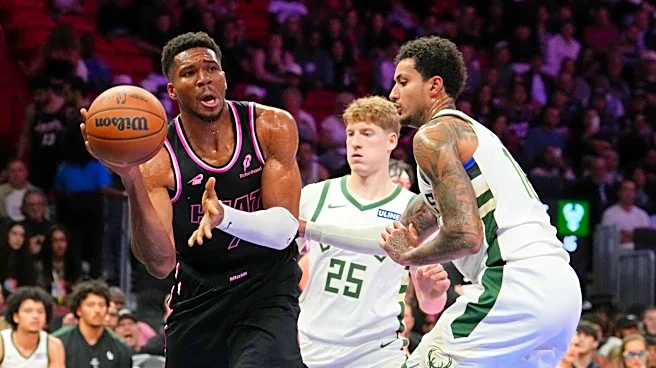
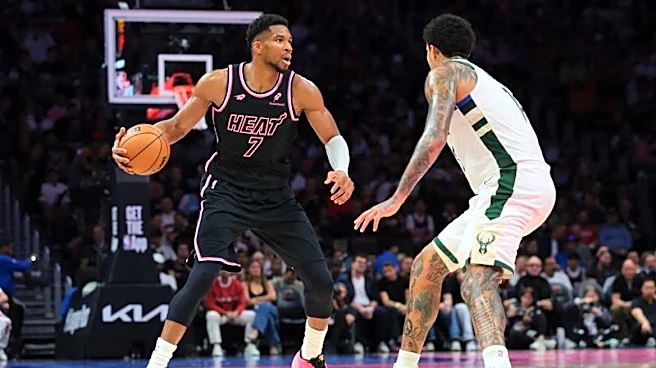
Bucks have—or, more importantly, what they don’t have—there’s certainly not heaps to get excited about. We know the draft is basically off the table until 2031, when Milwaukee regains its pick rights. The Bucks did get some potentially juicy Miami picks in the Giannis deal, which they could use to trade back into the upcoming drafts, but that remains theoretical; the only other avenue to get back in would be through spinning some or all of Tyler Herro, Jaime Jaquez Jr., and potentially even Ryan Rollins, but none of those guys will yield anything too flashy.
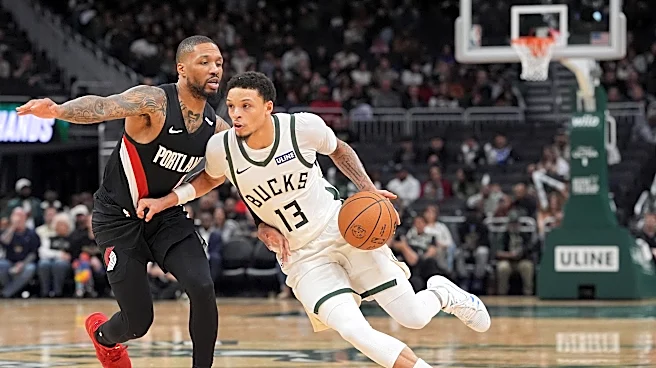
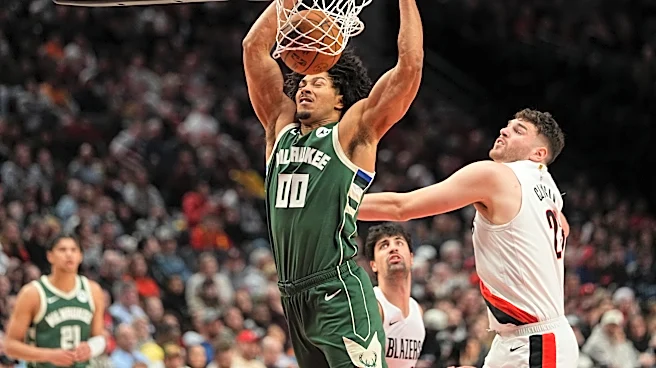
Among the players the Bucks have in-house as plausible future building blocks, Brayden Burries looks, at the very least, like a long-time starter, so that’s comforting. Nate Ament is growing by the day—figuratively and maybe even literally—but it is still unclear whether he can transition from “intriguing talent” to “full-time winning player.” I am getting more and more confident that Kasparas Jakucionis will become something, while Kel’el Ware, Ousmane Dieng, and Bogoljub Markovic remain much more of a question mark, and at this point, you’d probably bet against all three of them becoming long-term contributors. Finally, there’s Ryan Rollins, who, at 24, may or may not be part of the future, but is someone I remain high on. That’s… kinda it? Seven guys, most with a wide range of outcomes, and no blue-chip prospect as you enter the next four drafts without control over your first-round pick. Not ideal.
But it doesn’t end there. Beyond the young core not being anywhere near as robust as you’d hope, Horst also made some cataclysmic free-agent signings that will further impede the rebuild. Exhibit A: Myles Turner, who signed to a four-year, $108m deal with Milwaukee last summer as a key part of Horst’s last-ditch attempt to construct a winner around Giannis. Of course, to make this happen, the Bucks GM had to waive Damian Lillard and stretch the remaining $113m on his contract, putting $20m in dead cap space on Milwaukee’s books for the next five seasons. Don’t forget that Horst also had to send two second-round picks to Charlotte so they would absorb Pat Connaughton’s contract, freeing up the requisite cap space to sign Turner.

Suffice to say, getting Turner in the door was hard work! Surely Horst can trade him for something decent, given the extreme lengths he went to sign him? Nope. The 12-year veteran has been so diabolical that Milwaukee would struggle to even get neutral value for him at this point, with Brew Hoop founder Frank Madden recently calling Turner “easily the Bucks’ worst ever free agent signing.” Bravo. And hand up, after the decision was made that Giannis would not be traded, I was a fan of the Turner signing. I saw him play a key role on a team that had just gone to the NBA Finals and thought he would be Brook Lopez on steroids. Clearly, I was wrong. In my defence, I’m also not paid millions to have the purported ability to make these decisions.
And then there’s the granddaddy of them all: circumventing the salary cap to sign Gary Trent Jr. No, you’re not going delirious; you heard that right. Circumventing. The salary cap. To sign Gary Trent Jr. Predictably, just hours after Horst inked Trent to a definitely-not-shady $64m contract following a career-worst season, the NBA announced it would investigate the deal for possible cap circumvention and, according to Brian Windhorst, “everyone in the league expects a guilty finding.” To add insult to injury, The Athletic reports that the penalty could be just as severe—if not more severe—than what the LA Clippers received.
Honestly, I’m not sure I’m ready to consider the degree to which any level of severe penalty could hamstring a small-market team like Milwaukee, which already traded most of its picks away. It would be franchise-altering for sure, and some would say franchise-dooming. All of this to secure the services of Gary… Trent… Junior. I keep repeating it because it almost doesn’t sound real. Like, to be clear, GMs should always play by the rules, but to circumvent the cap for what? A ninth man on a good team? That’s next-level foolish. At least the Clippers got their money’s worth! Horst saw Trent averaging 14 and two in Toronto with non-existent defence and thought, “I simply must have this guy, and I’m willing to cheat to get his signature.” What was he thinking?
So there. The Bucks are in a deep hole, and based on what we’re seeing, it’ll be a while before they can climb out. Of course, the main reason for that is that the org continually mortgaged the future for the present throughout the Giannis era, which, to be clear, I was largely on board with! I was in on mortgaging the future for Jrue Holiday. I was in on mortgaging the future once more for Damian Lillard (even if, in hindsight, way more consideration should have gone to whether Lillard was the right fit next to a superstar who lacked the exact intangibles needed to maximise him).
But you don’t get carte blanche to operate that way forever. I know I’ve already bagged on about this, so I’ll keep it brief, but Horst emptied the clip for Dame—that was (or should have been) his final bullet. Once the moment came when any reasonable person looked at Milwaukee and deduced that their title window had very likely closed, it was incumbent on the Bucks GM to capitalise on the one golden ticket he had left to salvage the future of this franchise after years of mortgaging it: trading Giannis from a position of strength. Unfortunately, that moment came when Lillard tore his Achilles less than two years after he arrived, much sooner than anyone had hoped.

Still, the harsh reality wasn’t going away, even if Horst wanted to ignore it and double down, which was exactly what he did. The product we’re watching now—along with many of the restrictions that will hamstring the org’s ability to improve it in the future—is largely a direct result of that decision, which forced Horst into negotiating from a position of weakness when he did pull the trigger on a Giannis trade.
And look, I understand and respect the opposing point of view: that it was always worth keeping your franchise GOAT for one final run while at least keeping the door ajar for Horst to pull another rabbit out of his hat that would convince the two-time MVP to re-sign. I get it. I would just say the NBA moves incredibly fast, and if you do not capitalise on opportunities when they are presented, you will get left behind—that’s exactly what I fear has happened to Milwaukee by playing out the string with Giannis. In any event, and regardless of the decision to keep Giannis for that final season, enough evidence has piled up to show Horst lacks the poise and decision-making chops to do this job.
We’ve talked ad-nauseum about the nuances of Horst’s career in the big chair. He’s certainly had some major wins, and not all the losses people blame on him were actually his fault. Of course, he deserves immense credit for building the nucleus that ended a 50-year title drought in Milwaukee. Immense. But you can’t dine out on that forever while ignoring the litany of blunders since then: the coaching hires, draft misses, contract misevaluations, and worst of all, the bewildering willingness to play Russian roulette in pursuit of signing wholly inconsequential players. Heck, the cap circumvention is a fireable offence on its own, let alone all the other stuff!
The truth is that Horst’s decisions since the title weren’t those of a level-headed operator; they were the moves of a riverboat gambler desperately chasing losses with bigger, bolder bets, the stakes rising with each slipup. Loss after loss after loss, culminating in what I am comfortable labelling one of the worst and most inexplicable gambles in NBA history. A decision, mind you, that fans will be forced to bear the brunt of as their team gets pushed even further down the already-deep hole Horst put it in.
Look around. The most successful teams share one thing: competent management. It’s no coincidence that the Thunder, time after time, hit on the exact same picks the Bucks routinely miss on; it’s no coincidence that the Celtics consistently take other teams’ trash and turn it into their treasure. Equally, it’s no coincidence that the Kings and Pelicans have spent decades as the laughingstock of the league. Competent management matters, and if the Bucks are serious about being taken seriously, the first step seems quite obvious.