

As a chaotic #transferszn seems to finally have come to a close, it’s now time to dig through the rubble, count the casualties and take stock of how it all played out. A larger than normal (or at least exected) wave of young players exited the program through the portal, leaving the Tigers short not just on proven production, but on future depth. This left the he Mizzou coaching staff performing something closer to triage than simple roster enhancement this winter. Ultimately, it appears as if their
response was a portal class built on two distinct strategies, each aimed at solving a different problem.
The first strategy was the as they’ve taken all five years of the portal: the Tigers needed players who could walk in, start and contribute immediately in 2026. These were largely productive veterans from other programs, many with Power Four experience, who could stabilize key positions and prevent the roster from backsliding in the short term. The second strategy was quieter but arguably more important long term: the Tigers needed to restock the cupboard with young, talented yet unproven players but who possessed multiple years of eligibility and developmental upside.
Together, those two approaches shaped by far the most complex portal cycle of the Eli Drinkwitz era.

The immediate-impact group
The most visible part of Mizzou’s portal haul is the group of players brought in with the expectation of playing right away. Some are penciled in as starters. Others may not be every-down players, but they were added with the clear intent of contributing in 2026 rather than waiting their turn.
That group includes:
• Josh Atkins
• Malik Bryant
• Caleb Goodie
• Chris Graves Jr.
• Cayden Lee
• Kensley Louidor-Faustin
• Zack Owens
• Jahlil Florence
• Austin Simmons
• Sione Laulea
• Bobby Washington
• Luke Work
• Robert Woodyard Jr.
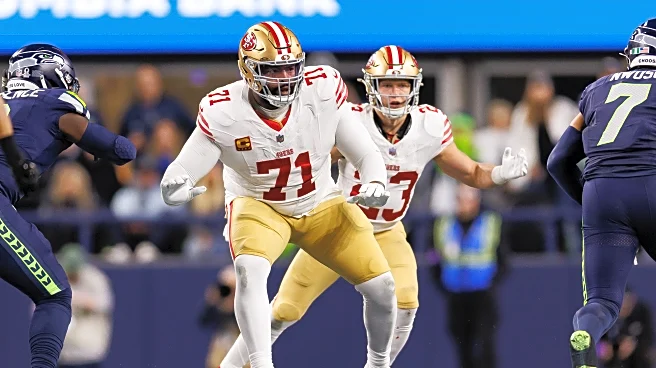
This group spans nearly every level of the roster, but the common thread is experience. On offense, the list is highlighted by quarterback Austin Simmons, who should come in and win the starting job immediately. Offensive lineman Josh Atkins arrives after starting extensively at Arizona State and looks like a plug-and-play option up front. Mississippi State transfers Zack Owens and Luke Work brings versatility and maturity to an offensive line that needs both. On defense, players like Robert Woodyard Jr., Malik Bryant and Bobby Washington provide physicality and familiarity with high-level competition at linebacker, a position group that saw significant turnover.
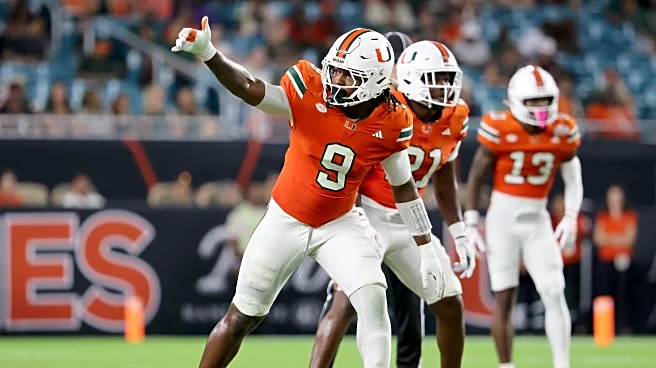
In the secondary, additions such as Chris Graves Jr., Jahlil Florence, Sione Laulea and Kensley Louidor-Faustin were aimed at shoring up depth and competition in a unit that could not afford another thin season. This group represents the staff’s effort to keep the floor of the program high. These are players Mizzou expects to rely on right away, whether as starters or significant rotation pieces. Without them, the Tigers would have been asking too many unproven players to grow up all at once.

The developmental reset
The second half of the portal class tells a different story. These players were not brought in primarily for what they will do in 2026, but for what they might become in 2027, 2028 and beyond. This group is a direct response to the unusually high number of young players who left the program before fully developing.
That group includes:
• JaDon Blair
• Elijah Dotson
• Xai’shaun Edwards
• Jaden Jones
• Kenric Lanier II
• Naeshaun Montgomery
• CJ May
• Donta Simpson Jr.
This is where the long-term health of the roster comes into play. Players like JaDon Blair, CJ May, Naeshaun Montgomery and Elijah Dotson arrive as former blue-chip or high-upside prospects who have yet to make a statistical impact. Others, like Jaden Jones and Donta Simpson, Jr., are bets on athletic traits and development rather than proven production.
Most of these players are not expected to play major roles in 2026, though a few defensively players, namely Dotson, Blair and Simpson could potentially make a bid for serious playing time. Some may see the field on special teams. Others may spend much of the season developing physically and learning the system. What they offer instead is eligibility runway. After a year when Mizzou lost multiple young players before they ever became contributors, this group is meant to refill that pipeline.
With the caveat that nothing in college athletics is “normal” anymore, under “normal” circumstances, a portal class leans one way or the other. Either it is a veteran-heavy group designed to win now, or it is a younger group built around upside. This cycle required both. The Tigers did not just lose seniors or one-year rentals. They lost players who were supposed to form the backbone of future depth charts.
That forced the staff into a balancing act. Lean too heavily on immediate contributors and the roster risks another depth crisis down the line. Focus too much on developmental players and the 2026 season could suffer. The result was a split approach that addressed both problems, even if it created a class without a single unifying identity.

What will define success
On paper, Mizzou added plenty of talent. In fact, if you balance the high school recruiting ratings of the incoming players with the ratings of the outgoing players, Drinkwitz and company actually saw a net improvement in talent. Several players in the first group should start and be productive. That part of the evaluation will be easy. If Atkins and Owens solidify the offensive line while Woodyard, Jr., Graves, Jr. and the Miami guys backfill the defense, this will count as a 2026 win.
The harder evaluation comes later. The true success of this portal haul will be determined less by how well the immediate-impact players perform and more by what happens with the developmental group. If players like May, Lanier, Dotson or Montgomery are able to contribute in small ways early, then stay and grow into larger roles in future years, the Tigers will have solved a long-term problem.
If they do not develop or choose to hop back in the portal once again, Mizzou risks being right back in the same position next winter, scrambling to replace lost depth with another portal class split between urgency and projection. In the modern era, roster management never truly stops, but this cycle made one thing clear. For Mizzou, portal success is no longer just about who plays right away. It is about who is still around and contributing when the next season rolls around and the one after that.