

“He’s doing fine.”
Texas Longhorns head coach Steve Sarkisian’s Monday assessment of high-priced junior wide receiver Cam Coleman’s first four games in burnt orange and white isn’t in line with the preseason expectations established when the Auburn Tigers transfer picked the Longhorns over the Alabama Crimson Tide, Texas A&M Aggies, and Texas Tech Red Raiders.
That’s because although Texas didn’t extend the highest offer to Coleman, a deal worth a reported $4 million, the Horns have a lot of money
invested in the 6’3, 204-pounder, who was supposed to be WR1 in Austin while providing the extra boost of explosiveness Sarkisian’s offense badly needed.
The early returns are largely uninspiring in the context of the expectations engendered by the expenditures — with 12 catches for 208 yards and four touchdowns over four games, Coleman leads Texas in receiving touchdowns while ranking second in receiving yards behind junior wide receiver Ryan Wingo (239) and tied for second in receptions with junior wide receiver Emmett Mosley V, who has one more target (21) than Coleman.
More concerning is that the four touchdown receptions by Coleman came against Texas State and UTSA — in the wins over Ohio State and Tennessee, Coleman combined for five receptions for 79 yards, but was unable to find the end zone.
The fact that Sarkisian took a micro approach to a macro question about Coleman’s contributions through one third of what still projects as his only season on the Forty Acres doesn’t provide much aid to this particular analysis.
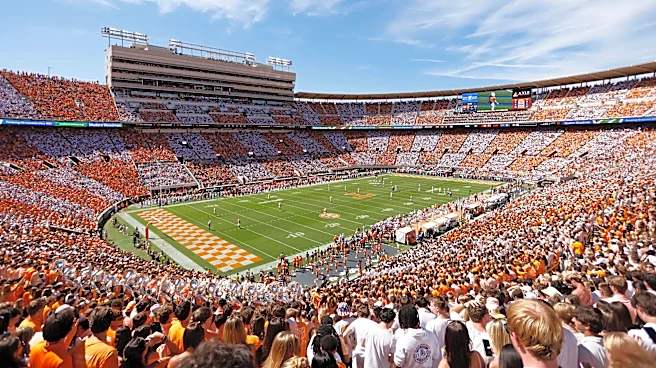
“He got banged up Saturday, and again, there was a lot of emphasis and attention drawn his way with cloud coverage and things,” Sarkisian said. “That’s where we have to utilize the other guys. I think Ryan had, I don’t know, five or six catches or whatever it was Saturday. When we get those opportunities, we’ve got to take them and we’ve got to take advantage of them.”
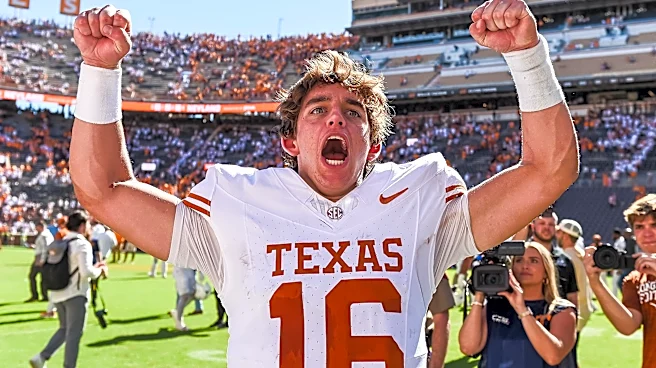
Wingo finished with six catches for 74 yards on six targets, 31.2 percent of senior quarterback Arch Manning’s pass attempts in a low-volume aerial attack against the Volunteers.
Meanwhile, Coleman sustained a bruised tailbone on his only catch, a 30-yard reception early in the third quarter that marked the totality of his contributions.
Depending on how targets are tracked, that was either the only target for Coleman in Knoxville or one of three, including one of the two instances in which Manning drew a penalty for an illegal forward pass.
The other target tracked by Pro Football Focus, perplexingly not credited by StatBroadcast, which provides stats for the media, came on a shot play from near midfield early in the second quarter.
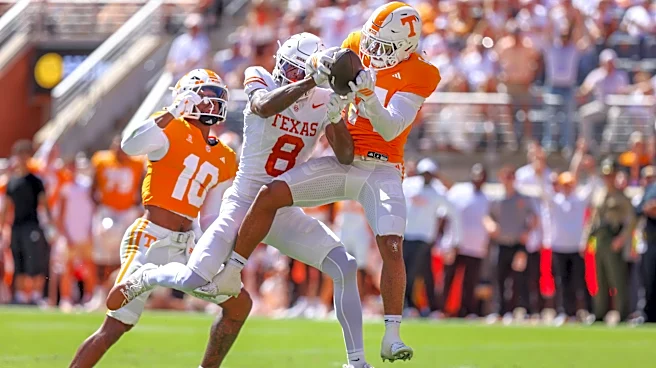
Operating by himself to the field in 12 personnel on 2nd 5, Coleman had a good matchup with single coverage against a cornerback, although the single safety did make it a middle-of-the-field closed coverage. The play-action fake held the safety initially, but Manning stared down his intended target, allowing the safety to undercut the throw and forcing Coleman to bend his route deeper, ultimately leading to an interception.
It’s the type of play that illustrates how things are just a little bit off between Coleman and Manning as Sarkisian’s scheme often fails to catch defenses by surprise — in bail technique, the cornerback doesn’t have much trouble staying on top of the route, Coleman inexplicably slows up like he doesn’t anticipate being targeted, and Manning fails to use his eyes to hold the safety to make it an easier throw. To cap it off, Coleman’s typically strong hands aren’t enough to win the football away from Tennessee’s Kayin Lee.
“Arch took the shot to him on the post, which I have no qualms about him taking that shot — I like Cam Coleman’s odds one on one on a deep ball down the field,” Sarkisian said.
Another prime example of subpar chemistry between Manning and Coleman manifesting in bad results came on the fifth play of the Ohio State game.
More effective play design by Sarkisian got Coleman a release against a linebacker and a matchup against a safety that he won handily. But Manning had an extra hitch in the pocket and led Coleman just a little bit too far instead of delivering a more flat throw on what should have been an easy touchdown.
The result? Coleman went to the ground on the catch and the football kicked out to Jaylen McClain for an interception.
Even on a big connection with Coleman for a 44-yard gain against Texas State on a go route, Manning’s slight under throw kept the play from producing a 67-yard touchdown.
At other times, Manning has overthrown Coleman or flat-out missed him when he’s been open — considering how much of a factor the Texas quarterback was in Coleman’s decision to play for the Longhorns, it’s an extremely disappointing aspect of a pairing that looked much better conceptually than it has so far in action.
But while Manning’s accuracy and processing with Coleman haven’t been ideal, scouts may have real concerns about the wide receiver’s struggles to create separation against UTSA when he was matched up against JUCO transfer cornerback Asaad Chapman.
On the positive side, there have been real flashes between Manning and Coleman, including a tight-window throw from just outside the red zone against Texas State that allowed Coleman to show off his ability to high point the football.
And a true jump ball on a fade route in the win over the Roadrunners.
Considering that Coleman only had five touchdown catches all last season with the Tigers, his efficiency finding the end zone is much higher for the Longhorns so far. And there haven’t been any issues with his hands — Coleman isn’t credited with dropping a single pass on his 20 targets while coming through on contested catches with four grabs in eight opportunities.
The aspect of Coleman’s game that grew last year but hasn’t come through yet at Texas is his ability to force missed tackles. After creating 11 last season, Coleman only has one through four games, along with just 28 yards after the catch.
Taken as an incomplete body of work through four games, however, there’s increasing reason to believe that the missed reps during the offseason as Manning recovered from ankle surgery impacted the chemistry between quarterback and wide receiver even though Sarkisian downplayed the limit Manning’s rehabilitation put on the number of opportunities to establish that all-important rapport.
And it may be that Coleman remains a work in progress in terms of his mastery of releases and the entire route tree after playing in an extremely simple offense at Auburn.
It’s also possible that Sarkisian still hasn’t found all the right buttons to push with Coleman schematically as the bye week currently in progress registers as an important chance for play caller, quarterback, and wide receiver to get on the same page.
With zero catches on screens and only two catches on five targets on passes between the line of scrimmage and 10 yards down the field, one area where Sarkisian could get Coleman more involved is that area of the field, where getting him the ball on the move could allow him to create after the catch, especially against defenses that choose to blitz as frequently as Tennessee did last weekend.
“We’ve got to be creative enough, and we’ve got to allow him to do the things that he does really well as we continue to navigate our way through the season,” Sarkisian said.
If that process doesn’t result in more impactful performances through the conference schedule, it will ultimately reflect poorly on Coleman, Manning, and Sarkisian in a no-excuse season.