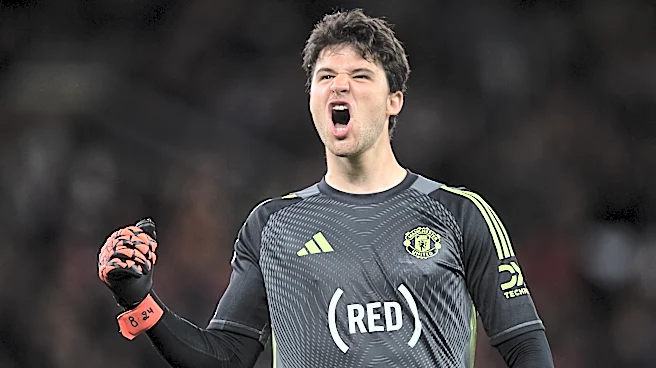








Colin: Senne Lammens has no fear, like Tom F***ing Cruise
Yeah, yeah, my takeaway is also a tweet that I’m going to attach here as well.
Sue me!
Anyway, the story of Senne Lammens in his debut season gets another solid addition. The Belgian made an impact between the posts in a game where the Bees were swarming for much of the contest.
Lammens finished the match with five saves, preventing .09 xG while facing a handful of difficult shots. The defensive tactical approach made
his life a little bit easier, but he still faced plenty of threats from open play and set pieces. He made two high claims and had to punch the ball away, winning his only aerial duel of the match.
Above all, we felt safe. Even with a goal given up, there wasn’t much more you could have asked from Lammens. He’s continued to make a difference since signing for the Reds simply by being brave enough to face the physicality of the Premier League. That confidence is crucial and he’s got it in bunches.
Suwaid: Lots of Strong Individual Performances
There were so many strong individual performances in the game against Brentford, but even the most optimistic fan wouldn’t have called that a straightforward win. United were worthy winners, but that game was a perfect encapsulation of why United are a hard team to figure out at the moment and why no manager would find it easy to get the best out of most of the players, get the team to play cohesively, and get points on the board.
Something had to give way, and Michael Carrick opted to forego the sort of drilled patterns that are the hallmarks of most great sides or even lesser sides that punch above their weight. His remit as the interim was to stabilise the club and earn Champions League qualification, which he looks set to achieve in the coming weeks.
The trouble for any Manchester United manager going into next season is whether he can manage all three tasks. For that, United will need to add better players, but also have to get players who combine well with one another and a coach who can drill certain patterns that opposition teams find hard to deal with.
This is going to be no easy task, and a league season can quickly go sour if players sense a lack of direction. It’s why managers with set ideas, like Ruben Amorim, remain popular. The question then for the United higher-ups is if they’d like to see the same but a better version of this going into next season and bank on Carrick landing on a pattern with better players at his disposal, or if, with better players, getting a manager with more set ways might be the way forward, as the quality in the squad will reduce the risk of making drastic adjustments for results.
Pauly: Was this always the plan?
When the team news dropped just over an hour before kickoff we found out Matheus Cunha had picked up an injury and wouldn’t be taking part. “It looked promising during the week, but he didn’t recover in time, as hoped,” said Michael Carrick before the match.
Carrick’s comments don’t make it clear whether United spent their week of preparation for the match thinking Cunha would start or not. Typically, when a player is ruled out late in the week coaches tend to stick the plan they’ve been working on all week and just plug a new player in, rather than move a whole bunch of players around.
Why does any of this matter?
United started the match with Benjamin Sesko up top, Amad on the left wing, and Bryan Mbeumo on the right. That’s a combination they have not deployed once this season. It makes you wonder whether this was always going to be the front three, or there was a late switch when Cunha was ruled out? Had Cunha started, Carrick’s preference has always been for Mbeumo to play down the middle and Cunha to play on the left.
Then the actual match started. With Brentford playing Keane Lewis-Potter, who is naturally an attacking winger, at left back (for the fifth game in a row), United made it a point to attack with Mbeumo early and often. It looked deliberate, like something United had been planning to try and exploit. On the other side of the pitch Amad looked pretty promising as a left winger, with only his end product and inability to stay onside evading him.
Then there was Sesko. United came out of the gates flying. The opening 10 minutes might have been the best 10 minutes the squad has played all season. All the while Sesko was out there doing, well, nothing. He was a warm body.
Sesko didn’t have a single touch in the first 10 minutes. United had 63 percent possession, outshot Brentford 4-0, won five corners, and essentially did it all with just 10 men. Things didn’t get much better. Over the first 20 minutes of the game Sesko had just three touches. Sesko would score a goal when Bruno Fernandes picked him out on the counter attack – his only touch inside the box all game. For the most part he looked cut off and distant from the rest of the attack. Bruno completed just two passes to him, Amad one, and Mbeumo none. It was almost as if United had a plan for this match that didn’t include Sesko and now he was serving as a placeholder.
For as much as United looked like they wanted Mbeumo running at Lewis-Potter, as soon as United went 1-0 up it looked as if they had never planned on Mbeumo playing on the right wing. Once United took the lead Lewis-Potter started getting forward, with Mbeumo hardly putting in an effort to track his runs. It almost looked like it was never United’s plan to have Mbeumo out there on the right wing tracking Brentford’s very aggressive fullback.
Mbeumo on the right wing won United the corner that Casemiro scored on, but his lack of defensive coverage caused a whole slew of tactical issues that forced Carrick to change the teams shape at halftime. Carrick did a good job adapting on the fly, but it left me wondering whether this had always been Plan A – and if it was why couldn’t they striker involved at all – or whether the adapting on the fly began even before the match?
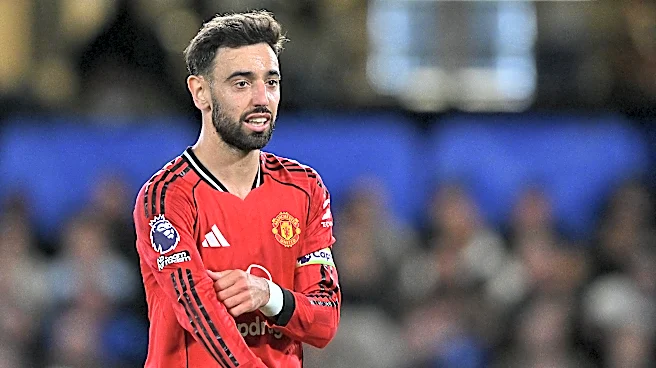
Nathan: The Premier League must make the ethically correct decision and name Bruno Fernandes the Player of the Season
I realize this is not an unbiased take, nor is it a particularly brave take anymore, but Bruno Fernandes should be recognized as the league’s best player for his contributions during the 2025-26 season — he certainly is the most valuable player to any one team in the league.
Sure, I’m bringing my American sports brain into the equation. I’ve also watched the games, and Fernandes’ nearly (soon-to-be?) record-breaking season is more than stat padding. His assists are vital to a team that ranks third in the league both in the standings and in goals scored and has eclipsed its 2024-25 goal-scoring total by 14 goals with four matches left in the season. Against Brentford, he showed again that his assist before the assist is equally vital when he placed the ball perfectly for Harry Maguire perfectly from the corner so that the centerback could assist Casemiro.
I mean, just feast your eyes on the creative consistency displayed by Fernandes, year after year after year.
Fernandes may never have the opportunity to lift the Premier League trophy as Manchester United captain (an unbelievable shame in of itself), but the league can do the right thing this season and rightfully enshrine him as one of the best and most influential players of this current era.