
What is a star in the NBA? What is a superstar? How do you define and separate the two?
There’s some subjectivity to it, but the NBA gives us a baseline with its player participation policy. A “star” is someone who has been selected to an All-NBA or All-Star team within the past three seasons. By that definition, you’re looking at roughly 50 stars in the league in any given year. “Superstar” is where it shifts. That’s where the conversation begins.
In my humble opinion, the subjective definition of
a superstar is someone who translates that star status into postseason success. Someone who rises when the lights are brightest and the margin is tightest. In those moments, they deliver. A dagger jumper. A key defensive stop. The right read that lifts a team. And they do it consistently. At any given time, there are maybe 10 to 13 true superstars in the league. These are the ones who close, the ones who elevate their teams when the postseason begins. “Postseason success” doesn’t have to mean a title or even a Finals appearance. Only two teams get that chance each year. But it does mean winning games, winning series, and showing up when it matters most.
That label isn’t permanent. It’s fluid. Being a superstar five years ago doesn’t guarantee you are one today. Charles Barkley was a superstar. If he suited up now, that label wouldn’t apply. There’s a difference between “was” and “is”, and that line matters. Being a superstar isn’t easy. It carries weight. Expectations follow you every possession. The difference is, superstars meet those expectations when the moment calls for it.
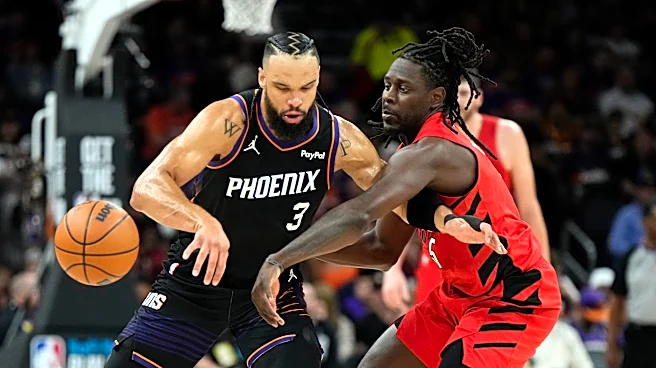
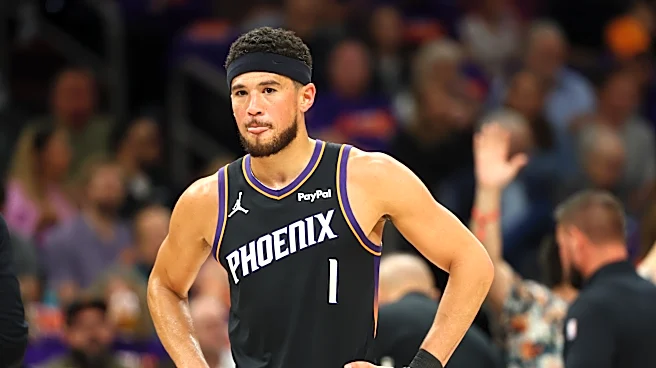
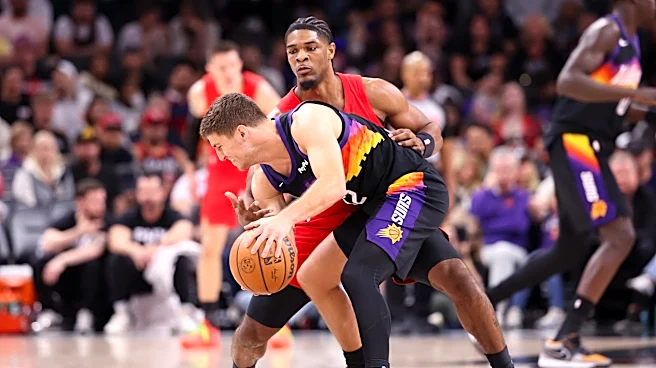
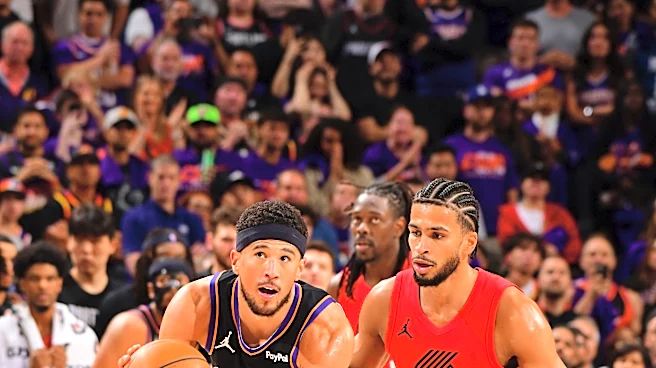
Which brings me to Tuesday night, the Phoenix Suns, and Devin Booker.
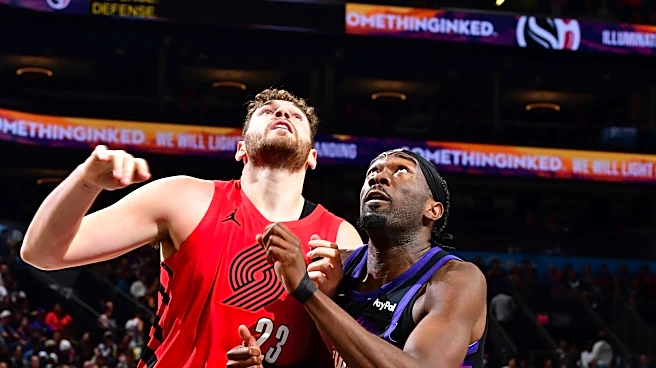
The Phoenix Suns entered their first-ever Play-In matchup with home court advantage, even as they struggled over the final two months of the season. On one side, a Suns team that went 13–14 after the All-Star break. On the other, a Portland Trail Blazers group that was 15–11 over that same stretch. On the surface, it felt like two teams moving in different directions.
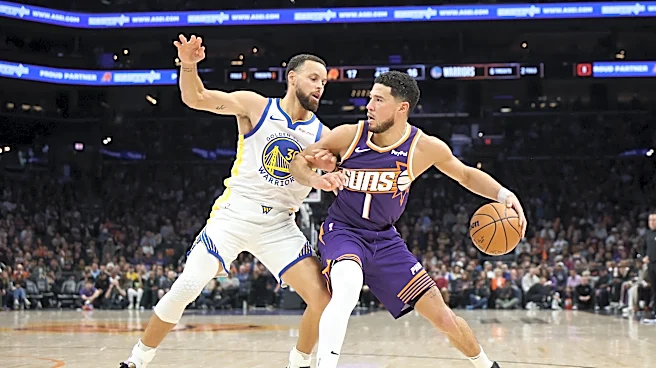
But the Suns had one thing that should have trumped the trends. They had Devin Booker. The best player on the floor. A bona fide star, someone who has touched superstardom, and depending on who you ask, still lives there. He’s paid like it with the ninth-highest salary in the league this season, eighth next year. So you break down the matchup, you run the numbers, you look at tendencies, and it comes back to one thing. You have the better player.
That’s not how it played out.
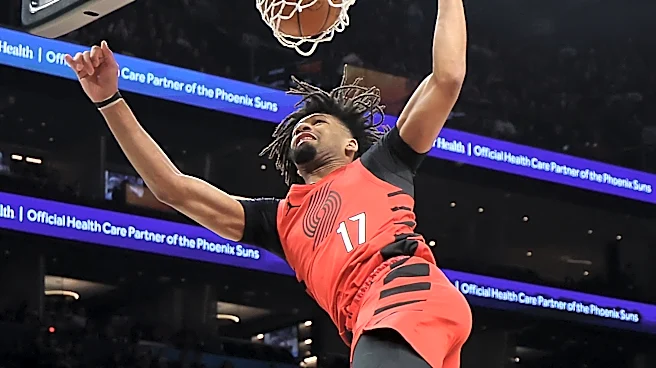
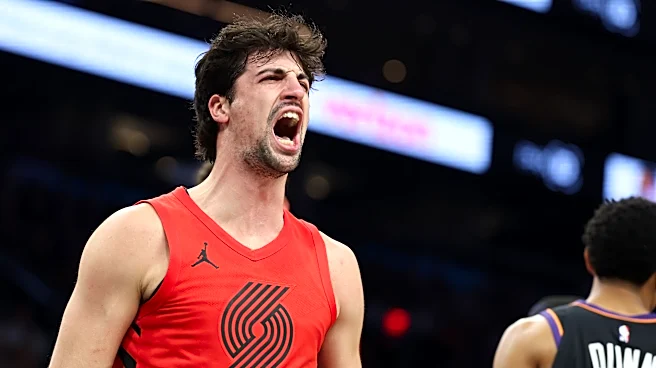
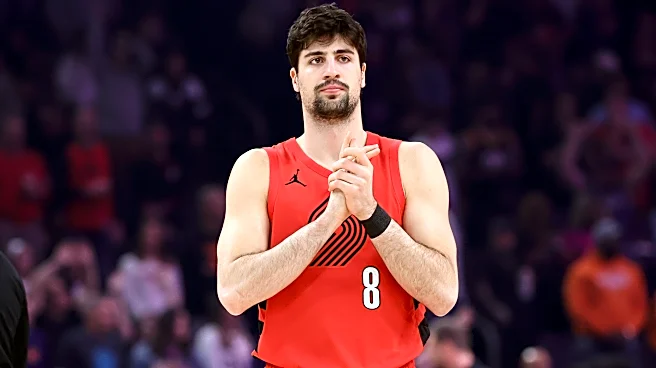
Because when the game tightened and it came down to execution, Portland had the better player. It was Deni Avdija who rose to the moment. He forced clutch time with a three at the 4:15 mark, pushing it to 100–97. From there, he went 2-of-2 from the field, 3-of-3 from the line, grabbed two boards, and added an assist. Of Portland’s 17 points down the stretch, he accounted for 10, either scoring or creating them.
On the other side, Booker finished 0-of-2 from the field, 3-of-4 from the line, with one assist. He accounted for five of Phoenix’s last 10 points.
And that’s where this gets uncomfortable.
Crunch time has been a challenge for Booker all season. Across 30 clutch opportunities, he shot 44.3% from the field, 30.8% from deep, averaged 0.98 points per minute, committed 11 turnovers, and sat at a-7. Those aren’t superstar numbers. Star, sure, but they don’t touch what superstars do.
And when you layer Tuesday night on top of that, it lingers. You can point to lineups. You can point to scheme. Tuesday brought it back to something simpler. There’s a ceiling when it comes to Devin Booker late in games, and it’s hard to ignore.
Booker is an elite jump shooter. One of the smoothest in the league. The lift, the release, and the rhythm all look effortless. But that strength can also define the limit. Because for everything he does well, he isn’t elite at getting to the rim, he isn’t elite from three, and he doesn’t consistently absorb physicality at a high level. He’s good in those areas. Not dominant. His 3.4 points per clutch performance in 2025-26 ranks 21st in the league. When the game tightens, the consistency in those areas fades. On Tuesday, it was right there.
Across from him, Deni Avdija looked different. Longer. More forceful. More committed to getting downhill. He kept applying pressure, over and over, and the Suns couldn’t stop it. That’s been his approach all season, and it translated when it mattered most. He attacked the rim, lived at the line, and made the right reads. He had 14 points in the fourth, was 4-of-5 from the field, and had 7 free throw attempts. High percentage decisions when every possession carried weight.
On the other end, it felt familiar. Booker working to get to his spots, trying to create space for that jumper. You’ve seen that movie before. You think back to the 2021 NBA Finals, those late-game moments where he kept searching for that same look. I still have nightmares in which Jrue Holiday is ripping the ball away from Devin Booker in the lane. It didn’t come easy then. It didn’t come easy here.
When a defense knows what’s coming and meets it with physicality and connectivity, that shot gets tougher. Booker did get to the line and he found points there. But there were no field goals made in the fourth. 0-of-3 from the field. Sigh.
That pattern has shown up too often this season, especially post-All-Star break, where Booker was 30% from the field in the clutch, 3-7 in the standings, and -30. His 2.9 points in those tight games rank 44th in the NBA. Late in games, when you need your best player to take over, he hasn’t been consistent. His 5.9 points per fourth quarter ranked 22nd in the league. And post-All-Star break, that number dropped to 5.0, which ranked 35th. His 8 turnovers are second in the NBA over that stretch, trailing only former Suns Kevin Durant.
That’s the reality they’re dealing with.
I keep coming back to the ceiling of Devin Booker, and by extension, the ceiling of the Suns. Booker has limits as a player. He isn’t overly tall, he isn’t long, he isn’t overwhelmingly explosive, and he doesn’t live at the line through physicality and whistles late in games. When things tighten, he doesn’t always find another gear. And when those traits aren’t there, what you go to becomes predictable. We saw it again against the Portland Trail Blazers.
That leads to the bigger question. How far can this team go when the focal point is paid like a superstar but runs into these challenges late in close games? What’s the ceiling? Add in the financial reality, $23.2 million in dead cap, and the margin tightens even more. Booker may take up 34.6% of the cap next season with his $57.1 million contract, but when you factor in that dead money, it plays closer to 40.3%. That matters. It limits flexibility. It shapes what you can build.
There’s emotion tied to all of this, and there should be. Booker is a player this fan base loves, and rightfully so. Loyalty doesn’t last long in this league. Having him here for over a decade is rare. It’s something to appreciate. When his name is called before every game, you feel it. You know why people are there. This is Booker’s city.
Longevity doesn’t create superstars, however. Superstars are defined by continual postseason success. So it’s irresponsible to treat Devin Booker as infallible or irreplaceable. You can appreciate what someone has done and still be honest about what you’re seeing. That’s sports. That’s life. That’s business.
Booker has been at the center of a team that exceeded expectations. He, individually, did not. He finished as a top-ten scorer and carries a top-ten salary, yet he still struggled late in critical games. Both are true. He hasn’t won a postseason game since May 7, 2023. In 11 seasons, how many times has this team truly felt like a championship threat? Two?
He isn’t alone in this. Plenty of players struggle late. The difference is consistency when the pressure rises. The ones who deliver in those moments earn the label. Booker isn’t there right now. He’s the face of the franchise, the player this city rallies behind, and he also had a rough night against the Portland Trail Blazers. It adds to a season where the returns haven’t matched the expectations. Multiple things can be true at once.
We entered that game believing the Suns had the best player on the floor. We left with a different feeling. Deni Avdija put up 41 to Booker’s 22 and did it by imposing his will. You can call it a one-game sample, but the broader trend pushes back on that idea. Avdija is on the rise. A star, not quite a superstar, but trending in that direction. He has multiple ways to generate points late, especially when possessions tighten.
Booker has done that in the past. We’ve seen it. But past production doesn’t guarantee present results. What you were doesn’t automatically carry over to what you are now. And it poses the question of who you want to be.
Maybe this is emotional. A reaction to a frustrating loss in a game the Suns let slip away, embarrassingly coughing up an 11-point lead late. Emotions can make smart people look stupid, right? You can’t put the loss entirely on the shoulders of Devin Booker, but there is no doubt that he needs to be better. This isn’t new, and at some point, it has to be acknowledged.
The hope is that Devin Booker responds when the season is on the line Friday. That’s the moment. That’s the opportunity. At the same time, there’s a part of you that hopes it doesn’t come down to clutch time again. Because right now, the numbers and the recent history aren’t in his favor.