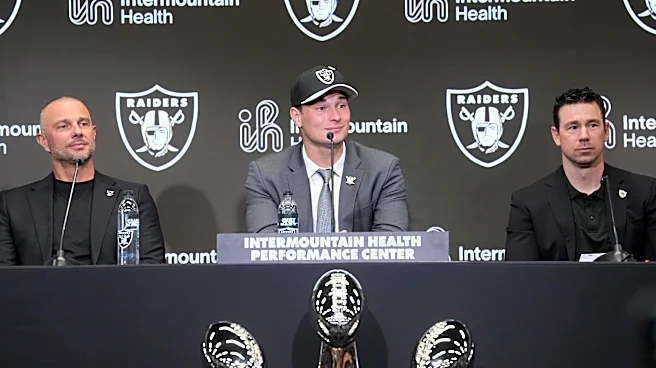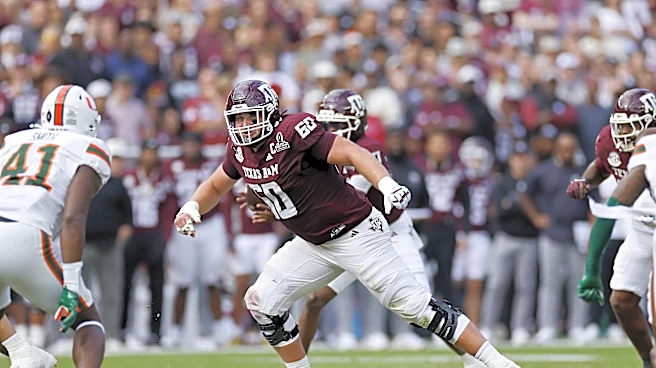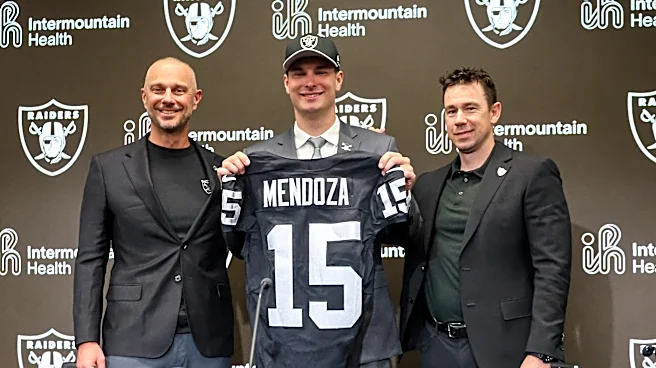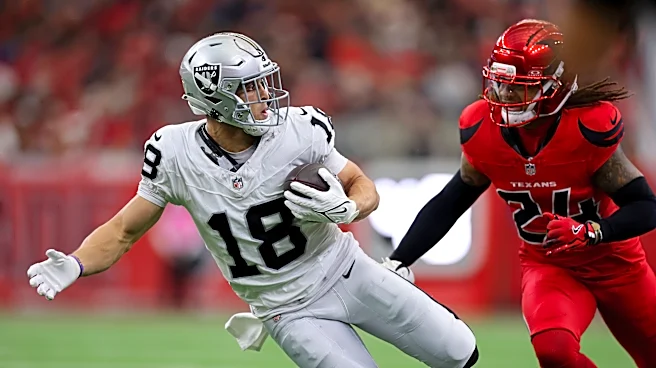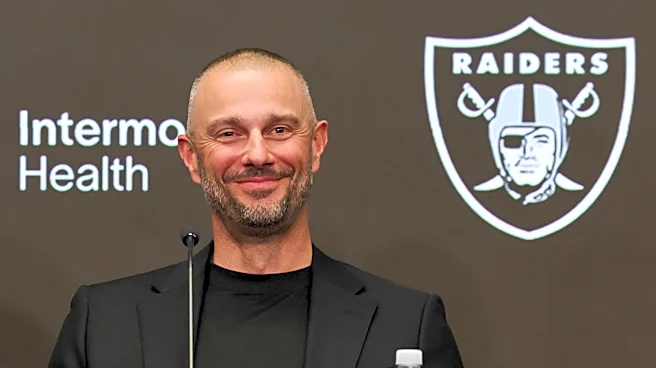




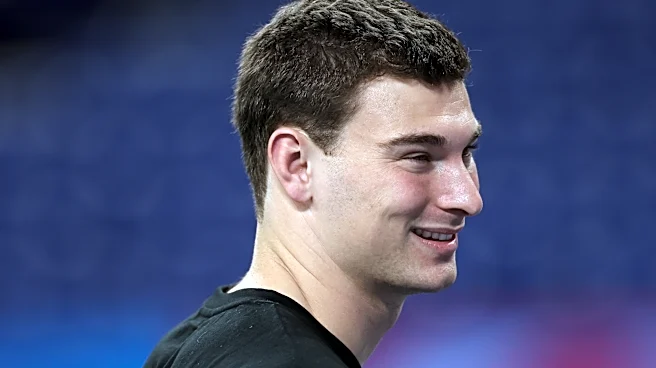
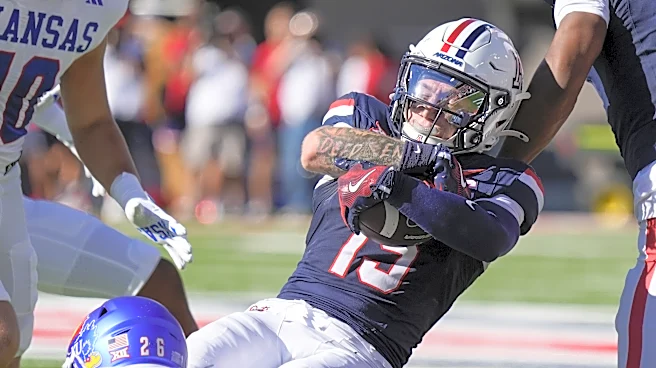
With the 2026 NFL draft in the books, Las Vegas Raiders general manager John Spytek now has two drafts under his belt as the team’s decision maker and has added 21 players to the roster during that timeframe. That gives us an opportunity to explore some insights and notice any trends in how Spytek operates the draft. So, let’s dive into a few overarching takeaways that I’ve noticed about the general manager’s first couple of draft classes.
Age is just a number
Some general managers won’t touch a prospect if he’s older
than 23 years old or a specific age, not with a high draft pick at least. However, that’s not an issue for Sptyek. Treydan Stukes will be 25 in September, Darien Porter was 24 when drafted and Trey Zuhn III turns 24 in October, to name a few, and those three were all taken with top 100 picks.
This isn’t to say that Spytek only drafts older players, but it does show that he won’t let age be a deterrent from drafting someone. If this trend continues, it will also indicate that he prefers players with more experience.
Athletes over maulers
Circling back to Stukes, that pick was surprising over the weekend because the Raiders had a chance to address the defense’s need at nose tackle with Kayden McDonald. However, Spytek opted to trade back two spots and take the defensive back over a different gap filler in the trenches, like Christen Miller or Lee Hunter, and didn’t address defensive tackle until the seventh round.
Toward the end of the ‘26 draft, it became a running joke on X/Twitter that Spytek was big on a prospect’s Relative Athletic Score (RAS). Well, four out of the 10 players he drafted posted an RAS higher than 9.75, and two—Fernando Mendoza and Keyron Crawford—didn’t perform any athletic testing during the pre-draft process. And if you watch Crawford’s tape, you can see the basketball player background on the gridiron.
Even the offensive linemen Spytek drafts are high-level athletes. Zuhn posted a near-perfect RAS (9.99) and Caleb Rogers wasn’t far behind at 9.68. To be fair, Charles Grant (5.78 RAS) didn’t test well, but he’s another player whose athleticism stood out on film.
BPA over need

Mendoza and Ashton Jeanty both filled needs, but outside of the first round, the Raiders’ general manager tends to prioritize players who are higher on his draft board than filling a need. Stukes is a good example. Yes, Las Vegas needed help at safety heading into the draft, but the Arizona product primarily lined up as either a slot or boundary corner during his career, while McDonald had plenty of experience playing nose tackle.
On top of that, edge rusher, interior offensive line, cornerback, running back, a second safety, and a second cornerback were ancillary needs at best for the Silver and Black. But those positions made up the team’s next six draft picks after Stukes. Spytek even traded up to secure McCoy at the top of the fourth round to secure the “best player available” at the time.
Wheeling & Dealing
Speaking of trades, leading up to the draft, we can pretty much ignore where the Raiders are sitting in the draft order when looking at who they might take on Days 2 and 3. Spytek has made seven draft-day trades over the last two years, with five coming from this past weekend. In 2025, it was about adding more picks, moving back in the second round twice to end the weekend with 11 selections.
This year, he went into the draft with 10 picks and added 10 players to the roster, but there was a lot of wheeling and dealing to get his guys. Stukes, Zuhn, McCoy, Mike Washington, Dalton Johnson, Malik Benson and Brandon Cleveland were all drafted with picks the general manager traded for. For those wondering why the math isn’t adding up since there are seven players listed but only five trades mentioned, the capital to select Stukes and Zuhn, and Benson and Cleveland were acquired via package deals in two separate transactions.
Visits still a mystery
Technically, the takeaway here is that there’s no takeaway. I was hoping to get some clarity if Spytek actually uses Top 30 pre-draft visits to get more information on the players he eventually drafts, or if he uses the visits as a big smoke screen. Unfortunately, his first two draft classes have yielded pretty different results.
In 2025, four out of the 11 players he drafted were hosted in Las Vegas—Ashton Jeanty, Rogers, Grant and Cam Miller. Meanwhile, Mendoza was the only player to visit the Raiders and get selected by the team this year, and everyone knew he was going to be the No. 1 overall pick.
Something worth noting about how Spytek uses the pre-draft visits is that he will play off what the media says is his team’s biggest need to get people off his scent. For example, Shedeur Sanders, Will Howard, Jaxson Dart, Quinn Ewers, Jalen Milroe and Tyler Shough all had Top 30s in Vegas, and eight wide receivers were brought in this year.