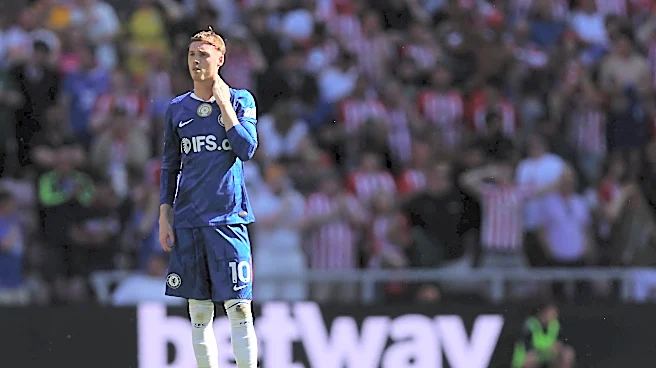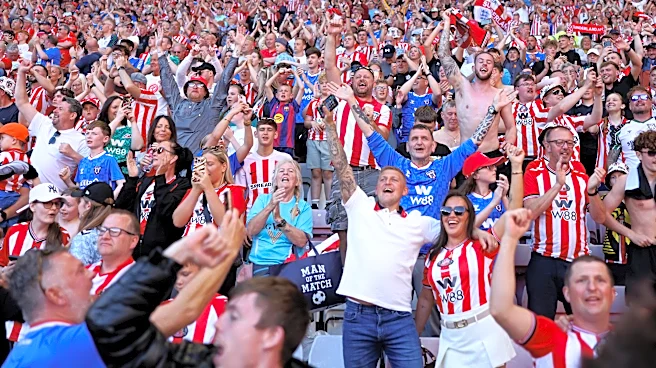




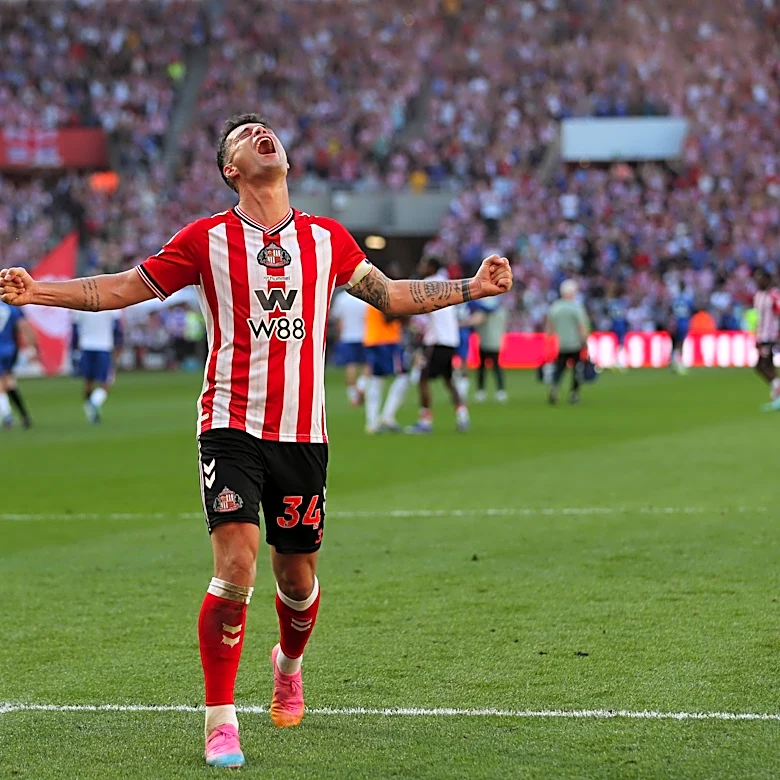



There are some weekends in life that you know immediately will stay with you forever — and this was one of them.
My son and I drove down from Edinburgh to Sunderland on Saturday morning carrying the strange mixture of excitement and caution that only Sunderland supporters truly understand. Hope always travels with you, but so does experience.
We’ve all seen too much over the years to assume anything would come easily; yet as we headed south and the familiar signs began appearing, something felt different.
The closer we got to Sunderland, the more the anticipation grew.
Football cities have their own atmosphere on big weekends, but Sunderland carries it differently. There’s pride here but also hunger, because success has never been handed to this club. Every achievement feels earned the hard way.
As we entered the city, seeing scarves draped from car windows and red and white shirts already gathering outside pubs, it felt like the whole place was holding its breath.

We started in the Canny Lad, then the Dun Cow, both busy with supporters talking permutations, old Sunderland stories and cautious dreams of Europe. Pints disappeared quickly and every conversation seemed to begin with “Imagine if…”.
That evening, we walked across the Keel Crossing, still new enough to feel symbolic somehow — modern Sunderland stretching confidently across the Wear while carrying all the weight of its history beside it.
Ahead of us stood the Stadium of Light and emblazoned across its side, “Welcome to Sunderland.” Simple words, but at that moment they felt strangely emotional. Because Sunderland has always been more than a football club: it’s memory, belonging, family and endurance.
Sunday began with a hangover-beating breakfast at Wendy’s Place, then we wandered through the city centre and I found myself quietly amazed at how much Sunderland has changed over the years. The old image many outsiders still hold no longer fits the reality: new buildings, new energy, students, cafés, riverside developments…the city seemed alive in a way I hadn’t seen for years.
And everywhere, more and more red and white. You could feel the importance of the day growing hour by hour, and the Fans’ Museum captured it perfectly.
Walking through those rooms felt like walking through my own life.
Every Sunderland supporter carries a private museum in their head and suddenly here it all was in front of me: the 1973 FA Cup memories, photographs of heroes from different eras, programmes, scarves, ticket stubs, promotion celebrations and heartbreaks preserved behind glass — as well as the infamous red beach ball that still somehow lives rent-free in every supporter’s memory, and Tommy Watson’s boots. So much history. So much survival.

And then came the match.
The atmosphere outside the ground was extraordinary long before kick off. Red pyrotechnics exploded into the afternoon air as the team bus arrived through crowds of supporters. Smoke drifted through the streets. Phones were held aloft and for a few moments, it felt less like a football match and more like a city summoning something together.
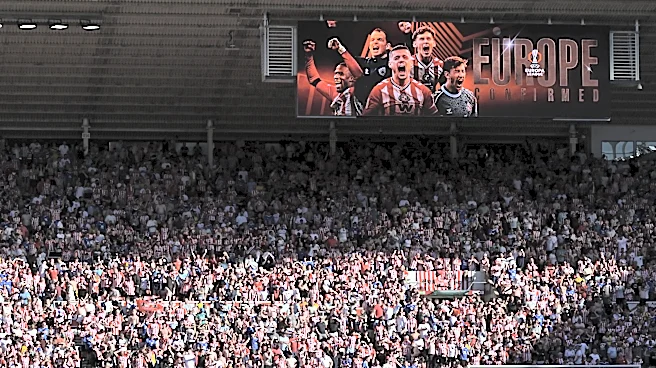
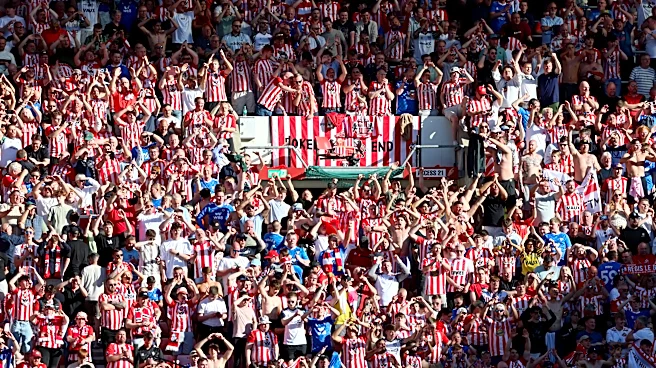
Inside, we stood with beers in 76 Yards watching the stadium slowly fill until every seat became red and white. There are bigger stadiums in England, but very few can generate noise like Sunderland when something truly matters and by kick off, the place was shaking.
When the first goal came, Luke O’Nien and Trai Hume — two players who had carried this club through darker days — combined perfectly and the release was deafening. Not just celebration, but recognition. Two stalwarts of the rebuild helping carry Sunderland into a future few would’ve believed possible four years earlier in League One.
The second goal arrived through relentless pressure, Brian Brobbey forcing the mistake and the stadium erupting again into disbelief and joy — but of course, because this is Sunderland, nothing could ever be entirely comfortable.
The final stages were agony. Every clearance was cheered like a goal. Every opposition attack seemed to last a lifetime. Around us, people stopped sitting entirely. Some could barely watch, and then finally, the whistle.
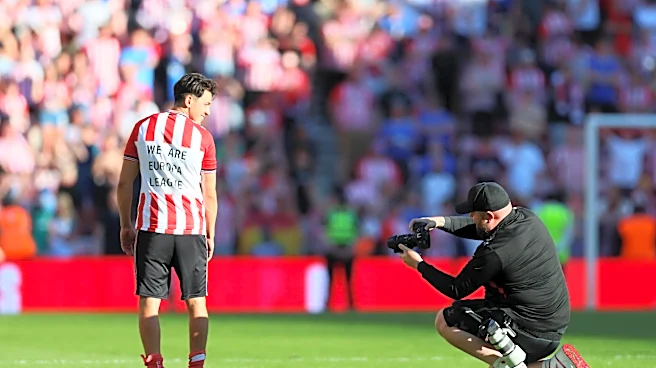
Europa League football confirmed for the first time since 1973, that magical year when all of this began for me as a thirteen-year-old boy in Hebburn, and Sunderland were back on the European stage.
The scenes afterwards were unforgettable. Players collapsing onto the pitch. Supporters singing long after the match had ended. Pride everywhere you looked.

What matters most, though, is not league positions or local bragging rights (“Mind the gap”, though!), but the sense that Sunderland has rediscovered itself. The club feels united from top to bottom: intelligent recruitment, courageous football, young players improving and supporters dreaming again, instead of merely enduring.
What a team.
What a management group.
What a football club.
And perhaps most importantly, what support.
As we stood there taking it all in, I thought about every year in between — all the disappointments, all the shattered hopes, all the reasons people could’ve walked away but never did.
“It’s only the beginning,” said Granit Xhaka.
For once, unbelievably, it truly feels like he might be right.