




Northwestern went 8-21 (2-16 Big Ten) in yet another season that its fans will hope to soon forget. Here are three numbers that defined the Wildcats’ disappointing season:
50.2
Northwestern’s effective field goal percentage allowed was 50.2, according to BartTorvik.com. This number reflects the problems that plagued the ‘Cats on the defensive end.
Effective field goal percentage is a statistic that measures shooting efficiency by adjusting for the fact that three-point shots are worth more than twos. Allowing
an effective field goal percentage above 50 means you couldn’t stop a nosebleed. Opponents consistently generated quality looks against Northwestern and converted at a high rate. The ‘Cats ranked 343rd nationally in this statistic, underscoring their defensive struggles. A Power Five team should almost never rank in the bottom 20 in Division I in any statistical category, especially one as fundamental as this.
The issues didn’t stop there. Northwestern allowed opponents to shoot 34.2% from three (336th nationally) and 49.7% from two (324th). Even basic metrics tell the story: NU allowed 80 or more points in 12 games.
You simply can’t win games giving up that much scoring defensively. Under new head coach Carla Berube, the defensive identity will need to change if Northwestern wants to get out of the loss column.
35.2
Northwestern’s defensive rebounding rate was 35.2%. That means the Wildcats grabbed 64.8% of their opponent’s missed shots.
While that might not seem disastrous at first glance, the top teams in the country secure close to 80% of defensive rebounds. To put it bluntly: Northwestern simply didn’t rebound the ball well enough to consistently win games.
On paper, that should seem surprising.
Grace Sullivan is an intimidating 6-foot-3, and Tayla Thomas might be an even more imposing figure at the same height. Thus, the ‘Cats had decent size in the frontcourt. The issues came elsewhere.
Northwestern’s three most-used guards were all under 6 feet. Xamiya Walton and Caroline Lau averaged a combined 63.2 minutes per game and are 5-foot-7 and 5-foot-9, respectively. That’s not to say Lau and Walton had an overall negative impact on NU, but it’s to say that the lack of size in three of NU’s starting spots severely inhibited its ability to rebound the ball.
The result: Northwestern ranked 306th nationally in defensive rebounding percentage. That’s not good enough in the physical, forward-driven Big Ten.
0-16
Northwestern went 0-16 against Quadrant 1 and 2 opponents in the NET rankings.
In simple terms: the ‘Cats couldn’t beat good teams.
And that might be an understatement.
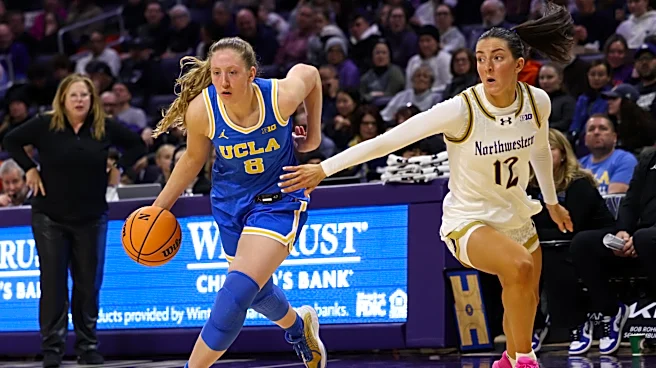
The ‘Cats got destroyed against good teams. Against UCLA, Michigan, Michigan State and Maryland – four of the best teams on its schedule – NU lost by an average margin of 28.5 points. The Wildcats struggled to stay competitive.
Thus, it’s not surprising that Northwestern lost all 16 games it played against Quadrant 1 and 2 opponents. In fact, it only beat three power-five opponents on the year, whose combined record was 33-62.
In that context, Northwestern’s eight wins may overstate the team’s performance. A 6-0 start against low-level competition masked deeper issues that became clear in conference play.
The Bottom Line
One can take these three numbers and begin painting the picture of Northwestern’s season.
50.2: NU couldn’t defend.
35.2: NU couldn’t rebound the shots that its opponents did miss, meaning its disappointing defense took center stage for longer.
0-16: The ‘Cats’ inability to defend and rebound resulted in a team that looked non-competitive for most of conference play.
Berube faces a significant rebuild if Northwestern is going to change its trajectory. This starts by aggressively hitting the transfer portal in search of height and athleticism to reflect the physical nature of the Big Ten.