



The 2026 NFL Draft is now under a week away. Much of the discussion has been around the first round that takes place on Thursday, seeing as though the consensus top prospects figure to have their names called that day.
However, don’t forget that there are two more days of the draft, While a lot of the flashiest names end up selected on Day 1, the real Super Bowl contenders are able to find diamonds in the rough on Days 2 and 3. Seeing as though the Bears won the NFC North last year for the first time
since 2018, they’re looking to establish themselves in that next tier up of serious championship contenders.
It can be tough to project which players will be available for the Bears in the third and fourth rounds, especially since we don’t know what the picks will be ahead of those rounds. However, using my own evaluations and the expert consensus rankings in the PFSN Mock Draft Simulator, I know which players grade out as third- or fourth-round talents going into this class. That’s no guarantee those players will still be available in that range, but if you’ve watched tape for long enough, a lot of your evaluations don’t stray entirely away from what the league thinks.
On Thursday, I posted a scattering of mid-round prospects I believe best fit the schemes the Bears run on both sides of the ball.
Today, I’ll be going in-depth with each of these prospects, sharing their strengths and weaknesses while specifying while they’re particularly good fits for Chicago in Rounds 3 or 4.
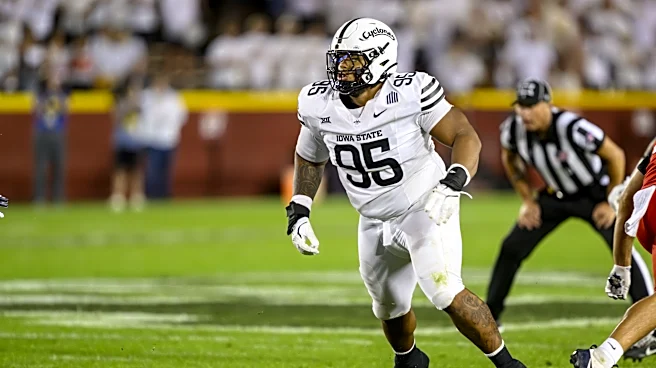
Kaleb Proctor, DT, Southeastern Louisiana
Kaleb Proctor fits the Bears’ scheme because of the athletic and physical attributes he possesses at defensive tackle. Defensive coordinator Dennis Allen has historically prefers his interior defenders on the smaller side, prioritizing explosiveness and quick backfield penetration over size and gap-eating ability. At 6’2” and 291 pounds, Proctor fits the bill as a smaller defensive tackle.
At the Combine, Proctor ran a stellar 4.79 40-yard dash with a 94th-percentile 1.68 10-yard split. He’s coming off a season with 9.0 sacks, two of which having come against LSU. His testing athleticism shows up on tape, as he’s consistently the first defensive lineman off the snap at Southeastern Louisiana. His speed, low center of gravity, and flexibility help him squeeze through gaps and project him as a penetrating 3-technique in the pros. Proctor’s quick hands and diverse arsenal as a pass-rusher should make him a valuable rotational defender on passing downs early in his NFL career.
De’Zhaun Stribling, WR, Ole Miss
An impressive size-speed combination at wide receiver, De’Zhaun Stribling projects as a WR3 or WR4 early in his career with the potential to be more down the stretch. He ran a 4.36 40-yard dash at the Combine this year at 6’2”, and his raw size and speed are complemented by his ability to work the stem to obtain leverage as a route runner on vertical route concepts.
Stribling is also a sure-handed receiver who can make grabs away from his frame and secure the ball through tight coverage. However, what specifically intrigues me about him as a fit for the Bears is his blocking ability. His raw size and length help him out at the point of attack, and he takes full advantage of that with good hand placement and a rugged demeanor when he engages in contact.
Stribling told me this in a recent interview in regards to his blocking prowess. I’ll let you decide if this fits the “no block, no rock” mentality that Ben Johnson likes to implement:
“I think it’s more my whole philosophy with it: establishing dominance. I’m gonna go out there, and I’m gonna establish dominance on whoever I’m playing. It doesn’t matter who it is or the body type; I’m gonna go out there and hit them right in the mouth, set the whole tone for the whole game.
“The other part of about that is just trying to win. I’m just trying to do my job to help us win. If I have to go in there and block hard for 30 plays a game, I’m gonna do that, just so I can give the whole team a chance to go out there and win. As a receiver, you get maybe seven targets a game. So out of 50 plays, what are you doing the rest of the 43 snaps? You have to go out there and block and make the most of it.”
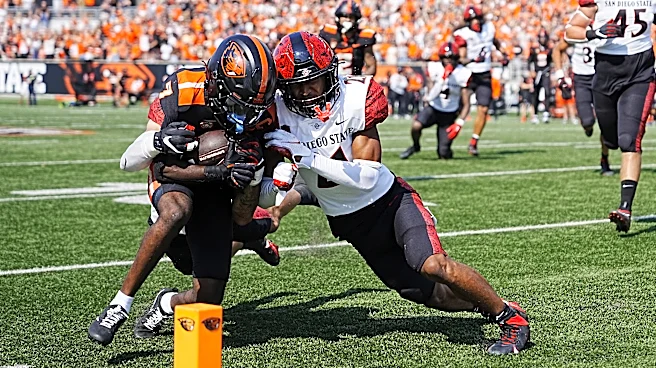
Tacario Davis, CB, Washington
Our Aaron Leming touched on Tacario Davis breaking down his own Day 3 prospects he likes for Chicago, and I agree with this sentiment of his in particular: “If there was a cornerback made in a lab that fits this defensive scheme, it’s Davis.” He’s a 6’4” cornerback with 95th-percentile arm length at 33 3/8 inches, giving him the prototypical frame to excel in Allen’s system as a perimeter cornerback.
Davis missed some time this year due to injury, but he’s displayed starter potential between his stints at Washington and Arizona, when healthy. He tracks the ball incredibly well in the air and has the catch radius to make deflections and catches that most cornerbacks don’t have the physical ability to. He processes route concepts well in underneath zone coverage, and while his lateral crispness needs work, he brings a rare physical amalgamation of tools worth betting on.
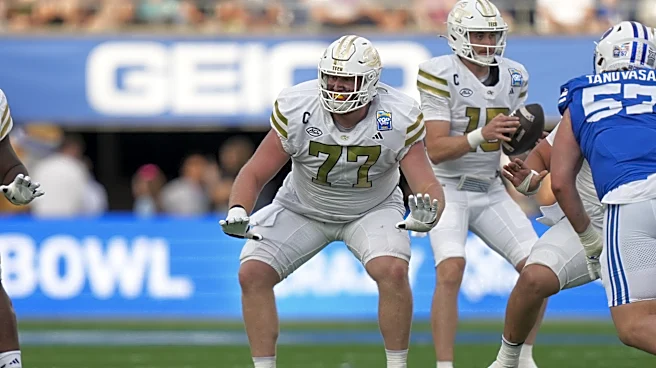
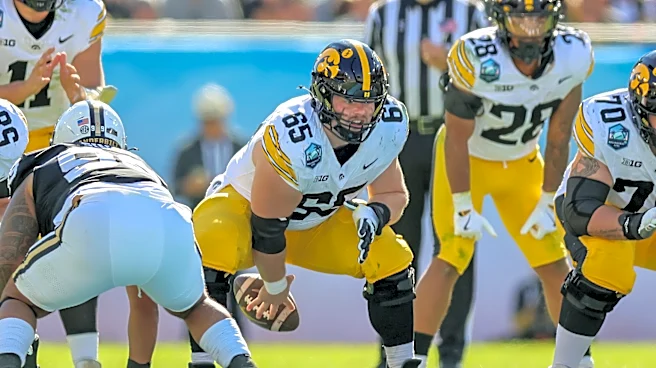
Logan Jones, C, Iowa
In my eyes, the only major reason Logan Jones would be available in the third or fourth rounds would be because he turns 25 during his rookie year. Being an older prospect, he might scare off teams in need of a developmental center, like the Bears presumably do as a successor to Garrett Bradbury.
However, I think Jones is good enough that he’d push Bradbury for a starting spot right away. Testing with a 9.63 Relative Athletic Score, he displayed the tremendous athleticism he showed in four years as a starter at Iowa. He’s explosive off the snap as a reach blocker or climbing to the second level in the run game, and he’s agile picking up blitzes and stunts as a pass protector. He also has a strong anchor with good raw grip strength to drive defenders off the ball. Jones’ length isn’t much to write home about, but he’s a perfectly functional blocker with quality starting upside.
Parker Brailsford, C, Alabama
Like Jones, Parker Brailsford fits the Bears’ zone-heavy run scheme because of his high level of athleticism and prowess blocking on the move as a run blocker. Between three seasons as a starter for Kalen DeBoer at both Washington and Alabama, Brailsford was a consistent anchor who could execute difficult assignments with his mobility, coordination, and technique.
At 6’2” and 289 pounds, Brailsford is smaller for a center and can struggle with taking on hefty nose tackles one-on-one. However, he’s super quick coming out of his stance and hits his marks quickly on the move, using his explosiveness to reach his targets and his coordination to roll his hips through contact and seal the defenders off in the run game. He keeps his head on a swivel and showcases ideal spatial awareness in pass protection.
Zakee Wheatley, S, Penn State
Between Adrian Amos and Jaquan Brisker, the Bears have had physical safeties from Penn State in their starting lineup for most of the last decade. Why not continue the trend with Zakee Wheatley? He fits Allen’s system well because he complements Coby Bryant well as a more reliable tackler, and he also brings ideal versatility to the secondary; the Nittany Lions had him play 316 reps as a deep safety, 253 reps in the box, and 84 reps in the slot in 2025.
Wheatley is a big-bodied safety at 6’3” and 203 pounds, and that size shows in how much pop he generates as a tackler at the wrap-up point. He’s a quick processor with good downhill speed as a tackler, and that ability to shoot downhill helps him jump routes in coverage defending underneath. His motor as a tackler and his aggressiveness in coverage should see him fit in well in Chicago, if he gets drafted there. Wheatley might not be the rangiest safety in coverage, but with Bryant projecting well as a single-high safety in necessary formations, the rookie wouldn’t have to worry about that as much.
Jalon Kilgore, S, South Carolina
Versatility and speed is the name of the game for defensive backs in Allen’s system. The faster you are, the quicker you can get to the ball, and the more versatile you are, the easier it is to disguise coverage concepts and make things difficult for opposing quarterbacks. Jalon Kilgore has both tools; he ran a 4.40 at the Combine, and he’s played 1,382 career reps in the slot, 541 in the box, and 238 as a deep safety.
The only reason Kilgore might fall to Round 3 would be because of concerns around a relative lack of deep safety experience, as well as his over-aggression as a downhill tackler. That in mind, he has all the physical tools to be an impact player in the NFL. He’s 6’1” and 210 pounds with a muscular frame and tremendous downhill acceleration. He’s physical at the point in coverage and times his jumps on routes well coming out of his breaks. Kilgore is a hard hitter in run support who also has some experience as a punt returner on special teams. He would project as a likely starter from Day 1 on the Bears’ roster as it currently stands.
Landon Robinson, DT, Navy
As mentioned in the Proctor evaluation, the Bears will likely be looking for athletic defensive tackles above all else, prioritizing burst and finesse over raw size at the position. If you’re looking for someone who prioritizes burst and finesse over raw size, there’s perhaps no better example than Landon Robinson from Navy.
Robinson is clearly short for an NFL defensive tackle at 5’11”, but he makes up for it in many ways. His naturally low center of gravity and high level of flexibility helps him squeeze up the B-gap with ease, and he has tremendous acceleration coming off the line of scrimmage. His agility in space is awesome for his size, and he has a deep arsenal of pass-rushing moves like cross-chops, two-handed swipes, rips, and swims to shed blocks. Robinson had 6.5 sacks and won the American Defensive Player of the Year in 2025.
Interviewing Robinson a few weeks ago, he had this to say about the advantages of being a shorter defensive tackle:
“I think my size helps. I weighed 297 this morning, so I’m not underweight. From a height standpoint, it’s about leverage. Low man wins. That’s something every coach teaches. Being able to use natural leverage and quickness is how I win. I have long arms, too, so I can get under blockers and use my length to control them. It’s a game of leverage, speed, and strength. I use it to my advantage.”