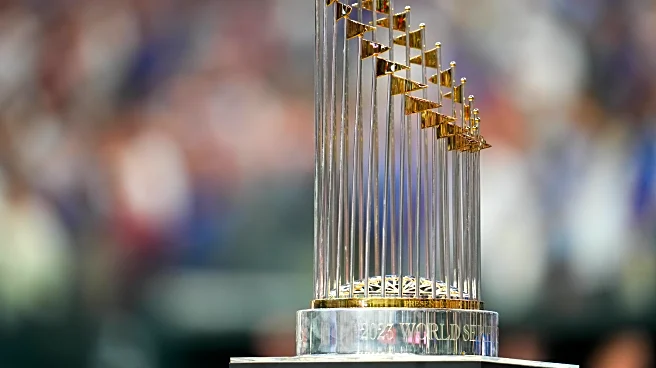


The Dodgers second title defense begins in earnest tonight.
From the Grand Tour of 2025, which spanned three countries, two continents, and took every last day of the season — and then some — to this new campaign, with a traditional length Spring Training. What a luxury. The Dodgers had the best record in the Cactus League, which seems off because they did not have 28 ties, but whatever, I hope someone gave them a little cactus for the memes.
After seeing friends and acquaintances gripe about how much
they spent on Opening Day tickets, I thought I would take a look. After seeing Loge tickets for over $500 directly from the team, I thought I would check the secondary market, starting with TickPick. I am not sponsored by them; I just abhor paying garbage fees if I can help it.
What I found did not surprise me in the least: one could look at a seat-map range for tonight’s game and be forgiven for thinking the postseason had already started. I have seen ticket prices ranging from $200 to $800 and more, depending on location.

For Opening Night, the Dodger tax is in full effect, with everyone paying like a road fan on Thursday. I have seen the groans and complaints as knowledge of prices has become more widespread. I had the following benign reaction to the news:
In my travels, I have long grown accustomed to paying out the nose for Dodgers tickets. With mild reductions to both the floor and ceiling of prices, I could swap tonight’s prices for games in San Diego, San Francisco, Atlanta, New York (both Queens and the Bronx), Seattle, West Sacramento, etc.
That assertion aside, I have full sympathy for anyone experiencing sticker shock. It stinks.
Granted, these prices are absolutely adorable compared to Game 1 of the 2025 season, but at least I had the good fortune to be in Tokyo when I plunked down the price of two used cars for my tickets to Game 1 and Game 2 of the 2025 campaign.
One consolation for the financial pain was that the games were an actual showcase international event that somehow spawned a mediocre documentary that one can literally start streaming on CNN’s streaming platform today. The Tokyo Series mattered, unlike the abomination that played out in San Francisco last night. The logic of “Netflix paid us money” is likely the only justification for starting the 2026 campaign with two literal also-rans.
Incidentally, the ticket for 2025’s Game 1 cost more than the ticket for 2025’s Game 179, albeit not by much. The sticker price for both tickets was comparable; it was just that capitalism (and the corresponding demand) exploded as planned.
Regardless, I understand the argument that the Dodgers have succeeded so much that they are now on the cusp or have started negatively affecting those who would just like to enjoy the ride: the casual fan.
The rush hour train is crowded
As someone who does not go to Los Angeles regularly, I do not find the influx of bandwagon and casual fans a big deal. Success breeds a party everyone wants to attend until they are priced out. No one wants to pay a premium price for games that do not, hence the modest attendance for the Freeway Series’ finale on March 24.
We do not have to rely on anecdotal evidence for this claim either. Michael Duarte of the California Post reported on March 19 about the booming prices of baseball tickets in 2026, focusing in part on how the Dodgers are leading the way:
Baseball is booming and so are the ticket prices. In 2026, ticket prices depend on where you sit and which team you’re watching.
Here in California, the divide isn’t subtle. It’s as large as the Grand Canyon.
The Los Angeles Dodgers don’t just lead Major League Baseball in ticket prices this year, they honestly belong in another economic category altogether.
The average minimum ticket price at Dodger Stadium sits at $76.57, nearly double the MLB average of $34.82…
…On average across the league, when the Dodgers come to town, the cheapest ticket in the ballpark jumps to $62.51. The only other team in that stratosphere is the rival Yankees.
Mr. Duarte is not exactly reporting breaking news here, especially as to the road front. Factor in the average ticket price, the $45 parking fee (unless you booked ahead of time, saving $5), the prices for food and drink (heaven forbid, alcohol), and one is looking at a several-hundred-dollar expenditure for a family of four or more to see the Dodgers in person.
It is widely believed that the Dodgers pulled in over $1 billion in revenue last year, topping the four-million mark in attendance for the first time in franchise history. Note that I did not say “profit,” but given the team’s perception problem, the distinction will likely be lost on most. I have harped on this point before: does the team need to extract every nickel and dime it can out of its fanbase?
Would a five-dollar hot dog, a refillable soda, and capping the prices of certain tickets really break the franchise and critically slow the Dodgers’ financial juggernaut?
Echoes of a bygone age
I remember when I was so broke that I could only cobble together the funds to go to a single game at Dodger Stadium a year. If you came back to tell me in 2012, after seeing Chris Capuano “pitch”, that 14 years later I would be working for a site I was then intermittently reading and going to 17 Dodgers games in seven cities, words fail me as to how badly I would handle that hypothetical social interaction.
I would probably see it as a unique form of bullying; that’s how broke I was during those days.
In baseball’s golden age, seating was seen as a great democratic (small d) equalizer, as you would have members of different social and economic classes jumbled together to watch baseball. That horse is so far gone from the figurative barn that it has died from old age from running free.
There is no going back; if you want a better view, you have to pay for it. Baseball teams have been catering to the 1% of earners, its whales, for a long time now.
A modest proposal
If I could change one thing about the operation of the Dodgers (I can’t) or if the Dodgers were interested in the public relations boon that would arise from following my advice (they are not and they will not), I would implement the following changes on ticket prices for the regular season going forward:
- No bleacher seat should cost more than $25 out the door.
- No upper deck seat should cost more than $40 out the door.
I am being entirely arbitrary, operating purely on the vibes, as the children say. I simply asked myself what 2012-me would have considered fair. If the Dodgers’ economic engine is wholly dedicated to running on the backs of those sitting in the literal cheap seats, so be it. But without looking into the team’s financial books, I suspect that all the corporate and sponsorship money, along with the media deal, are largely keeping the proverbial ship afloat.
Plus, imagine the public-relations bonanza if the team announced such a move; it would flummox the naysayers with a single announcement. Two additional steps would be needed to thwart scalpers and others who would seek to ruin a good thing. Oddly enough, one step comes from what I have seen other franchises do, and the other step comes from the Savannah Bananas, of all people.
This year, when obtaining my Phillies tickets directly from the team, they were initially geolocked to residents of Philadelphia and the surrounding counties. I do not live in Pennsylvania, and I was prompted to call the ticket office. I did, and ten minutes later, after declaring that I was not a scalper and that I was only after one ticket for one game, the transaction was completed with nary a feather ruffled.
Generally, a setup like the one described above thwarts, or at least slows, the automated computer bot that can react faster than a human. The only way to ensure these tickets would not fall into the hands of mass sellers who would then feel free to raise the price as much as they want, to take a page from the Savannah Bananas, who were inspired by how music acts combat scalpers: by cutting out the middleman and becoming the only outlet to sell tickets.
Such measures would mean more work and less profit for the Dodgers, which is likely a non-starter. The situation seems likely to hit a breaking point with people’s finances, especially in a rapidly spiraling economy. Where that breaking point actually is is anyone’s guess.
Feedback on Dodger Stadium Express
For those going to games at Dodger Stadium in the next week or two, I would greatly appreciate feedback (posted in the comments of this essay or on BlueSky) on the wait times to get to and leave Dodger Stadium after games. There were changes implemented in the final third of the 2025 season, and I am working on a follow-up analysis essay for which I need to crowdsource anecdotal data, as I am physically unable to collect it myself.
Any assistance would be greatly appreciated.