
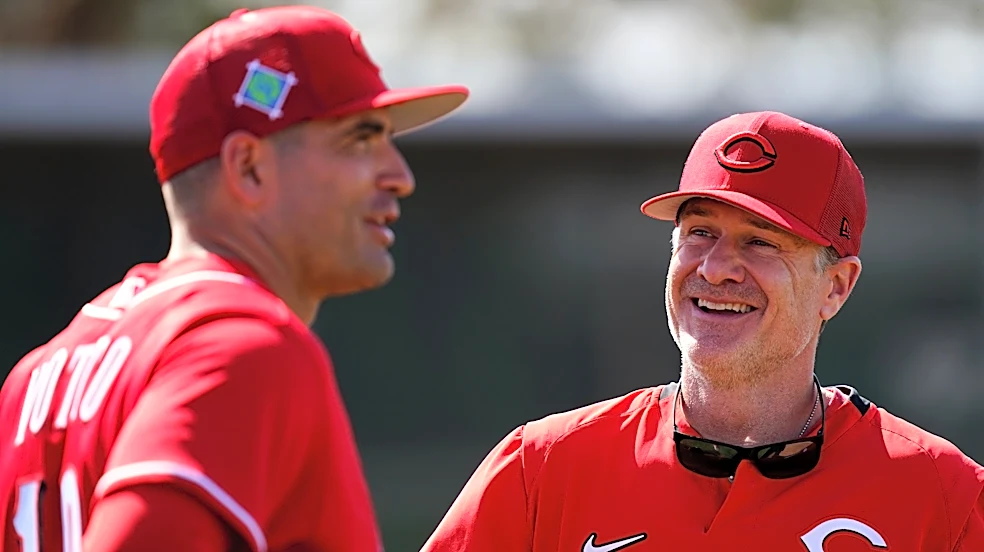

For the most part you can count the ways in which things went well for the 2026 Cincinnati Reds the same way you can count how many licks it takes to get to the center of a Tootsie Pop.
- Elly De La Cruz emerged as an offensive superstar to begin to match the talent he has within.
- Chase Burns was the ace we all dreamed about, and the Reds signed him long-term.
- Sal Stewart socked a lot of homers, drove in a ton of runs, and might win Rookie of the Year.
One, two, three – that’s what went right all season long.
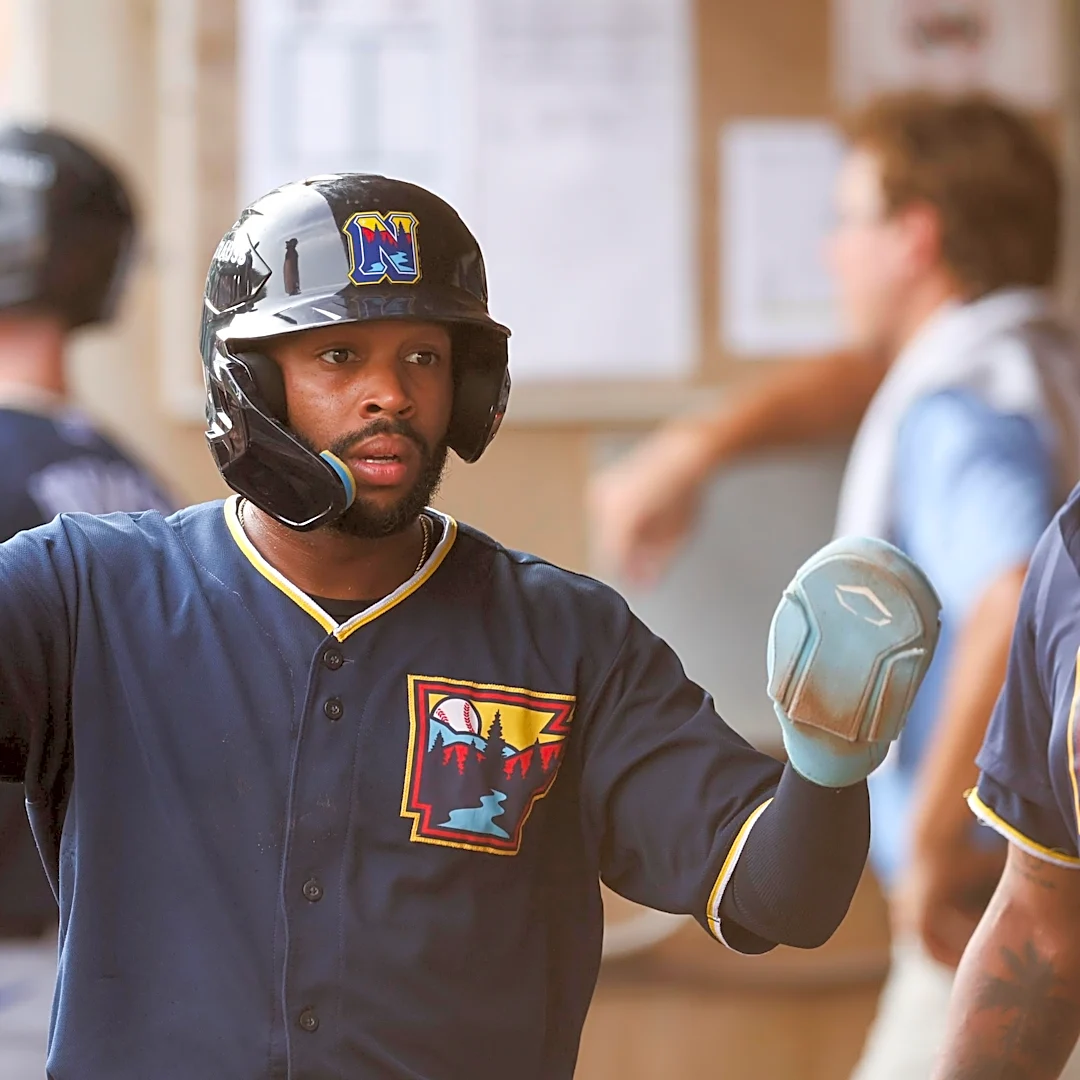
Amid those and the extensive list of things that decidedly did not go well, though, is a ho-hum 105 OPS+ season from a corner outfielder who posted a .217 batting average and a grand total of 1.2 bWAR. That would go to one JJ Bleday, who’ll turn 29 within the next
month, as his season would’ve made him tied for the 10th most valuable position player on the World Series bound Milwaukee Brewers.
He was not terrible. He’s got that going for him, which is nice. Signed off the scrap heap for just $1.4 million with another pair of seasons of team control coming with him, he provided just enough cheap production that a team like the Reds will absolutely be jumping for joy at their find, convinced there is so, so much more to him than the .217/.324/.416 (.740 OPS) he put up in 545 PA for them during the 2026 season.
That may be because we – and the Reds – really did see so much more than that for a time.
Though JJ lost out on a spot on the team’s Opening Day roster due to the presence of fellow lefty outfielder Will Benson and Nathaniel Lowe (who the Reds would have lost back to free agency had they not chosen to pick him at that time of the season), he went straight to AAA Louisville and mashed. And when it became obvious that he was more deserving of a big league roster spot than most of his peers by late April, he was summoned back to the big leagues and promptly mashed the way the Miami Marlins thought he would when they selected him 4th overall out of Vanderbilt back int eh 2019 MLB Draft.
He was the best hitter in the National League through June 1st, if not on the entire planet. He took home the NL Player of the Month Award for May, and when he woke up on June 2nd he owned a .301/.399/.655 line (1.053 OPS) with 10 homers across 31 games played – all with a completely reasonable .304 BABIP through 133 PA. The Reds, at the time, looked like they’d found the second coming of Scooter Gennett.
Two things in particular should stand out at this point of the article. One, that I cherry-picked June 2nd as an important date, for some reason, and two, that Bleday held a completely normal (and almost completely average and expected) .304 BABIP to start his season. He was that good without it being ‘lucky,’ in essence – his .304 BABIP through games played on June 1st anked tied for 110th out of the 306 MLB players who’d logged at least 120 PA through that date. In other words, his numbers weren’t being inflated by Acts of the Baseball Gods that would have suggested that a good portion of his otherworldly work would not be sustainable.
June 2nd, though, is when the Baseball Gods did decide to start fighting back, however.
There were 163 MLB players who logged at least 300 PA from June 2nd until the end of the regular season, and JJ Bleday was one of them. Nobody else posted a BABIP worse than the .216 he put up in that time.
Not a single person.
Now, it’s worth pointing out that Bleday is a pretty extreme fly-ball hitter. Extreme fly-ball hitters typically do carry BABIPs slightly below average since no batted ball is ‘easier’ to catch than fly balls. That tracks intrinsically, as they spend more time in the air and the ones that aren’t hit into the seats are typically hit much softer than laser liners and even pulled grounders. At 51.4%, he ranked as the 6th most fly-ball happy hitter among that 163 player sample, and his 0.52 GB/FB ratio was the second lowest to only Seattle slugger Cal Raleigh. Pending MVP Pete Crow-Armstrong, I should point out, ranked 4th there at 0.54, while other noted sluggers like Miguel Vargas, Wilyer Abreu, and Isaac Paredes ranked in the Top 10 (with Yordan Alvarez at 16) – good company, in essence.
His 23.7 degree launch angle anked 4th – again with Raleigh atop the list – and he ranked in the middle of the pack in each of exit velocity, barrel rate, and hard-hit rate. His expected slugging was roughly 40 points higher than his actual slugging during this time, and the .190 average he posted was somehow the third worst. Those aren’t superstar numbers by any means, but had his BABIP hovered more around the middle of that pack like most of the rest of his batted ball metrics, we’re talking about a guy who should’ve posted an OPS around ~.760 or .770 during the ‘slump’ portion of his 2026 season, not a guy who actually posted a .639 mark that ranked 147th out of that 163 player sample.
I don’t think there’s a ton left to ‘unlock’ with Bleday as he enters his age-29 season in 2027, especially not with the hitting coaches employed by the Reds running the show. I do think, however, that if he simply runs back the approach and batted-ball impacts he had in 2026 during the 2027 season his numbers at season’s end will look rosier than the ones on the back of his baseball card right now – and that’s before we even get into how he should never face a left-handed pitcher ever again. And if that’s the case, there’s still a chance the Reds can make a claim that they really did find another diamond in the rough.