



Hayden Senger
Week: 5 G, 17 AB, .412/.474/1.000, 7 H, 1 2B, 0 3B, 3 HR, 2 BB, 6 K, 0/0 SB, .500 BABIP (Triple-A)
Season: 5 G, 17 AB, .412/.474/1.000, 7 H, 1 2B, 0 3B, 3 HR, 2 BB, 6 K, 0/0 SB, .500 BABIP (Triple-A)
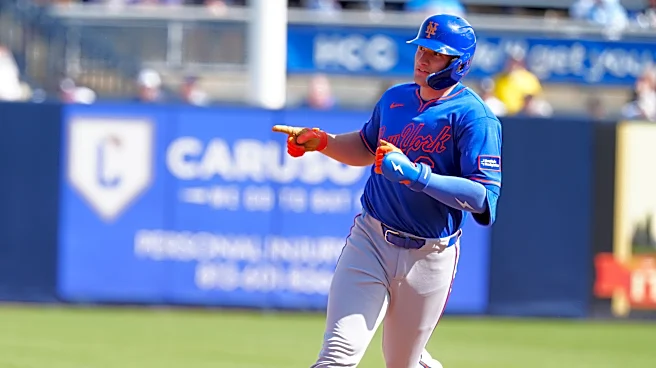
If these trends continue, Hayden Senger is on his way to being the greatest hitting catcher of all time. Odds are, these trends are not going to continue, but that sure would be fun, wouldn’t it? Hayden Senger isn’t exactly a guy who is known for his bat; in 46 games in Syracuse last season, he hit .218/.268/.339
with 5 home runs and in 2024, he hit .252/.323/.401 in 46 games with 3 home runs. At this rate, if Senger plays 46 games this year, he is on pace for roughly 27 long balls, and if he plays an entire season, he is on pace for roughly 84.
The 29-year-old was drafted back in 2018 out of Miami University of Ohio and in the first few years of his professional tenure with the Mets, was getting roughly a full-time catcher’s load, averaging 85 games in 2019, 2022, and 2023 and playing 61 in the COVID-delayed 2021 season. When he made it to the upper levels of the minor league ladder, it became apparent that his bat was a bit too anemic for the levels and he lost out on a lot of playing time, primarily relegated to back-up catching duties. Last season, he got a quick cup-of-coffee when Francisco Alvarez began the season hurt, but Luis Torrens eventually emerged as the better of the pair due to his better bat.
Barring the unlikely chance that Senger is a .412/.474/1.000 hitter from now until September, it is likely that the backstop will remain in the role that he’s settled into over the last few years. Better performance in Syracuse may buy him some more playing time, and depending on how well he does, could even theoretically get him some Major League playing time if certain factors line up, but we know who the “minor league veteran” is at this point, and his strength lies in his defense, ability to handle a pitching staff, and his baseball intangibles, not his bat. A random outlier season is obviously possible, but odds are, Senger will regress to the type of organizational guy you want in your system for everything else he brings to the table except his bat.
Cam Tilly
Week: 1 G (1 GS), 5.0 IP, 0 H, 0 R, 0 ER, 1 BB, 6 K (Single-A)
2025 Season: 1 G (1 GS), 5.0 IP, 0 H, 0 R, 0 ER (0.00 ERA), 1 BB, 6 K, .000 BABIP (Double-A)
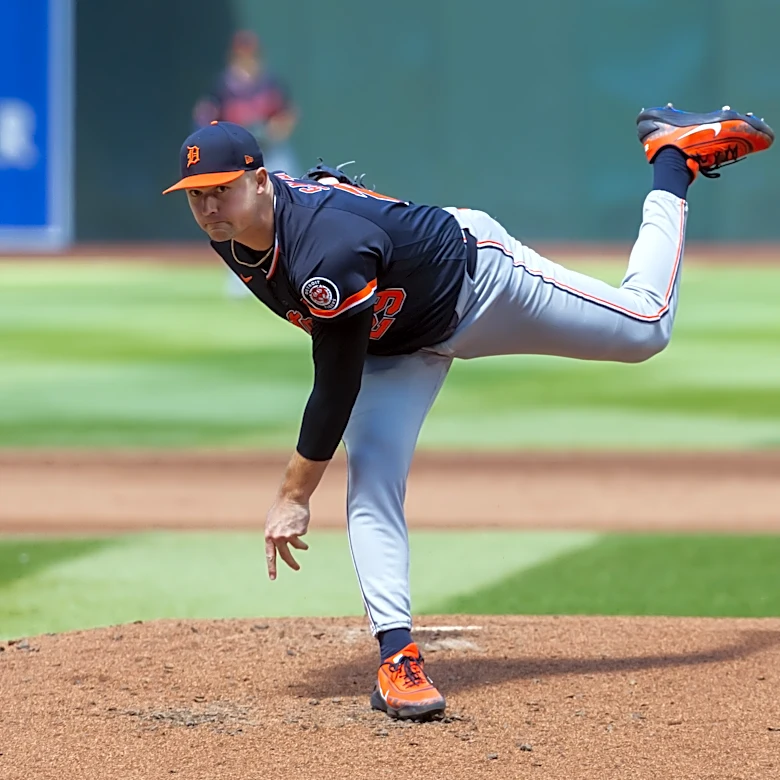
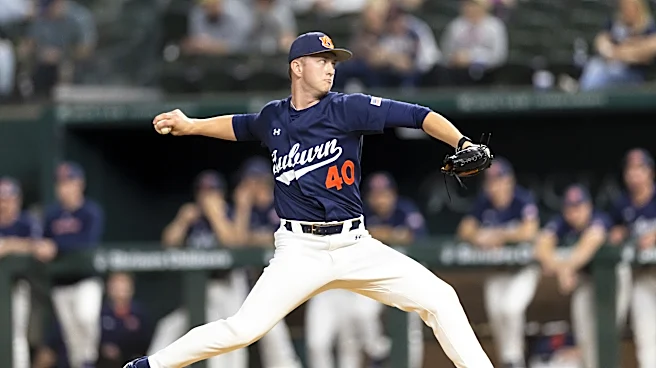
Not bad for your first professional game. Toeing the rubber for the St. Lucie Mets against the Palm Beach Cardinals in his first ever start as a member of the New York Mets organization, the 22-year-old right-hander threw five no-hit innings, walking one and striking out six. Tilly was drafted last season out of Auburn, where he threw two uninspiring seasons primarily in relief. The Mets selected him in the seventh round and he signed for $397,500, roughly $150,000 over the MLB-assigned slot value of $254,000 for the 223rd overall pick.
Based on reports and evaluations at the time, the 6’2”, 205-pound right-hander possessed a four-pitch repertoire featuring a four-seam fastball, slider, curveball, and splitter. His fastball sat in the mid-90s fastball, topping out at 97 MPH, and featured high spin rates and above-average vertical induced break. His slider sat in the low-80s and featured spin rates in excess of 3,000 RPM, giving it late gyroscopic slice. His curveball sat in the upper-70s and also featured high spin rates, but lacked the bite that his slider possesses. His splitter sat in the low-to-mid-80s and featured late tumble. In a vacuum, all of his pitches looked good, but the right-hander had trouble commanding them, partially due to the break on them and partially because of the crossfire in his three-quarter delivery.
Looking at statcast data from his start for better clarity about Tilly as a pitcher, he utilized a four-seam fastball (19 pitches, 39%), changeup (10 pitches, 20%), cutter (8 pitches, 16%), slider (7 pitches, 14%), and curveball (5 pitches, 10%). His fastball was thrown for a 78% Strike Rate, his changeup was thrown for a 70% Strike Rate, his cutter was thrown for a 63% Strike Rate, his slider was thrown for a 57% Strike Rate and his curveball was thrown for a 20% Strike Rate. His fastball drew the most swings and misses, with a 60% Whiff Rate, while his curveball did not cause any swings and misses.
His fastball averaged 92.2 MPH, sitting between 89.9 MPH and 93.7 MPH. It averaged 2,420 RPM, ranging between 2,300 RPM and 2,540 RPM, giving the pitch an elite 19 inches of induced vertical break and 10 inches of horizontal movement. His cutter averaged 85.6 MPH, sitting between 84.5 MPH and 86.3 MPH. It averaged 2,520 RPM, ranging between 2,450 RPM and 2,600 RPM, giving the pitch 4 inches of horizontal jerk.
His changeup averaged 84.8 MPH, sitting between 83.3 MPH and 86.1 MPH. It averaged 910 RPM, ranging between 750 RPM and 1,090 RPM, giving the pitch 34 inches of vertical drop and 12 inches of horizontal hop.
His slider averaged 82.7 MPH, sitting between 80.8 MPH and 85 MPH. It averaged 2,710 RPM, ranging between 2,540 RPM and 2,880 RPM, giving the pitch 36 inches of vertical drop and 10 inches of horizontal slice. His curveball averaged 80.4 MPH, sitting between 79.8 MPH and 80.9 MPH. It averaged 2,810 RPM, ranging between 2,740 RPM and 2,895 RPM, giving the pitch 43 inches of vertical drop and 14 inches of horizontal break.
As is the case with any pitcher, these numbers and trends may change throughout the year, as Tilly is still not only a developing player, but it is literally the beginning of his baseball journey.
Players of the Week 2025
Week One/Two (March 27-April 5): Hayden Senger/Cam Tilly