





There’s a certain tone of equal parts pragmatism and quiet frustration with the NCAA’s latest eligibility proposal.
Not outrage for outrage’s sake, but a measured, almost weary recognition that the system has drifted far from its stated ideals. This newest proposal, most notably introducing age limits and tightening eligibility windows, feels less like bold reform and more like a late attempt to restore order to something that’s already been gamed beyond recognition.
At its core, the proposal from
the NCAA aims to address a growing imbalance: athletes stretching their “amateur” careers well into their mid-20s, often leveraging redshirts, COVID waivers, transfers, and medical exemptions to stack years of eligibility.
In theory, this is about fairness and clarity.
But in practice, it’s a response to a system that has rewarded those most capable of navigating its gray areas.
The Pros: A return to structure (at least on paper)
From a structural standpoint, the proposal has merit that sets clearer age limits and eligibility timelines. It introduces a level of predictability that college athletics has sorely lacked in recent years. For conferences like the Mountain West and other Group of 5 programs, this could help stabilize rosters.
Mid-majors don’t have the luxury of hoarding talent or absorbing constant roster churn. When a 24 or 25-year-old “super senior” occupies a scholarship spot, it’s not just a feel-good story: it’s a bottleneck. That’s one fewer incoming freshman, one fewer developmental prospect, one fewer chance for a program to build sustainably.
There’s also a philosophical alignment with what the NCAA still claims to be: a collegiate model centered on education and limited athletic participation. If the spirit of the “student-athlete” is to balance academics with a finite athletic window, then a six- or seven-year playing career begins to stretch credibility, right?
At some point, the distinction between college and professional blurs beyond usefulness.
And yes, there’s a financial angle that quietly underpins all of this. The NCAA reportedly spends millions adjudicating eligibility cases with appeals, waivers and exceptions; often with inconsistent outcomes. A more rigid framework could reduce that burden, or at least make decisions less arbitrary.
The cons: Punishing the many for the few
Here’s where the skepticism creeps in. Because while the proposal addresses symptoms, it doesn’t fully grapple with the underlying incentives that created the core of the problem itself.
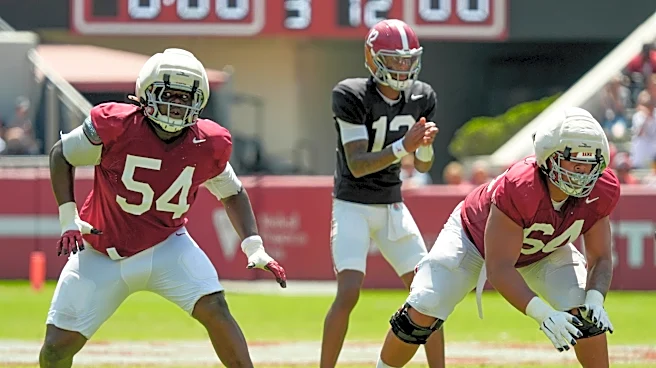
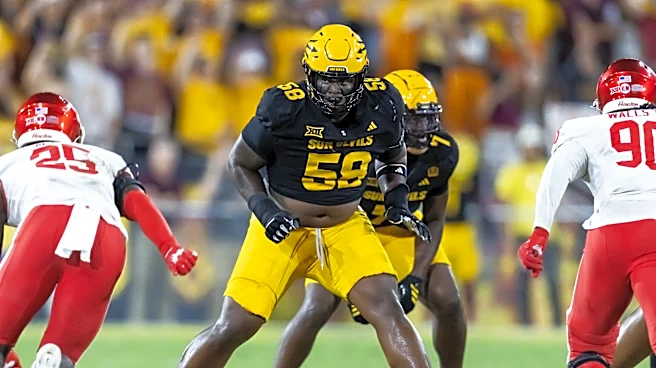
For every high-profile athlete extending their college career to maximize NIL opportunities, there are dozens of players, especially at mid-major and Group of 5 schools, who rely on those extra years for entirely different reasons. Developmental quarterbacks, late-blooming linemen, players who missed time due to injury or circumstance, where a hard age cap doesn’t differentiate between opportunism and necessity.
And in a system already stratified by resources, who stands to benefit most from tighter rules? Not the Mountain West. Not the Sun Belt. It’s the power programs that can reload instantly through the transfer portal, that have the infrastructure and resources to identify and secure talent earlier and that don’t rely as heavily on long-term player development.
In other words, the proposal risks reinforcing the very imbalance it claims to address.
The reality: Amateurism as a convenient myth
What’s impossible to ignore and should be an emphasis is the growing disconnect between the NCAA’s rhetoric and reality.
The idea of the “amateur student-athlete” operating in a pure, educational environment has been functionally obsolete for years. Today’s landscape is transactional, accelerated, and hyper-visible, where NIL deals, transfer portals, and media exposure have created a marketplace where athletes are both students and commodities.
In that context, extending one’s college career isn’t just opportunistic: it’s rational.
If a player can earn six or seven figures through NIL while maintaining eligibility, why wouldn’t they delay entering a professional league where contracts are less guaranteed?
Essentially, the NCAA’s proposal doesn’t eliminate that logic. It just limits how long it can be exploited.
Hidden drivers: Who really benefits?
Dig a little deeper and the motivations behind the proposal become more complex.
There’s a clear institutional interest in cost control. Fewer eligibility exceptions mean fewer legal battles, fewer administrative headaches and a more streamlined governance model.
But there’s also an unspoken alignment with the interests of the sport’s power brokers.
Shorter eligibility windows mean faster roster turnover. Faster turnover means more movement in the transfer portal. And more movement benefits programs with the resources to scout, recruit, and integrate talent quickly.
It’s not hard to see how this could consolidate power further at the top, leaving mid-majors scrambling to adapt. The same schools that already operate on thinner margins, financially and competitively, are once again asked to adjust to rules shaped by a system that doesn’t fully account for their realities.
Even media dynamics play a role. The “flash-bang highlights culture” thrives on newness; new stars, new storylines, constant churn. Extended careers don’t fit that narrative as neatly.
The bottom line
The NCAA’s eligibility proposal is, in many ways, a necessary correction.
The current system is unsustainable, inconsistent, and increasingly detached from its stated principles, but it’s also a reminder that reform in college athletics rarely exists in a vacuum.
For mid-majors and Group of 5 programs, the challenge isn’t just adapting to new rules; it’s surviving within a framework that continues to shift in ways that often favor the few over the many.
And until the NCAA fully reconciles its identity between amateur idealism and professional reality, these kinds of proposals will continue to feel less like solutions and more like temporary patches on a fundamentally uneven playing field.