





How low can the vibes get before you reach a point of no return?
We got pretty close to that after the demoralizing beatdown the Knicks got at the hands of the shorthanded Mavericks back on MLK Day in January to fall to 2-9 in their last 11 games. Even throughout all the frustration in the prior year and a half, it felt like the Knicks were dangerously close to something irreparable that night. Fortunately for them, they solved their woes two nights later.
The Game 3 defeat at the hands of the Atlanta
Hawks on Thursday somehow found a lower point. While January is still a ways away from the playoffs and most fans knew they had enough time to shape up, the Knicks were suddenly fighting for their lives in Game 4. A loss would mean a 3-1 deficit and an all-but-assured first-round exit in the season with the highest expectations in nearly three decades.
The discontent was already beginning. Mike Brown was being flamed for every single decision. Jalen Brunson’s struggles were having fans question his long-term viability as the face of this franchise (don’t believe me? We got that discourse in our very own comment sections!). Mikal Bridges became the most slandered man in basketball. For the sake of the franchise and everyone involved, Game 4 was a must-win, even if they could technically afford to lose.
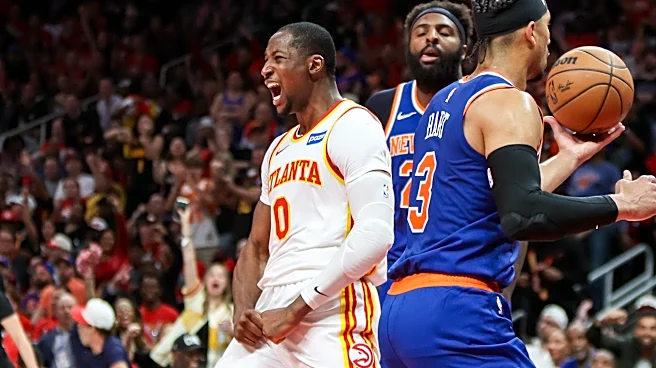
But they didn’t. They almost led buzzer-to-buzzer, and aside from a brief charge to start the second half, the Hawks were down double digits for essentially the final three quarters. Every small run was answered. Every time Atlanta countered an offensive strategy or found a way to exploit a defensive hole, it was patched immediately. It was 48 minutes of pure execution.
You could not script a better feel-good victory that has you take a step off the ledge and believe better days are ahead. But what exactly changed about how the team played in Game 4 compared to the first three?
Defensive Intensity and Pressure
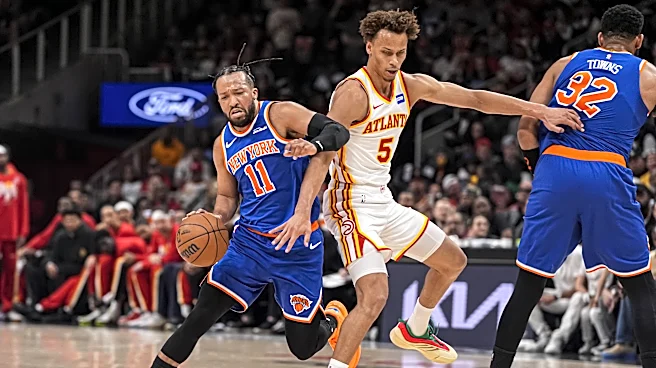
The No. 1 thing that the Knicks did right in Game 4 was to not make anything easy for the Hawks on offense. There was significantly more full-court pressure, a higher pick-up point, and more physical on-ball defense. CJ McCollum, whose performance in the first three games mirrored the Black Mamba, got a variety of looks to keep him off balance and it wore him down, to the point where he played significantly more off-ball than usual.
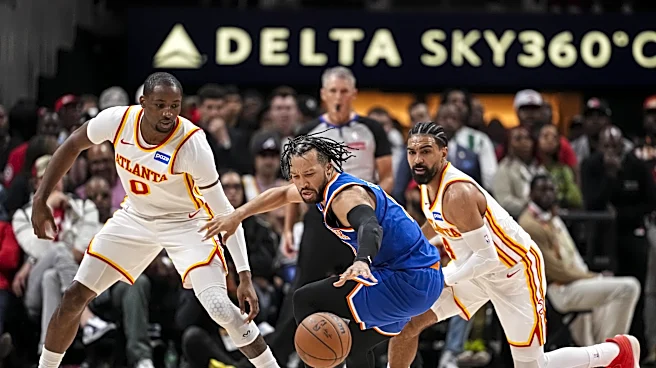
The Knicks forced 18 turnovers and made play after play, gambling for steals and deflections to slow down a potent offense that thrives on early shot clock action.
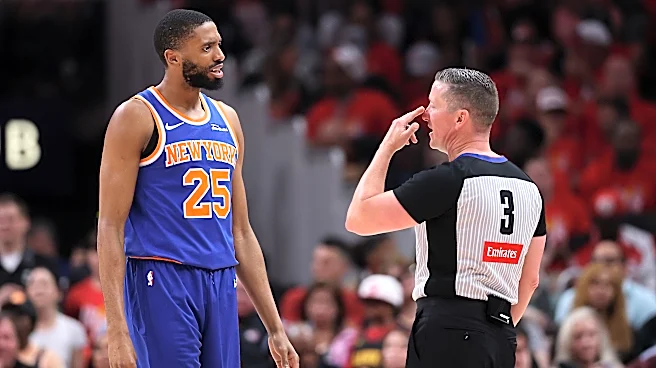
A different referee crew might disrupt the game flow with a litany of fouls on these plays, but the Knicks recognized early that Scott Foster’s crew was going to let them play, and they looked the part of a veteran team playing with the type of desperation they needed against a young, athletic team on the road.
But it wasn’t just the way they were dragging down Atlanta in the halfcourt; it was the way they prevented them from playing to their pace.
Game 4’s pace sat at just 94 possessions, compared to 101 in Game 3.
The Hawks went from scoring 40 combined fast-break points in their two wins to just seven in Game 4.
The Hawks scored 37 points off 29 combined turnovers in Games 2 and 3, but only scored 14 points against 14 turnovers on Saturday. The Knicks turned the Hawks over 18 times on Saturday, a series-high.
All of this is absolutely necessary to continue to take firm control of this series.
Working Through Karl-Anthony Towns
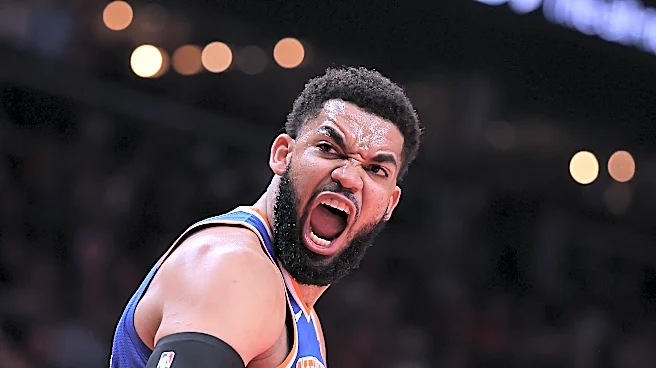
Pretty much everyone here at P&T believed that Karl-Anthony Towns was the X-factor, so there’s no coincidence that Towns’ two best games have been the two wins this series.
What’s fascinating, however, is that you’re not getting the 35-point masterpieces. Instead, you’re getting low shot totals and 20-point triple doubles.
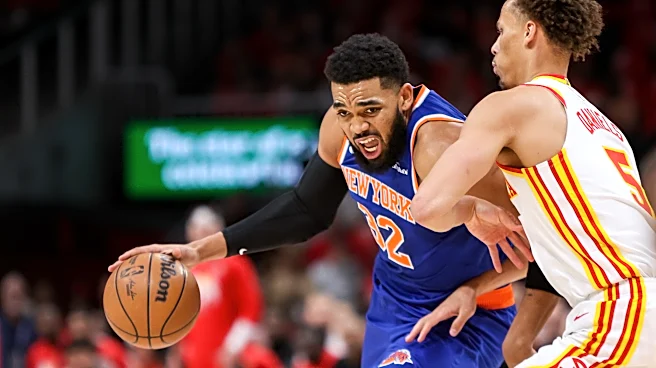
Gravity is extremely impactful in evaluating the impact of an offensive player. Even when Jalen Brunson is struggling with his shot some nights, he can have a big impact by drawing defenders and spraying to open shooters. While that’s not precisely what happened with Towns’ last game, his gravity led to openings for his teammates, specifically using the exact same back screen concept with Brunson and OG Anunoby that worked to perfection over and over again.
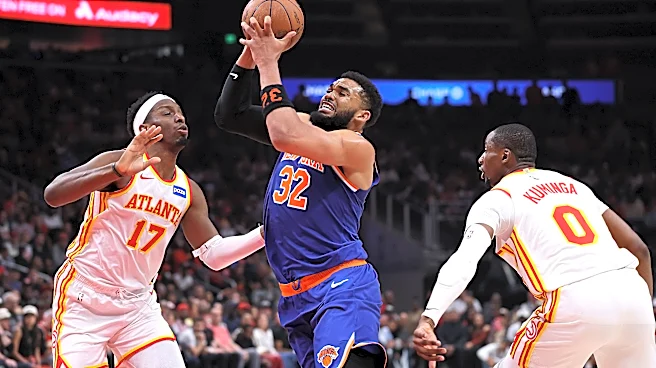
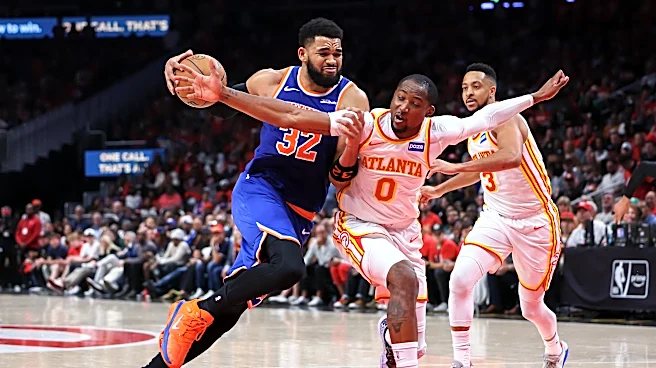
When he wasn’t the facilitator, Towns was going right at both Onyeka Okongwu and Jonathan Kuminga. Unlike before, when he was content to sink into the corner when the Hawks switched up the coverages with Kuminga, he was a man on a mission all night long.
The only player that the Hawks have no answer for is Towns. We’ve seen them hound Brunson with a variety of wings that have made him struggle through four games, but no coverage in the world can stop the Big Bodega when he’s decisive and playing with purpose.
Better Rotations
The only time in this series that the minutes with both Brunson and Towns on the bench have been catastrophically bad was the start of the second quarter of Game 2. Outside of that, they’ve played about even.
That said, we saw very few of those minutes in Game 4 as part of a very different rotation.
For one, the struggling Bridges was limited to just 19 minutes, as his impact on offense was incredibly muted and, due to the team-wide priority on more defensive intensity, his defensive impact was more replaceable. That meant more minutes for Deuce McBride, whose minutes alongside Brunson and/or Towns this series have been exceptional this series:

There was still no double big lineups, but Mike Brown’s real stroke of genius was how he deployed Brunson and Towns. He did an effective line change with four minutes left in the first quarter to get all starters but Josh Hart out of the game, but re-inserted Brunson after a one-minute recharge to finish the quarter before starting him on the bench and Towns on the floor in the second.
His trust in Jose Alvarado was also similarly important, and he’s been willing to play the hot hand by putting in the fiery Brooklyn native over Landry Shamet, who’s currently out of the rotation. There’s still potentially more moves to be made, but the moves made thus far have stabilized this series.
Effort. Pure Effort.
At the end of the day, this is what it’s all about.
The Hawks have flat-out played harder through three games in this series. Talent can overcome intensity every so often, but the Knicks put themselves in the muck for long enough that energy won out in Games 2 and 3. The Knicks needed to match the intensity, and they played the type of ankle-biting basketball that we haven’t seen enough from this group.
They’re diving for loose balls. They’re communicating on defense. They’re getting in each other’s faces to lock in. Just look at what Rick Brunson was saying to his own son.
Every time this team faces any sort of adversity, there are detractors in the media who want to tear down everything that this team has built. Regardless of how Boston, Detroit, and Cleveland have fared in the playoffs so far, it’s the Knicks that have the most negative coverage. It’s not just the fanbase that was ready to write the Knicks’ obituary after Game 3; it was the national media. What other team gets mentioned on a WWE show as “cursed”
For the Knicks, the No. 1 key is intensity and effort. They played Game 4 like they only had 96 minutes left in their season, and that mentality needs to remain. Dropping Game 5 in MSG is a similar death sentence to dropping Game 4. The season is in similar peril on Tuesday, even if you feel a helluva lot more confident now than you probably did going into Saturday.
Keep Atlanta on their heels, and the series is yours. They’ve shown you the blueprint.