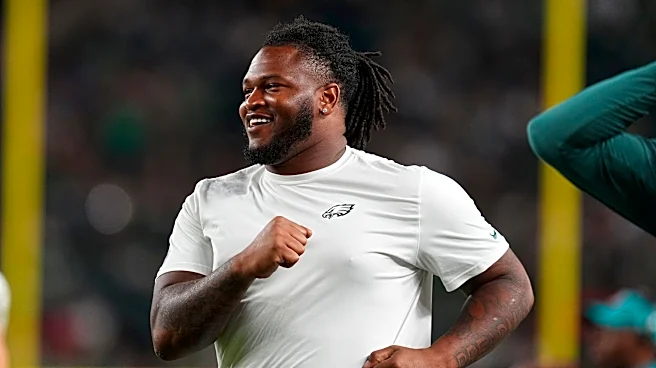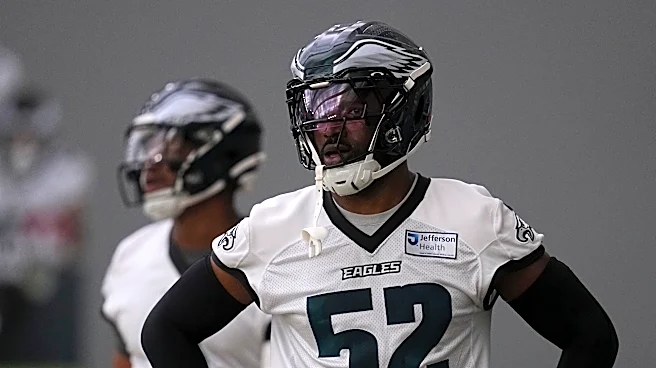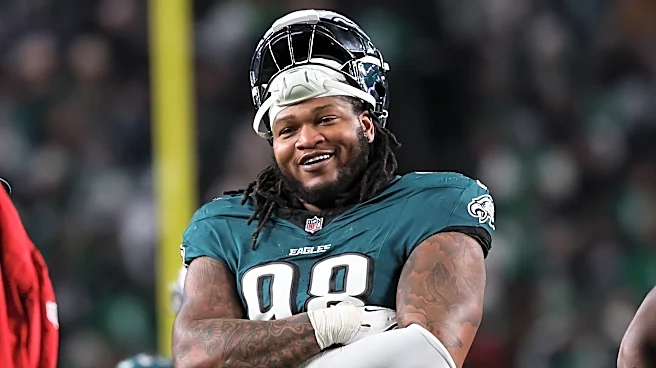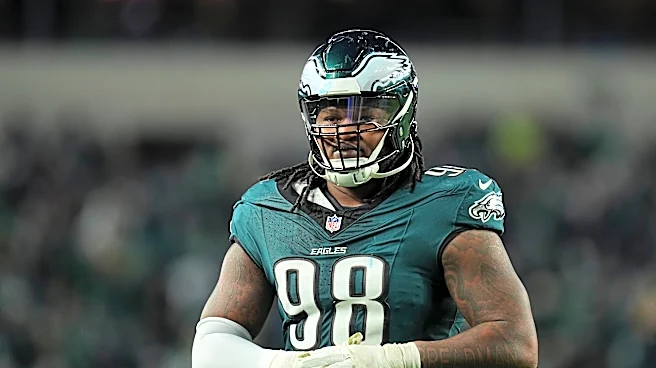




The Eagles just agreed to a record-breaking contract extension with Jalen Carter this week, so I feel inspired to write about him. There are plenty of ways to analyze the deal. Others will break down the numbers, discuss the salary cap implications, and debate whether he was worth it. Those conversations are important, but they aren’t the ones that I want to focus on here. Instead, I just want to focus on the film. It’s easy to forget that’s what it’s all about…
When the Eagles traded up to draft
Carter in 2023, I made my feelings pretty clear. This was from my rookie film review!
“The most talented player in the class, regardless of position. An elite prospect as a disruptive three-technique, but he can do it all. He could play anywhere along the defensive line and would be fine. He’s a high-level prospect with outstanding traits and the film to back it up. He has an explosive element to his game and can win in so many ways. The upside is as high as anyone in this class.”
I actually don’t think Carter has already become the complete player I thought he could be. If anything, I still believe there’s another level for him to reach. His 2025 season was fine, but by the incredibly high standards he had already set, it wasn’t quite as dominant or consistent as I hoped. Injuries undoubtedly played a part, but when I watched his film again, the flashes are still extraordinary. The ability to completely take over a football game is still there.
In my opinion, there is only one defensive lineman in the NFL whose overall talent level I would place above Carter’s today, and that’s Myles Garrett. Garrett has earned that status through years of elite production and remarkable consistency, and Carter still has to prove he can sustain that level over the course of a full season. Outside of Garrett, I don’t think there is another defensive lineman in football with a higher ceiling. Carter possesses an incredibly rare combination of explosiveness, power, flexibility, hand usage, and football intelligence that very few players have. That’s exactly why the Eagles were so comfortable making him the highest-paid defensive tackle in NFL history.
So rather than discussing the contract itself, let’s just talk about the player.
Elite athletic profile
Everything about Jalen Carter’s game starts with his athletic ability. There are plenty of powerful defensive tackles in the NFL, and there are plenty who win with quickness, but it is exceptionally rare to find a player who combines both traits at Carter’s size. At over 310 pounds, he possesses the explosiveness of a lightweight speed rusher whilst retaining the power to overwhelm interior offensive linemen. It is the foundation of everything he does as a pass rusher. I know this play doesn’t matter, but he’s above 310 pounds…
One of the play-style comparisons I made during the 2023 draft process was Aaron Donald. That wasn’t because they are identical players, but because they create the same reaction when you study the film. Donald’s movement skills always looked unnatural for an interior defensive lineman. Carter gives me a similar feeling, only in a bigger frame. His combination of first-step explosiveness, lower-body power, flexibility and balance simply shouldn’t exist in a player of his size.
It wasn’t a one-off, either…
When you see him at his best, you remember what a physical freak he is. His burst forces offensive linemen onto the back foot immediately after the snap. His flexibility allows him to reduce his surface area and squeeze through gaps that most defensive tackles cannot exploit. His balance enables him to recover when blockers appear to have gained leverage, whilst his lower-body explosion allows him to transition from speed to power almost instantly. There are more explosive players in the league at other positions, but very few interior defenders possess Carter’s complete athletic profile.
Elite first-step explosiveness
If I had to identify one defining trait, it would be Carter’s first step. Hence, the Donald comparison. His get-off is exceptional and, when he times the snap correctly, he is almost impossible to block one-on-one. His burst off the football immediately forces offensive linemen into recovery mode. Rather than being able to dictate the rep, they are reacting almost instantly, opening their hips earlier than they would like and exposing themselves to inside counters. Carter’s first step doesn’t just help him penetrate the pocket. It creates the conditions for every other aspect of his pass-rush game.
What makes his get-off even more dangerous is his timing. Carter has an outstanding feel for the snap count and repeatedly leaves the line of scrimmage a fraction before the offensive line is fully engaged. Half a step can be the difference between a clean punch from the guard and Carter already working past his shoulder. Few defensive tackles consistently win the race off the ball in the way Carter does, and it remains the defining characteristic of his game. I’ve always wondered if snap timing is something you can really coach, or if some players just have it. Jalen Carter just seems to have it. I mean, just stick him at edge and he can still time the snap…
A complete pass-rush toolbox
Many elite pass rushers have one signature move that they repeatedly return to. Carter is different because he has answers for almost every situation an offensive lineman presents. His favorite move remains the violent inside club, where he attacks the guard’s outside shoulder before knocking away the hands and working back inside, but that is only one part of his pass-rush arsenal.
Carter is equally comfortable winning with a club-swim, a long-arm bull rush, converting speed-to-power, or just bursting through a gap before the offensive linemen have time to think. He can pull offensive linemen off balance before swimming over the top, chain together multiple counters within the same rep or collapse the pocket by driving straight through the middle of a blocker. The variety is what makes him so difficult to prepare for. Offensive linemen cannot simply sit on one move because Carter is constantly adapting to the picture in front of him. One more club move? Oh, go on then.
The most impressive aspect of his pass rushing isn’t any individual technique, but how he can react within the rep. If a guard recovers from his initial club, Carter can transition into another move without losing momentum. If the blocker oversets, he attacks inside. If the guard sits back, Carter converts speed into power and walks him into the quarterback. Everything happens instinctively and at remarkable speed. That ability to process and react within the rep is what separates elite pass rushers from very good ones.
Outstanding football intelligence
The easiest mistake to make when evaluating Jalen Carter is to focus solely on the physical traits. They are obvious from the first snap and immediately catch your attention. However, the more I study his film, the more convinced I become that Carter’s football intelligence is just as important to his success as his athletic ability. I sort of reference this above, but he doesn’t always win because he is bigger, stronger, or quicker than the player in front of him. Although the vast majority of the time he is. I think he’s a smart player, too.
His intelligence is most obvious as a pass rusher. Carter has an excellent understanding of offensive line protections and rarely attacks blocks without a clear plan. Rather than wasting energy driving directly into double teams, he works to split blockers, attack leverage or force the protection to collapse around him. It is a subtle part of his game, but one that repeatedly shows up on film.
His awareness also allows him to affect passing plays even when he doesn’t reach the quarterback. One of the most underrated aspects of Carter’s game is his ability to recognize when his rush lane has disappeared. Instead of continuing to fight a block with little chance of success, he immediately gets his hands into the throwing lane, using his timing and vertical explosion to disrupt passes at the line of scrimmage. Those plays rarely receive the same attention as sacks, but they are another example of Carter understanding that affecting the quarterback is not just about hitting them.
That processing speed carries over into the running game. Carter consistently diagnoses blocking schemes quickly and rarely loses sight of the football whilst engaging offensive linemen. Against gap schemes, he identifies pullers early and understands where the ball is likely to hit. Against zone runs, he works hard to maintain his leverage, preventing offensive linemen from reaching his outside shoulder and forcing runners to alter their path.
Better against the run than he gets credit for
For all the attention Carter receives as a pass rusher, I think his run defense has become slightly underrated. Whenever a defensive tackle starts producing sacks and pressures, it’s easy to assume that getting after the quarterback is their primary value. Carter certainly has the ability to dominate on passing downs, but his impact against the run is a huge reason why Vic Fangio can leave him on the field in every situation.
The biggest strength of Carter’s run defense is that he rarely loses at the point of attack. His combination of lower-body strength, leverage and violent hand usage allows him to consistently control offensive linemen rather than allowing them to control him. He plays with heavy hands, regularly locking out blockers to create separation before locating the football. Rather than becoming stuck on blocks, Carter keeps his eyes in the backfield and gives himself every opportunity to shed late and make a play on the ball carrier.
I mean, come on…
Another underrated part of Carter’s game is how well he handles double teams.
Most defensive tackles will inevitably lose ground when two offensive linemen arrive together. Carter certainly isn’t always going to win against double teams, but his lower-body strength and natural leverage allow him to survive situations that would move most interior defenders several yards off the line of scrimmage. Just as importantly, he rarely accepts the double team. He is constantly fighting to split blocker or create enough disruption to prevent the offensive line from climbing cleanly to the second level.
Perhaps the biggest compliment I can give Carter’s run defense is that it doesn’t feel like a competition between playing the run or the pass. There are plenty of elite pass-rushing defensive tackles who become liabilities against the run because they are desperate to penetrate upfield on every snap. Carter isn’t one of them. He understands when to attack vertically, when to sit down and anchor, and when simply occupying two blockers is the correct play. In fact, quite often his best reps when he explodes up the field are against the run, because offensive linemen are more likely to be moving to a spot, either by pulling or moving laterally. His freakish first-step quickness helps him massively.
Beyond the box score
One of the easiest mistakes to make when evaluating defensive linemen is to focus too heavily on sacks. They are obviously important, particularly when discussing an interior pass rusher, but they are not everything.
Turn on the film, and it quickly becomes clear how much attention he demands from opposing offensive lines. Few defensive tackles consistently force offenses to change their protection plans in the way Carter does. Guards are reluctant to leave him isolated in one-on-one situations and centers regularly slide towards him before the snap. That respect doesn’t always appear on the stat sheet, but it matters hugely. In fact, I recently wrote about Moro Ojomo, and I stated this…
“Has played alongside interior defensive linemen Jalen Carter, who frequently attracts double teams and create favorable one-on-one opportunities across Philadelphia’s defensive front”
If Carter attracts two blockers, someone else is playing one-on-one. Carter’s disruption creates favorable situations for the players around him, even when he doesn’t finish the play himself. It’s one of the reasons coaches value him so highly and why his influence often exceeds his individual statistics.
Ultimately, that’s what makes Carter so valuable. He isn’t simply an explosive athlete with a deep pass-rush repertoire or an outstanding run defender. He changes the way offenses are forced to play. Every protection call, every double team, and every extra blocker committed to slowing him down creates opportunities elsewhere. There are very few players in the NFL capable of having that kind of influence on a game, and Carter has already shown he belongs in that company.
Where can Carter still improve?
Obviously, he isn’t perfect. Duh. No one is. In fact, I wasn’t even convinced the Eagles would pay him this contract, which seems absurd after everything I’ve just said. There aren’t many glaring weaknesses in his game. Instead, the areas for improvement are largely about refining what is already there and limiting errors.
The biggest area for improvement, in my opinion, is consistency. Carter has already shown he can completely dominate NFL games. We’ve all watched those performances where he looks unblockable, collapsing the pocket almost every passing down and taking over drives by himself. The next challenge is producing that level of performance every week, regardless of the opponent or stage of the season. Myles Garrett has set the standard here. Offensive lines know exactly what Garrett is going to do every Sunday and still struggle to stop him because his performance level almost never drops. Carter has produced those games already. He simply needs to make them the expectation rather than the exception. Carter does have bad games, which isn’t good enough when considering how talented he is.
Technically, I think there are still moments where Carter relies a little too heavily on his extraordinary athletic gifts. His first-step explosiveness is so exceptional that he occasionally trusts it to win the rep on its own, playing with too much forward lean and leaving himself vulnerable to technically sound offensive linemen who are able to catch his momentum or use his aggression against him. It doesn’t happen often, but the very best interior blockers have shown they can exploit it when his pad level rises, or his balance drifts over his toes. Improving his consistency in these moments will make him even harder to block because it removes one of the few opportunities offensive linemen currently have.
I thought his run defense was pretty poor last year, which surprised me based on his first two years in the league. My guess is that he simply wasn’t healthy, but we can’t just fully ignore all the bad reps and put everything down to health. I do want to see him bounce back.
The final area is conditioning and staying healthy. Vic Fangio has spoken publicly in the past about wanting Carter to maintain his level of play deeper into games, and it’s a fair point. Carter plays an incredibly demanding position, often absorbing double teams whilst remaining the focal point of the opposition’s protection plan. The effort has never been the issue, but sustaining that same explosiveness over a full game (over the course of the whole season, without getting hurt) is another step in becoming a complete player. He played last year at times when he clearly was not right.
There may be some off-the-field stuff that caused him to fall in the draft, but I’m not getting into that here because I know nothing about it. I’ll leave that to others.
Ultimately, none of these concerns are about talent. They are about refinement and staying on the field. Carter doesn’t need another pass-rush move, more power or greater explosiveness. He already possesses all of those qualities. The next stage of his development is about maximizing them every single snap, every single week.
Conclusion
This contract doesn’t change my opinion of Carter as a player or suddenly elevate him into a conversation where he didn’t already belong. I already viewed him as one of the premier defensive tackles in football. If anything, the extension simply reinforces how highly the Eagles think of him internally and how confident they are that his best football still lies ahead.
Some fans may argue that Carter’s overall play hasn’t yet lived up to being worthy of the highest-paid defensive tackle in football. I think that’s probably fair if you are looking at last year only. But, don’t forget how special 2024 was. However, the Eagles are not paying for past performance; they are paying for what he is going to do in the future. Carter already possesses virtually every trait you could ask for. I believe he has as much natural talent as nearly any defensive player in the league.
The next step is simply putting everything together over the course of an entire season. If Carter can combine his extraordinary physical ability with the week-to-week consistency of someone like Myles Garrett, then we won’t just be talking about one of the best defensive tackles in football. We’ll be talking about one of the best defensive players in the NFL. I’m not certain he will get there, but I feel a lot better knowing that the Eagles are confident internally.
I’m also going to get a video out on Carter over on my Patreon. This one took a while, so if you want to say thanks and watch the video on Carter’s play, please feel free to support me on there!