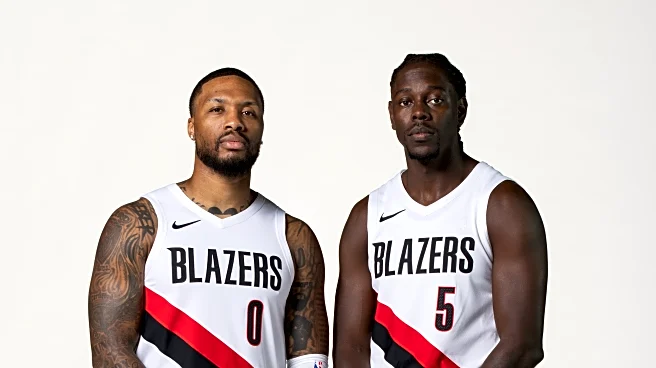

After a rash of high profile Achilles tendon injuries to NBA poster children Tyrese Halliburton, Jayson Tatum and Trail Blazers star Damian Lillard, the league is proceeding with caution.
John DiFiori,
the NBA’s director of sports medicine, told Ben Golliver of The Washington Post the injury is rare enough that its cause remains somewhat mysterious.
“When you have a small prevalence of injury, it’s hard to scientifically study that,” DiFiori said. “Typically over the last 15 years, we average about two Achilles tendon injuries per year. Last year, we had seven. That’s a lot. One year prior, also with a high pace of play, we had zero. We’re taking it very seriously. We’re concerned about it, but I don’t think we have our finger on what’s the driver here or what factors may have led to last season’s unusually high number.”
There is a prevailing theory as to the cause of the injuries. Halliburton and Lillard each had calf strains before they were injured, as did Kevin Durant before he ruptured his Achilles in the 2019 NBA Finals. And, according to Tom Haberstroh’s excellent explainer, there has been a dramatic league-wide spike in calf injuries this season.
This time last season, there were 18 calf injuries at the 20-game mark. This season, it’s up to 25 incidents, representing an increase of nearly 40%.
This calf-a-demic has hit home with Trail Blazers guards, Jrue Holiday and Shaedon Sharpe both battling the injury. Sharpe has been in and out of the lineup while Holiday has only appeared in twelve games this year.
Dr. Richard Ferkel is a top orthopedic surgeon at the Southern Orthopedic Institute and an assistant clinical professor of orthopedic surgery at UCLA told Haberstroh there’s a reason for caution.
“There is a concern that calf injuries can lead to Achilles injuries, and that this is all due to incomplete rehab in the calf and favoring one leg over the other,” Ferkel said. “Teams are being much more conservative in returning players back from calf injuries.”
Haberstroh’s must read piece details how trainers, sports scientists and technologists are poring over data, testing different bio mechanical models to discover the best methods of preventing Achilles ruptures. For now, expect slower rehab timelines, stricter return-to-play thresholds, and a willingness to sit stars longer than fans want.