



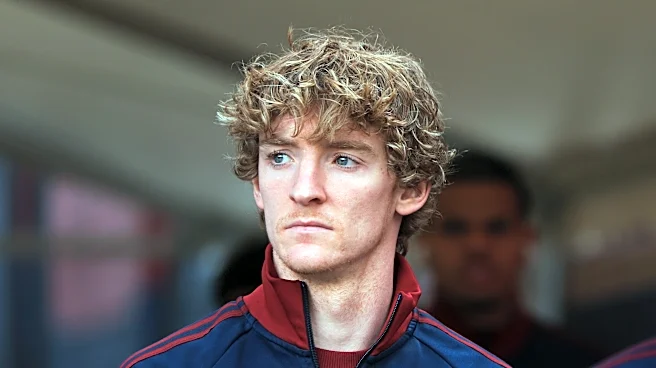
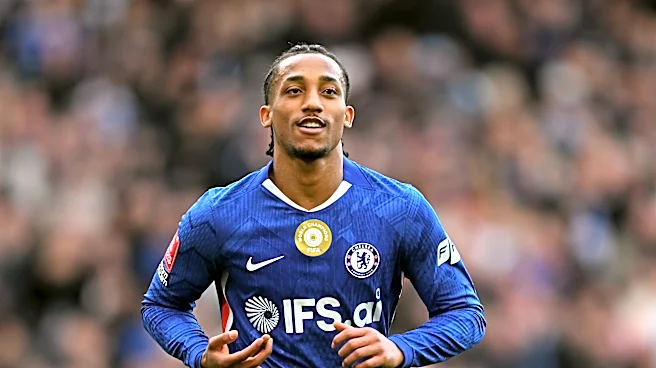
I’m not one to ever dwell on the past too much, but found this somewhat instructive given that we’re (once again) in-between coaches and looking for the next man to take the thankless job of being Chelsea manager. Sorry, I mean head coach.
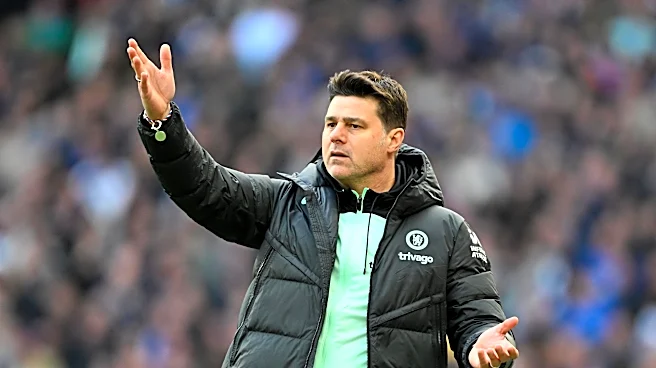
Mauricio Pochettino was the guest on “The Overlap” podcast this week, and you can watch the whole thing here if you can deal with Gary Neville & Co for nearly two hours. The bit about Chelsea is at the end, the final 15 minutes or so.
When Pochettino left Chelsea
by “mutual consent” in the summer of 2024, it came as a bit of a shock. It wasn’t a great season by any means, but we started twelfth and ended sixth, and looked to be on the right path after a strong finish to the campaign. We even reached a cup final! Pochettino was well liked by the players and we looked to be building something good for the future.
Reports at the time cited unspecified differences that were “philosophical” in nature, related mostly to “the dynamics of working within a club structure”. We took that to mean that essentially Pochettino wanted a (bigger) say in transfers (specifically signing experienced players) and Chelsea wanted him to focus on coaching. Everything that the club have done since have only reinforced that notion.
One might wonder why Pochettino took the job in the first place then — though it sounds like there was more “alignment” in the beginning, to use Liam Rosenior’s favorite word, or at least Poch perceived all to be on the same page.
“[BlueCo] have a plan [….] that is maybe completely different than what was used to be Chelsea in the past. [But] in new project the most important is how we can translate and to show what is the plan and what we want to achieve with that and how is going to be the process to arrive where we want to arrive. [And] what I understood didn’t happen after … and maybe I was wrong.”
“[…] Why I think I am disappointed with the internal things is that under our assessment and our vision was a normal process to create something solid for the future, to assess things and to add quality. [We thought we] were on a very good trajectory in the project. But after, when things didn’t match what what was our vision, we said it’s better to split and to give the possibility to the club to do what they want to do.”
That said, the idea of a true “manager” has been dying for a while in top level football. A few noteworthy exceptions aside, all clubs have moved to some sort of sporting director model, with varying levels of involvement from the coaches. And the trend is certainly towards less and less direct involvement from those coaches, and not just at Chelsea.

But for Pochettino, that’s the wrong way to go about things.
“To be fair, when we arrived, all the business, all the signings [were done]. I was only involved in — I say “okay” to — Disasi, because Fofana was injured in preseason, and Cole Palmer. I don’t want to be wrong but I think in these two we we were involved in the in the decision. But I think is it’s more about a philosophic idea that the coach or the coaching staff need to be involved in all this type of decision, need to be part important part of the decision. […] The coach cannot be in a corner and only coach the team, because it’s too many things that are going on.
“For a player to perform, they need to to be attached with the coaches. If not, it is difficult. [There is] no ‘I play for the for the club’. The player need to play for the club, after playing for the coaches. If they play for the coaches, they can play for the club. I’ve never seen a player play for the club and not play for the coach. It’s impossible to perform. You need to connect in an emotional way the player with your coaches. And then, you play for the fans and play for my club.”
“Chelsea, I think, after us it was more clear the idea of the man management of the club. [But] there are still things [in football] that you cannot measure with with data or [explain with] science. It’s still a game that has some mystery that you cannot identify. [There is no] equation that a player that play here is going to perform in [another] environment. […] Football is a contest of emotion.”
-Mauricio Pochettino; source: The Overlap
Of course, Pochettino also believes that lemons can ward off evil spirits and bad vibes. So you, some science might be okay.
As with everything in life, it’s about finding balance. Rosenior, as alluded to above, spoke a lot about being aligned with the powers that be. We poked fun at the word choice, but that is an important notion to consider. Alas, though he was in alignment, he couldn’t produce results. (And he also lost the connection with the players.) Enzo Maresca, like Pochettino, got some results, but also got out of alignment. At one point or another, all of them hit on the need for some experience.
Some reports would have us believe that Chelsea’s decision-makers are reevaluating certain parts of our plans. That seems little more than PR to me, and I don’t expect drastic changes either way. But surely we’ve seen enough evidence by now that our current plans are not accomplishing the stated goals that we set out to accomplish. And that data is indisputable.