
Letting go is an essential part of life. Letting go is also, by its very nature, painful. The New Year is defined by the need to let go of both the good and the bad things that defined the previous 365
days—retaining the parts you want to bring with you, breaking away the parts you want to leave behind, and charting a new course for the 365 days that lie ahead. Even if it is mostly symbolic and ritualistic, and even though the only thing that functionally changes is the date, it still feels like a powerful moment of rebirth.
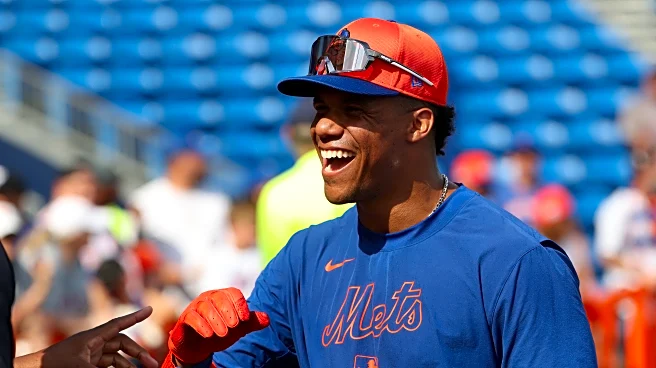
2025 is a year most Mets fans won’t have trouble leaving behind. Without inviting too much debate on the subject, it was one of the worst calendar years in Mets history. The last truly joyous moment experienced by Mets fans was the team signing Juan Soto, which came in December 2024—sure, the season itself had its share of great games and milestone occurrences, but I’m speaking more broadly. The year started with dreams of a World Series and ended with their four longest-tenured players being shown the door following a gut-wrenching collapse. There truly was no joy in Mudville for Mets fans last year.
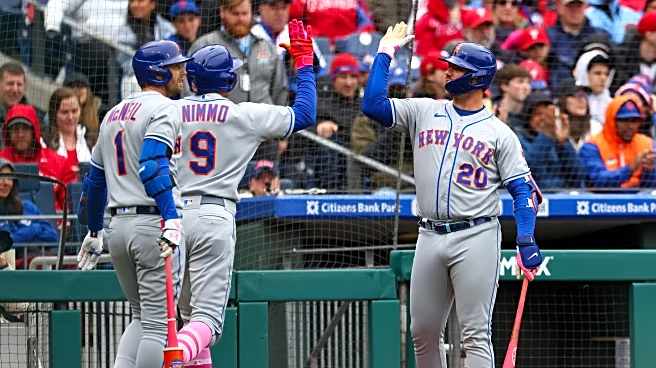
David Stearns, following a period of reflection and analysis of the team’s public and embarrassing failure, concluded that the team’s current core had run its course. The old Mets had their chance to prove themselves, but their window had closed, and big changes were needed to move the franchise forward. That conclusion ultimately led him to allow Pete Alonso to walk and trade Brandon Nimmo and Jeff McNeil. He tried to retain Edwin Díaz but was unsuccessful in those efforts—that is the one move where it looked like you could argue his plan did not entirely play out as he had intended.
It is easy to rationalize the impetus for these moves. These four players are the lone constants since the start of the 2019 season, the pre-Steve Cohen era. In their tenure, the club has won a total of eight playoff games, seven of which came in 2024. Stearns determined that this is not good enough, and you can’t really argue with his logic. We can debate for hours whether it’s the fault of the departed players and whether they deserved their fates, but Stearns clearly believed this organization needed an injection of new blood, be it due to clubhouse issues, underwhelming performance, forecasted declines, or a combination of these factors. The casualty ended up being some beloved franchise players who have endeared themselves to the Flushing Faithful through their on-field and off-field contributions.
Admittedly, as fans, we become too attached to players. The core tenet of fandom is rooting for the laundry, and with it comes a rotating cast of characters, year-over-year and across generations. The one constant is the orange-and-blue M-E-T-S on the front of the jersey. There is a paradox in sports fandom: we love players on our team, yet above all else we want the team to win. Anything that advances that objective is celebrated, making players ultimately expendable in pursuit of victory. At the same time, there exists an irrational feeling of wanting to win with “our players”, but the truth is that winning trumps all, and as much as we want to see a team win with the players we’ve grown to love, we quickly move on if a new group of players become successful.
Be that as it may, seeing the franchise move on from four lifers—six years is a lifetime in baseball years these days—is a tough pill to swallow. We become attached, buy jerseys with those players’ names on the back, and become engrossed passengers in those players’ career journeys. We were exhilarated when Nimmo ran to first after drawing a walk, and sang along when, “On my best days, I’m a child of god/on my worst days, I’m a child of god” played on the Citi Field PA. We readied ourselves and our air trumpets for the opening notes of “Narco” by Blasterjaxxx and Timmy Trumpet as soon as the Citi Field lights dimmed, and braced ourselves for the Edwin Díaz experience, even if it made us nervous roughly half the time. We dutifully followed McNeil’s improbable journey from overlooked minor leaguer to everyday regular, finding joy and pride when he became the team’s first batting champion in over a decade. And yes, we cheered with glee as a Polar Bear from Florida become the franchise’s all-time home run leader while winning multiple Home Run Derbies and hitting dingers we’re convinced still have not landed.
These players have been a foundational part of the experience of watching Mets baseball for a half-decade, and while uprooting this core is probably necessary and overdue, it’s still sad to let them go. Even if it’s fundamentally true that they have not won a division or a pennant—thus failing at the one thing we expect as fans of the a sports team—the part of fandom that craves connection to the players who wear the uniform deserves to feel a little sad, and we can allow ourselves to feel that sadness, even if the logical, analytically-driven fan inside us understands the argument for moving on and trying to build a better, more sustainable winning team.
Agree or disagree with his methods, Stearns seems like the right guy to take the cold, calculated steps necessary to make these hard choices. As someone who has inhabited both worlds—the emotional lifelong fan and the analytical executive—Stearns has shown a willingness and ability to set sentiment aside in favor of rational, results-driven decision-making when necessary. At the end of the day, our love for the players who wear a Mets uniform next year will entirely depend upon wins and losses, and we will quickly move on if successful or remain largely nostalgic if the plan fails. After all, the players themselves move on pretty quickly once they’ve left the team, and the fans do as well. This is the never-ending cycle of sports fandom, one that closely resembles the cyclical flow of the calendar, bringing us to the new year.
Death Cab for Cutie famously sang, “So this is the New Year, and I don’t feel any different”. This line, which typically rings true, does not feel appropriate for these Mets. Come Opening Day 2026, the old Mets core will officially give way to a new one, led by Juan Soto and Francisco Lindor and complemented by a crop of talented up-and-coming prospects and (hopefully) some new additions to round out a winning roster. So as we turn the page on 2025, we also symbolically turn the page on a chapter of Mets history that, while fruitless in the pursuit of a World Series title, did bring us some good times and some great players that we as fans loved watching suit up for the Mets every day. And now, having let go of that era of Mets baseball, it’s time for a new era to begin. Maybe this is the one that brings the franchise its first championship in 40 years. Here’s to hoping.