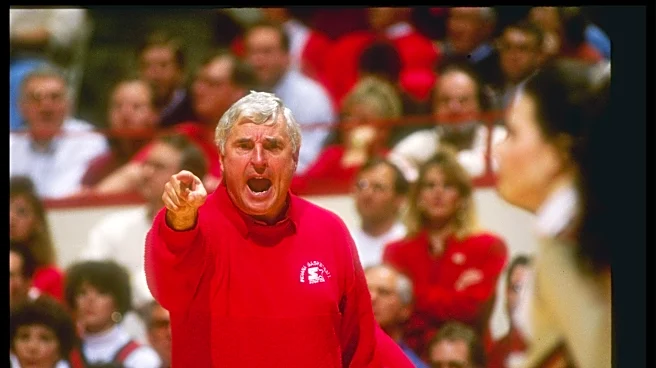



College basketball fans have historically been some of the most engaged and entertaining fans in sports. Back in College basketball fans have historically been some of the most engaged and entertaining fans in sports. Back in 1999, the student body at Northwestern started chanting “Hoosier daddy” at Bobby Knight, then the coach of the Indiana Hoosiers.
Knight asked an assistant, “What are they chanting?”
“Hoosier daddy.”
“Who’s your daddy?”
“No, Hoosier daddy.”
Knight took offense, which, given his temper
and previous outbursts, is hilarious in its own right. After the game ended, Knight pointed to the scoreboard (Indiana won 69-62 in OT) and yelled to the student section, “Who’s your daddy now?”
The chant “who’s your daddy” is supposed to be an insult. Seems kind of tame to me, but you never know what’ll set someone off.
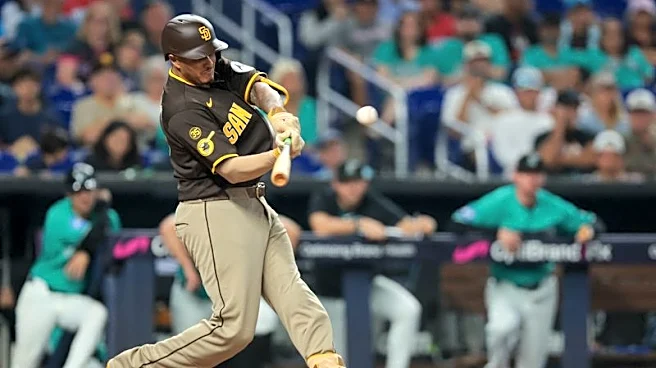
After watching Ty France eviscerate the Royals a couple of weekends ago, it got me wondering which player has been the Royals’ daddy. In recent years, it’s been France. In just 42 career games, he’s slashed .372/.449/.660 with 11 home runs (most of them coming at critical times) and an OPS of 1.110.
Despite the evidence and the gaudy numbers to back it up, the Royals continue to pitch to Mr. France, and he happily continues to mash. To paraphrase James Earl Jones in the baseball classic Field of Dreams, have we got a learning disability here?
Seems so.
You’d think by now the Royals’ brain trust would realize that France owns them and it might be a good idea to pitch around him, especially if the game is in the balance.
I checked the Royals’ Wikipedia page just to make sure, and yes, in the owner section, right under John Sherman’s name, it says, Ty France.
Who was the Royals’ daddy before France? I’ve crunched some numbers, and believe me when I say there are plenty of worthy candidates.
When it comes to crunching numbers, I’ll be the first to admit that it’s not one of my strengths. There are plenty of people, many of whom write for Royals Review, who are much more advanced than I am. I probably missed some players. After looking at 25 players who put up massive numbers, my eyes started to glaze over.
I broke the research into several categories. First, I looked at older players, guys who tormented the Royals back in the 1970s and ’80s.
A high batting average is nice, but I was more interested in players who consistently dented the walls while feasting on KC pitching.
Other criteria included more recent players, and finally, I was looking for sustained excellence—someone who pounded the daylight out of the staff over at least 150 games.
Whew.
Of the older players, Rod Carew treated KC pitching like most of us treat KC barbecue. Over 205 games, he slashed .345/.408/.471 with an OPS of .880. Carew was never much of a power hitter, but he did crank 10 of his 92 career home runs off KC offerings.
Chris Chambliss deserves a seat at the table. In just 89 games, he hit .321 against the Royals, which was his highest average against any opposing team. Plus, he hit the walk-off bomb in the 1976 playoffs that broke a million hearts in Kansas City.
The real daddy of the early players is one Reginald Martinez Jackson. Reggie started his career in Kansas City. He hit his first home run as a member of the Kansas City Athletics in 1967. He hit home run No. 500 against the Royals in 1984. I personally saw him hit home runs for Baltimore, New York, and California against KC pitching, and all of them looked like they were shot out of a cannon. In 223 games against the Royals, Reggie only slashed .256/.340/.445, but he did spank them with 37 home runs, 341 total bases, and 126 RBIs, good for a .785 OPS.
His most punishing hit against the Royals wasn’t even a home run. It was his eighth-inning pinch-hit RBI single off Doug Bird in Game 5 of the 1977 ALCS, which started a Yankees rally and ultimately led to a win and a trip to the World Series.
When it comes to the more recent players, Dustin Pedroia holds the highest batting average at .353. He only played 61 games against the Royals with 273 plate appearances, but it was enough to give him a .998 OPS.
Several players with alleged ties to steroids had their way with Kansas City pitchers. Alex Rodriguez has the most career home runs with an even 50. A-Rod also holds the record for the most runs scored against the Royals with 135, all of them accrued in just 156 career games. Very impressive.
Manny Ramirez (37 home runs), Rafael Palmeiro (41 dingers), and Mark McGwire (30 long balls) all feasted on Royals pitching.
Miguel Cabrera holds the total bases record with 422, the hits record with 266, and the RBI record with 165 against the Royals. Miggy played 240 games against the Royals and should be given a lifetime achievement award by the Royals’ front office. Unlike many of the other scofflaws, Kansas City fans actually liked Cabrera.
Paul Konerko is another big dog who ate well at the Royals’ table. In 253 career games, he collected 240 hits, good for 418 total bases, to go along with 45 home runs and 150 career RBIs. Hard to believe Konerko was only worth 28 WAR in his 18-year career. With numbers like that, most of the WAR must have been accrued against Kansas City. He remains a Royals legend for being photographed standing next to Rusty Kuntz and Chris Getz.
There were plenty of others who deserve mention, luminaries such as Joe Mauer, Cal Ripken Jr., and, more recently, Jose Ramirez, who all padded their résumés against Royals pitching. But to me, the Royals’ all-time daddy must be Jim Thome.
The Thomenator spent a lot of time playing in the Royals’ division, and I always wondered why they never made a serious pitch for him when he was a free agent.
He ended up playing for six teams over his 22-year career and made a living burying the Royals. In 193 career games, he slashed .299/.414/.582 with 49 home runs, 139 RBIs, 194 hits, and 133 runs scored, all good for an OPS of .996. Thome hit a major league-record 13 career walk-off home runs. Looking at his game splits, I didn’t find any walk-off dingers against the Royals, but many of those home runs against KC came in critical situations, when the outcome of the game was still in question.
One of those blasts came on July 3, 1999, off Don Wengert. The ball traveled 511 feet before hitting something, making it the longest in the history of Jacobs Field/Progressive Field. On a trip to Cleveland one year, I stood where the ball landed and had to squint to see home plate. It was so far that my brain had a difficult time processing it. My brain said, “No way a man can hit the ball that far.” He did.
To prove that wasn’t a fluke, Thome also hit the longest home run in Target Field history, a 490-foot upper-deck blast that came on July 17, 2011, off the Royals’ Felipe Paulino. It’s not enough that it was the longest home run in stadium history. It was also a three-run jack that provided the winning runs in a 4-3 Twins victory.
Strangely enough, Thome’s first poke at the Royals wasn’t a home run. In a May 1997 game at the Jake, with two outs and Julio Franco on first, the Indians pulled off a double steal with Thome swiping home. I’m guessing this might have been the only time the big guy stole home, considering he had only 19 stolen bases in 2,543 games. The steal ruined a brilliant outing by Kevin Appier, who allowed only two hits in eight innings. Royals catcher Tim Spehr tried to end the inning by throwing out Franco, which allowed Thome to score the only run of the game.
Thome’s greatest hits against Kansas City read like a baseball crime novel:
September 28, 2002 – Bottom of the eighth, Royals leading 5-2, two on, one out. Thome mashes a three-run dinger off Jeremy Affeldt to tie the game. Cleveland scored the winner in the 10th inning, 6-5.
May 7, 2006 – Bottom of the eighth, score tied at 2-2, two outs. Thome rips a double off Elmer Dessens, then scores the game-winner on a single by Joe Crede.
July 9, 2008 – Royals lead 6-5 going into the top of the eighth. Thome hits a two-out RBI single off Ramon Ramirez to tie the score. The hit moves Carlos Quentin to third. Ramirez then balks with Paul Konerko at the plate to gift the White Sox a 7-6 win.
August 27, 2011 – Bottom of the sixth, one out, Royals lead 4-3. Thome hits a solo shot off Danny Duffy to tie it up. The Indians eventually win 8-7.
The real soul crusher for me came on Opening Day 2009. The Royals held a 2-1 lead going into the bottom of the eighth. With two outs, two men on base, and Kyle Farnsworth on the mound, Thome strode to the plate.
Do you remember the comedian Sam Kinison? His schtick was screaming all his jokes. When I saw Thome coming to bat, I went full Sam Kinison. I screamed at the television, hoping somehow, someway, the message would get through to Ned Yost, who sat passively on the bench.
“Walk him! Walk him!! WALK HIM!!! WALK HIMMMMM!!!! WAAALLLLKK HIIMMMM!!!!!”
My wife, bless her heart, poked her head into the room to make sure I wasn’t stroking out.
The baseball gods didn’t listen. Farnsworth, as was his role in those days, served up a meatball, which Thome comfortably deposited over the right-field wall, providing the deciding runs in a 4-2 White Sox win. Ned stayed on the bench, probably daydreaming about the deer he missed during hunting season. I seriously thought about turning in my Royals Fan Card that day.
It could have been worse. Thome spent four seasons playing in the National League, which reduced his chances of tormenting the Royals.
So, there you have it. Most of these players are Hall of Famers, save for the steroid cheats. The remainder—the Pedroias, the Chamblisses—were still outstanding ballplayers. This collection of talent tormented a lot of teams, not just the Royals. Who knows? Give Ty France another 150 games against Royals pitching, and in 10 years he might displace Thome as the Royals’ daddy.