

Mizzou’s passing attack provided a lot to take away from in a smaller sample size on Thursday night.
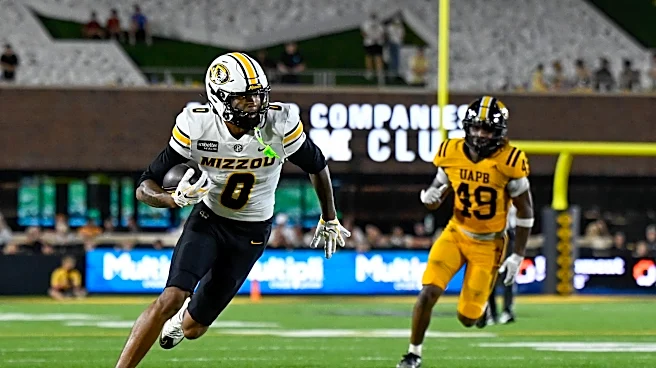
To preface this, yes, it was against an FCS opponent: the Tigers defeated Arkansas Pine-Bluff 54-14 on Thursday night, and the final score says it all. But within the decisive victory, I believe we got a glimpse of what Chip Lindsey’s offense could become in 2026.
So, after one game, and really less than half, what was, or felt, different?
To start, Mizzou was willing to attack downfield
The Tigers weren’t afraid to be aggressive in how they operated
their passing offense. As for Austin Simmons, it took him less than a half to have the best day of his collegiate career: 17-of-19, 252 yards with four touchdowns.
He averaged 13.2 yards per attempt, which ranks fourth among Mizzou quarterbacks since 2020, trailing three Brady Cook games. His 11.6 average depth of target is the ninth-best in the Drinkwitz era.
Pro Football Focus helps make charting Simmons’ throws a bit easier:
- Behind the line of scrimmage: 2-of-2, 2 yards.
- 0-9 yards: 6-of-7, 52 yards.
- 10-19 yards: 7-of-7, 132 yards, 3 TD.
- 20-plus yards: 2-of-3, 67 yards, TD.
On throws traveling at least 10 yards, Simmons finished 9-of-10 for 199 yards and four scores. Those throws account for 52% of his attempts and 79% of his yardage. How the Tigers found those opportunities is interesting in itself.
How those opportunities were created
Simmons arrived at Columbia as a former highly ranked high school recruit with plus arm talent and was named the starter for Lane Kiffin’s offense a season ago before getting injured. The arm talent was on full display Thursday night.
One particular throw that stood out was early in the second quarter, when Simmons threw a tight spiral from the right hash to the opposite sideline for a first down. The ball just comes out effortlessly, and it’s very reminiscent of Drew Lock years ago. The way I describe is no wasted time for the ball to get into the receiver’s hands.
UAPB played a relatively conservative defense. The team knew what Mizzou was capable of and operated as such; they did not want to get beat deep, further explaining why Simmons went 7-for-7 for 132 yards in the 10-19 yard range.
An example came on an early 3rd and 8 when the Tigers’ offense was getting their feet wet on the first drive. Only four defenders were within the first down marker, three on the defensive line. Simmons took what was available to him, a common theme of him making the right reads all game, and Norfleet converted the down, moving the chains.

But the Tigers were still able to exploit that. On a 2nd and 2 early in the first drive, with UAPB showing cover 3, Olugbode settled to where the cornerback wasn’t, and Simmons found him for a 13-yard gain.

On a 2nd and 12, Cayden Lee ran a beautiful deep in, where he caught it two yards beyond the sticks for a first down. When UAPB showed cover four, the Tigers took advantage of it with a seam route by Olugbode, who made an excellent catch, but an even better ball by Simmons for a first down.
What’s also interesting to notice about the play above is that there is no tight ends on the field, which is called 10 personnel. In the first half, there were three times where Mizzou showed this. Here were the results:
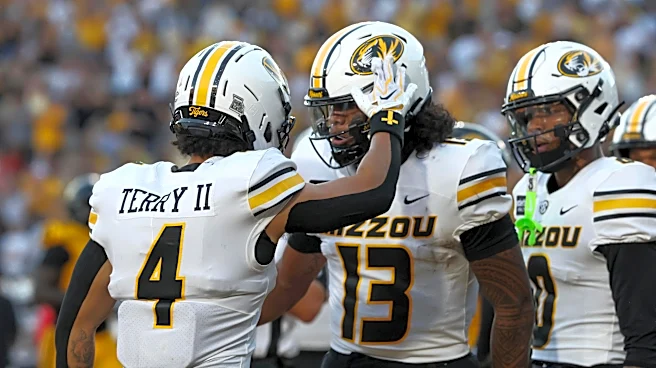
- #1 The first touchdown of the game to Shaun Terry.
- #2 The play above.
- #3 Cayden Lee’s sideline catch in the second quarter.
Three chunk plays.
Lindsey also added some more wrinkles, which helped open up the pass game on the second-to-last touchdown pass. Mizzou used an orbit motion, which worked great on a Jamal Roberts run to the one-yard line. On this particular play, the orbit motion with Shaun Terry and the play action to Roberts sucked the defense up and left the intermediate part of the field wide open.
With great pass protection by Roberts and the offensive line, Simmons probably had an easier touchdown than hitting Olubode running free on a dagger route to go up 30-0.
But, also, the orbit motion itself was noticeable. With a player like Terry or someone else, the defense has to account for it as well as the play action. It leaves fewer answers in the secondary to match whatever is going on the back end and creates more space for the receivers to work. It was an excellently designed play, and hopefully it’s something that is utilized throughout the season.
We’ve sort of seen this before, but not so fast, my friends
As encouraging as this all is, there is a reality check within all of this. We’ve seen Mizzou engineer an explosive attack before against an FCS opponent as recently as Week 1 last year.
Last year, Beau Pribula in his first-ever start was a star in the season opener. He was 9-of-11 for 184 yards and two scores on throws of 10-plus yards, compared to Simmons’ 199 yards on 9 of 10 attempts. Nathan and Nate also discussed this on the BTBS postgame show.
To further counter everything above, Pribula actually completed 3 of 4 attempts of 20-plus yards for 113 yards and a touchdown. Simmons went 2-of-3 for 67 yards and a score.
So, if we’re looking at a straight downfield production, the difference isn’t as dramatic as Thursday felt. Therefore, one game against Arkansas Pine-Bluff shouldn’t be proof that Mizzou’s passing attack isn’t truly taken to another level yet.
And last year, it declined. In 2025, the Tigers’ passing offense declined to 77th in EPA/dropback, 118th in yards per successful dropback, and 111th in 20+ completion percentage.
However, what makes this past Thursday more fascinating, and why there’s a different feel, is the fact that there was a noticeable difference in how Mizzou’s passing attempts were distributed.
In Pribula’s 2025 opener, PFF charted four attempts behind the line of scrimmage and 12 more within the 0-9 yard range. Simmons had just two behind the line of scrimmage and seven in the 0-9 yard range.
That’s something worth noting, and as mentioned above, Simmons’ arm talent helped create opportunities beyond the underneath portion of the field.
Again, Missouri’s passing offense was awesome against UAPB. The play from the starting quarterback was great. The pass protection was there as well. Cayden Lee is a nice addition to the team alongside Simmons, while Olugbode has taken the step forward we all projected him to. It helped mitigate the inefficiencies in the rushing attack that were there without both preseason All-Americans Ahmad Hardy and Cayden Green.
So, Week 1 showed us that Mizzou is willing to be more aggressive through the air, while also demonstrating some new things we could perhaps see in the offense, plus a QB that can take advantage of those things.
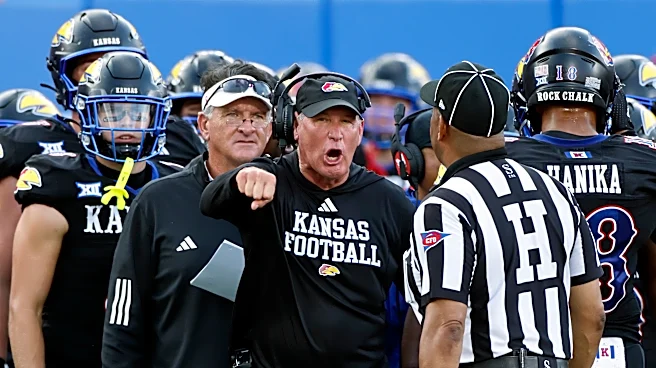
Next week will be much different. UAPB is not Kansas. The Tigers have won just three times in Lawrence since 1980, so no matter how good or bad this Jayhawks team is, it’s going to be a challenge. Week two in Lawrence will be a great opportunity to see if the Tigers remain aggressive with their philosophy.