

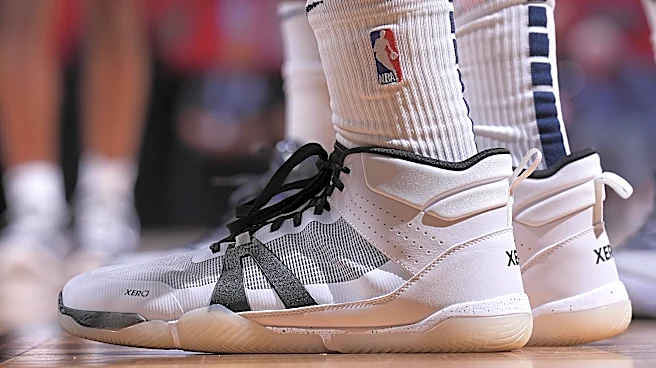
Paul George has a Hall of Fame resume.
Entering Year 17, George is a 9-time All-Star, 6-time All-NBA forward, 4-time All-Defensive Team member, an Olympic gold medalist, and is one of the most recognizable stars of his era.
And yet, it’s a tricky legacy.
No one will dispute PG’s impact on the game. He’s one of his era’s most dynamic two-way players, and he’s been recognized as such. When it’s all said and done, George has made a good argument to be considered a top-100 player all-time.
But true championship
opportunities have always eluded him.
A lot of George’s legacy has been defined by what could have been, or in some cases, what should have been.
No one would fault George or the Pacers for falling short in three straight battles with Miami’s Big 3, two of which were during George’s ascension into superstar territory and one that went down to a Game 7 in Miami, but George’s era as a Clipper is more complicated.
Their 3-1 collapse to Denver in the bubble was an all-time choke job, and it robbed us of what would have been a genuinely interesting series with a Lakers team they matched well with in the regular season. After that, Leonard and George played just 13 playoff games together across their next four seasons in LA, never seeming to find a way to stay on the court at the same time.
There was also the weaponization of his “Playoff P” moniker, which has mostly settled into an outdated reference, especially after his admirable performance in the 2021 postseason without Leonard, and his revitalized play against Boston this past year as a 76er. Especially during his LA tenure though, if you were a true PG supporter, chances are you were having to fight against the notion that George was a playoff dropper.
As it stands now, he’s fighting within the category of “greats without a NBA championship,” but where he fits in that conversation can feel a little complicated.
Legends like Charles Barkley, John Stockton, Patrick Ewing and Reggie Miller are some of the loudest names in that category, yet they all reached that final stage for at least one chance to capture a title.
Maybe the closest situation to George’s would be that of Carmelo Anthony, who like PG, had a long and productive career with six All-NBA nods, is an Olympic gold medalist, and only made it as far as the conference finals. Both players aren’t just missing that ring, they’re missing the chance at even proving themselves on the defining stage of the Finals altogether.
His injury history, the playoff highs and lows, and even his podcast have played some role in the way George is both talked about and regarded within the upper echelon of NBA players. You can have dozens of All-Star appearances, you can be All-NBA ten times over, but nobody wants to be in the conversation of greats who never won the big one.
“Yeah he’s great, but he was never a champion.”
But what if he was?
How does the perception of his career shift if PG-13 leads to Banner 19?

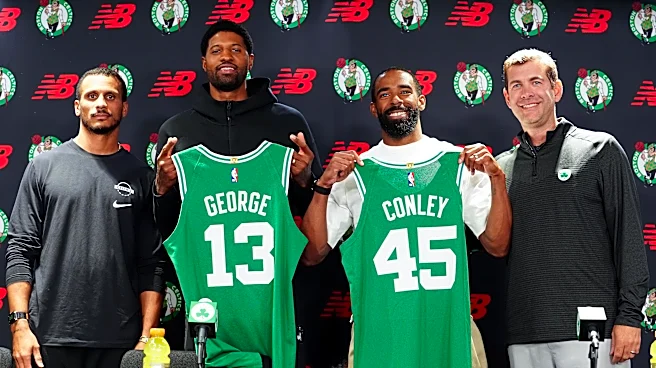
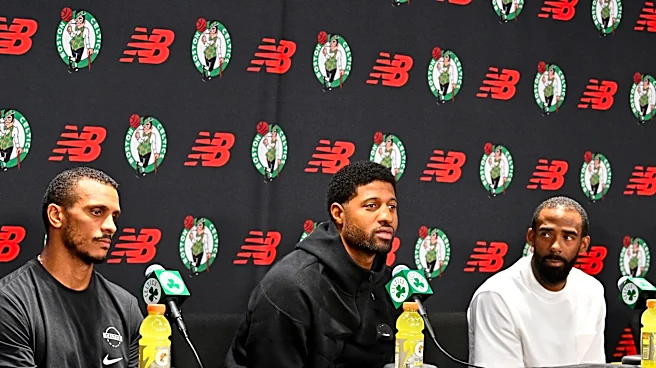
“I’m a guy that, when it’s all said and done, where my legacy falls being compared to guys in my category, I’ve yet to have something to show for it,” George said at his introductory press conference. “So for me, that’s where that chip lies on my shoulder.”
The Celtics, now a third season removed from Banner 18, still have championship DNA left over from that historic 2024 team. They’ll hope that past identity combined with impactful new faces and budding young talent will be enough to get them back to the main stage.
The Celtics have done their best to get with the times. They’re trying to make a team that’s deep, captained by a true superstar, and isn’t held at gunpoint by the second apron. They’re trying to build a winner without sacrificing all paths to future improvement. He’s no longer the face of a franchise, but George’s impact and availability will be a vital element to a title chase.
However long George’s Celtics tenure ends up being, this feels like the inevitable last chance as a major player to win a championship. And maybe it’s his best chance.
At his current level of production, it feels like George’s Celtics tenure will have a contending window that goes at least into next season to capture that 19th championship. He’ll be 38 years old by the time his current deal ends, far removed from his prime. Perhaps by then he’ll slide into the “overqualified role player” archetype and provide the veteran savvy Al Horford left behind.
Like Melo, who entered the Hall of Fame in 2025, George doesn’t need a ring as proof of his distinctive greatness on a basketball floor. A championship doesn’t fundamentally change just how good George became and just how fast he rose to prominence in the league.
He doesn’t need to prove he’s a great player, or a Hall of Famer, or where his place rests among the era’s best.
And yet there remains that chip on his shoulder because he knows that, for how great his career has been, it’s missing something.
It’s missing a storybook ending, that last perfect sendoff to wrap up his NBA journey with one defining image on a podium, engulfed by green and white confetti. The mission finally accomplished.
“The chip on my shoulder is, I’m a winning player,” George said. “I believe I’m all about winning, being a winning teammate, a winning locker room guy.”
What would a title do for Paul George’s legacy? It’d complete his story, while adding another chapter to Boston’s own.
Perhaps he’ll find that storybook ending as a Celtic.