
I think about the Kansas City Royals’ ALDS series versus the New York Yankees quite frequently, about as much as I think about the Roman Empire. When I think about the Royals dropping that series, I often
think about the Yankees hitters compared to the Royals hitters and how many more pitches the Bronx hitters saw at the plate. In Game 3, a 3-2 victory for New York at Kauffman Stadium, Royals pitchers had to throw 178 pitches while Yankees pitchers only tossed 120. It seemed like every hitter in the New York lineup was patient, refusing to chase even borderline pitches. It was an impressive display of patience, swing decision,s and not swinging at pitches outside the strike zone, and I wanted the Royals lineup to learn a few lessons from that series.
I don’t know if JJ Picollo thinks about that series as much as I do, but his moves so far suggest that he might. At the 2024 Winter Meetings, after the playoff loss to the Yankees, Picollo told David Laurila of Fangraphs:
“We need to be a little more dynamic offensively, and by that I mean we need to get on base at a higher rate than we did this year… We’re trying to target players we can lengthen out our lineup with, whether it’s someone at the top, in the middle, or toward the back end.”
Getting on base and lengthening the lineup was the theory behind the Jonathan India trade. India has consistently had an elite chase rate (as in he doesn’t chase many pitches outside of the strike zone) as a hitter. Even in his disappointing 2025 season, India’s chase rate was in the 97th percentile among qualified hitters. India didn’t square up the ball enough last season to take advantage of that chase rate, but you can see what Picollo was thinking when he traded Brady Singer for the second baseman.
Mike Yastrzemski, whom the Royals acquired at the trade deadline and were open to bringing back for next year before he signed a two-year deal with the Atlanta Braves, also has an elite chase rate. Yaz was in the 87th percentile for chase rate in 2025, and has been in the 80th percentile and above every season since 2020. The veteran outfielder proved to be a much better hitter in 2025 than India and his bat helped lengthen the lineup. The entire team, at least for a while, seemed to be more patient after Yastrzemski’s arrival; their two best on base percentage months were August and September, the two months Yaz played for the Royals.
The Royals front office has continued this trend of valuing hitters who don’t chase outside of the strike zone with their last three moves this offseason. The Royals signed outfielder Lane Thomas on December 11th to a one-year deal. Thomas, even amidst a lost offensive and injury-plagued 2025 season, had a good enough chase rate to rank in the 84th percentile if he had enough plate appearances to be eligible. His rate in 2024 was in the 87th percentile.
Then on the 12th, word leaked out that the team was signing Maikel Garcia to a five-year extension. There are plenty of reasons why this deal made sense, but one of the factors was likely that Garcia was in the 91st percentile for chase rate among hitters. Even in his down 2024, Garcia had an excellent chase rate, which was one of the things that made him a decent bet as a bounce-back candidate this year. He certainly exceeded most people’s expectations, and his ability to judge the strike zone is a key reason why I think he will be able to sustain his offensive output next season.
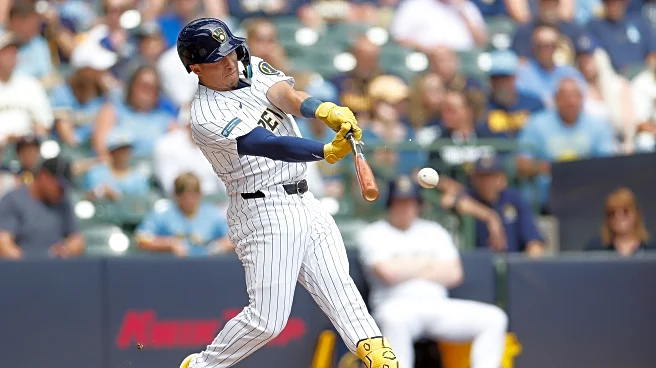
Finally, the Royals and Milwaukee Brewers completed a trade on December 14th, which brought outfielder Isaac Collins and reliever Nick Mears to Kansas City for reliever Angel Zerpa. And as I’m sure you can guess by now, Collins had an elite chase rate, 98th percentile among qualified hitters. Connor Dawson, one of the Royals’ two new hitting coaches, was a Brewers assistant hitting coach last year and complimented Collins on his swing decisions last August.
I don’t think the Royals are convinced that a good chase rate is the only thing you need to be a quality hitter. This team did extend Salvador Perez this offseason and seems committed to finding a spot in the lineup for Jac Caglianone. There is also a difference between not swinging outside the strike zone and swinging at the right pitches inside the zone, which ends up being somewhat different for each hitter.
The Royals, however, have talked a lot about having quality swing decisions by everyone in the lineup, and chase rate is a good indicator if someone is able to recognize pitches well enough to make those decisions. After years of the Royals front office talking the talk about the importance of getting on base but not walking the walk, it’s refreshing to see a front office that is trying to get guys who should be able to see a lot of pitches and draw some walks. Hopefully, this will lead to more pitches being thrown by opposing pitchers, which will lead to more guys on base, which will lead to more runs. In that case, maybe it will be the Royals who will haunt some opposing fans wandering thoughts throughout each day, and I will be able to stop thinking about that 2024 ALDS so much.