

The offseason has barely begun and yet it has already been an eventful one for the Colorado Rockies.
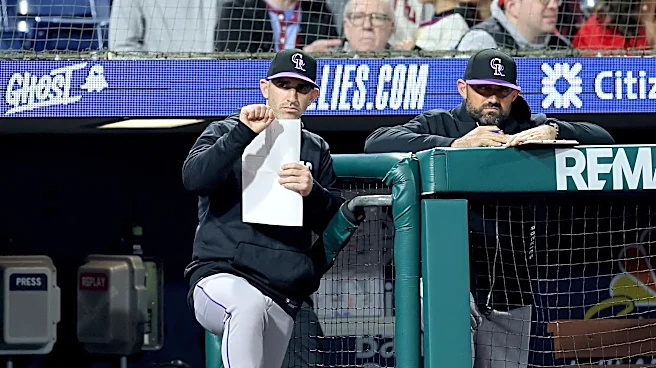
On October 15, they fired pitching coach Alon Leichman after just a single year with the team. This past Monday, they hired Ethan Katz as his replacement.
On the surface this all seems pretty simple:
- Leichman, in his first season as a head pitching coach, oversaw a pitching staff that had the worst ERA, the second-worst FIP, and the fifth-worst fWAR in all of MLB.
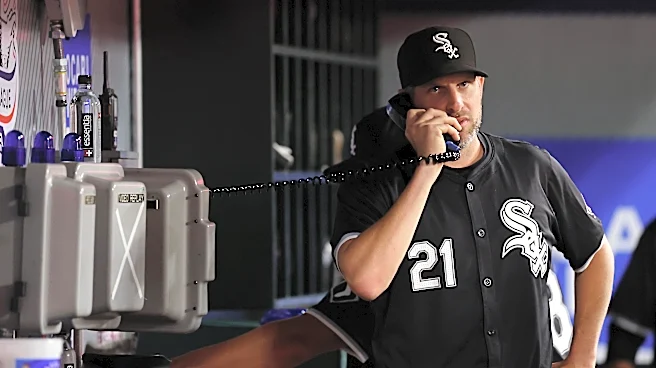
- Before his brief foray as the assistant pitching coach for the (barely) playoff-bound Houston Astros, Katz was the Chicago White Sox primary pitching coach for five seasons.
When just looking at the basic facts, the Rockies have simply pivoted from a coach whose first results were poor to one with more experience; totally mundane.
The drama, however, comes from the details.
Some
of those details may have come out in the latest edition of the DNVR podcast in which host Christian Saez shared a summary of conversations with both Leichman and unnamed members of the Rockies front office.
According to DNVR, the reason for the Rockies moving on from Leichman wasn’t purely results based but instead part of a fundamental inability for Leichman and the other members of the coaching staff to align on a shared vision for Rockies pitching.
Last offseason, the newly-appointed Rockies front office took the approach of bringing in the best pitching minds they could find, assuming that a melting pot of different approaches and ideas would lead to the best results. Instead, it appears as though competing ideas simply led to players getting mixed messages over the course of the season.
The variety of “experiments” that the Rockies came into the 2026 season attempting to run with their pitching staff (pitch suggestions from the dugout, heavy use of openers, etc.) were reportedly Leichman-led efforts. Leichman, as quoted on the DNVR podcast, characterized his tenure this way: “I felt like they brought me in and then after the month of May we struggled, they ditched everything that I wanted. I couldn’t get one voice to the players and ultimately paid for it.”
According to DNVR, the coaching staff spent a full week after the season attempting to resolve their differences in philosophies and to create a consensus about the path forward. When they were unable to arrive at a resolution, the front office essentially chose which side to move forward with in order to make sure that they had a unified plan in place next season.

The odd thing about this, from the outside perspective, is that the Rockies best pitching results in 2026 were very clearly during the early portion of the season when their experimentation was in full swing. If the front office was choosing between two sides of an internal debate, it is confusing, given our limited information, why the side that yielded the worse results this season was ultimately chosen.
The thing is, while we have a fairly robust picture of what Leichman’s vision for pitching in the organization was, we don’t have as clear an idea of what the alternative vision being espoused, presumably, by some mixture of director of pitching Matt Daniels, assistant pitching coach Gabe Ribas, and bullpen coach Matt Buschmann actually entails.
The initial external reaction to the DNVR podcast I’ve seen has likened the organization’s rebuke of Leichman’s ideas as a return to the Bud Black era of pitching philosophy. Given that Black, and everyone from his pitching department, are gone this seems overblown.
For instance, Buschmann (along with Brandon Stone, Rockies manager of performance science) appears to be at the forefront of the team’s recent adoption of wearable tech in the form of Catapult Vests and Plantiga inserts to track and measure player biomechanics.
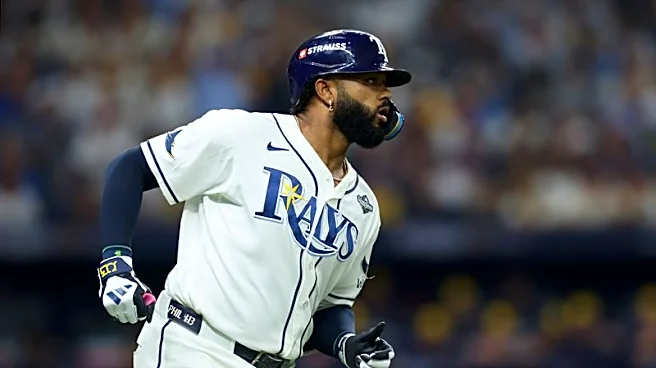
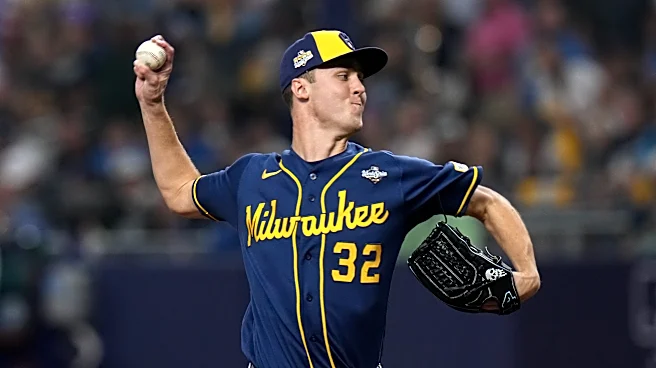
Those sort of efforts are less visible on the broadcast than something like the use of openers, but are tangible steps into the world of modern baseball. The Rockies don’t seem poised to mimic the cutting edge style of the Brewers and Rays that many would like, but let’s be clear that this is still an organization years ahead of where it was in 2025.
What’s more, as far as I can tell, there is no current indication that new pitching coach Katz is anti-analytics or preaches a Bud Black style one-size-fits-all sinker forward approach.
In a lengthy interview with SoxOn35th.com from 2022 when he was with the White Sox, Katz described himself as “very hungry for information” and “very open-minded.” The key part, from Katz’ perspective is effectively communicating that information with his players: “You got to get to know the person and the player and basically understand, okay, he could handle this information, or he can’t handle this information. [For some], this might be too much. I’m going to save this for the right time, or if he has a question, dumb it down for him if he needs it.”
Granted, those are all pretty standard, non-specific answers. I tend to think that interview does more to show that Katz has had media training than it does to give a deep insight into his relationship with modern analytics. There is something to be said, however, for him knowing the right things to say for a public audience.
While the overall record of the White Sox declined over the course of Katz’s tenure as pitching coach, there were still many success stories on the mound.
- Reynaldo López had an ERA north of five in the two seasons prior to Katz’ arrival in 2021. After Katz became the pitching coach, López racked up four straight seasons with an ERA- 20% better than league average.
- After two straight seasons of Dylan Cease running elevated home run and walk rates, Katz oversaw his transformation into a Cy Young candidate in 2022.
- Erick Fedde came back to the states from the KBO after having flamed out with the Washington Nationals earlier in his career. Under Katz, Fedde put up 4.6 rWAR before the trade deadline when he was traded to the St.Louis Cardinals.
- Even late in his tenure with the White Sox, Katz was able to strike gold by successfully transitioning Garret Crochet from a flamethrowing reliever that had never started a professional game into a genuine ace.
While the team as a whole was falling apart, Katz managed to help all four of these pitchers perform on the field and become appealing trade targets for contenders. The Crochet and Fedde trades in particular brought back many of the 2026 White Sox key contributors.
This is all to say, Katz has many more recent examples of successfully getting results from his pitchers than anyone that the Rockies had employed in the Bud Black era. His methodology may not be as obviously boundary pushing as Leichman’s, but that doesn’t mean he represents a clear step backwards in terms of tangible results.
Regardless of whether or not the front office chose the optimal side of the pitching philosophy divide, it is necessary for the organization to have a unified vision. Having multiple different coaches telling players to do radically different things can only lead to confusion or mistrust.
Last offseason, Paul DePodesta credited this sort of organizational misalignment as the source of his failure during his time as the general manager of the Los Angeles Dodgers.
“I was really young [31] at the time. What I knew how to do at that point, or what I felt I knew how to do, was build a roster that could win. I had been incredibly fortunate — I had been in Cleveland, had been in Oakland, and both of those teams had done nothing but win. So I had an idea of ‘This is what it’s going to take to win, and that’s the job.’ And we did it the first year.
“Then it didn’t take long after that to realize that’s not the whole job. It’s a necessary part of the job — it’s why you do it. But it really isn’t the whole job. The whole job is actually building an organization, not just a team. I look back on that now and realize I made a lot of mistakes in terms of bringing that organization along, being able to bring in people from different departments, tying together baseball and business.”
Leichman himself seemed to agree with the sentiment that it was not productive to have different members of the coaching staff pulling the players in different directions. As quoted on DNVR, Leichman said that ultimately “My job was to get everyone on the same page, and I couldn’t.”
Let’s just hope that under Katz, the Rockies are now all on the same page.
Join the conversation!
Sign up for a user account and get:
- Fewer ads
- Create community posts
- Comment on articles, community posts
- Rec comments, community posts
- New, improved notifications system!
Download the SB Nation app on iOS or Android.
Please keep in mind our Purple Row Community Guidelines when you’re commenting. Thanks!