

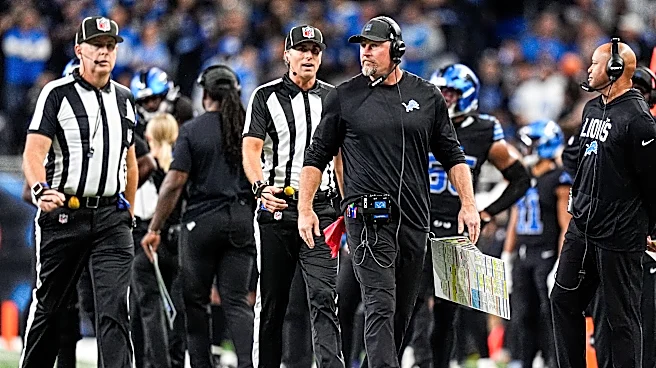
It’s the preseason. Core starters are in street clothes. The Detroit Lions weren’t game-planning for the Cincinnati Bengals, and they surely weren’t going to show everything defensive coordinator Kelvin Sheppard has planned for the 2026 season. Yet, there were things worth watching to gain insight into the evolution of Sheppard’s defense in his second year as coordinator.
Earlier in the offseason, I wrote about what that evolution could look like, and Jeremy Reisman did a good job laying out the broader
picture here at Pride of Detroit. Now that we have seen the Lions actually play a game on the field, I got close, but it wasn’t quite what I had projected.
The wrinkle we uncover, though, might actually be more interesting.
Why defenses use nickel formations and how successful teams run it
Recently, Vic Fangio, the Philadelphia Eagles’ highly respected defensive coordinator, was asked why he runs a relatively high percentage of nickel defense compared to the rest of the league.
“Well, first off, the whole league as a whole is playing a lot more nickel, and there’s many reasons for that. The biggest being the fullback has disappeared in the NFL, and he’s been replaced by a third wideout or a second tight end who’s a good receiver. So they’re splitting out people more from the core of the formation than they ever used to.”
The conflict, however, is that by replacing a base front-seven player with a defensive back, it becomes difficult to remain stout in the run game.
“We will get back to playing elite run defense here,” Sheppard proclaimed at the start of training camp.
So how do the best teams make that work?
Seattle Seahawks coach Mike Macdonald explained when describing his defensive philosophy:
“So to me is I would draw up my front against duo and build and then draw in how they’re going to block it against the front that I’m going to be in the most. And now I want to take blocks that they’re going to have and I want to move them.”
That’s where my initial thinking about the Lions this offseason concluded: The defensive line has to utilize movement to disrupt blocking angles, force 2-for-1s, thereby creating opportunities for a free defender to make a play on the ball.
The basic idea was that the 1- and 3-techniques (circled in yellow) would cross-face the offensive linemen to the next gap over toward the tight end side, changing the blocking picture after the offense had already identified the front. Seattle’s nickel, Nick Emmanwori (circled in red), fills the B-gap.

Because Emmanwori is a special player, Macdonald not only uses interior movement to create space, but can also call on his extra “defensive back” to penetrate the B-gap.

Sheppard explained it at the NFL Combine:
“It’s funny because I keep hearing about this Seattle nickel thing. Do you guys know who their nickel is? Yeah he’s 6’3, 225-pounds. It’s Emmanwori from South Carolina. So yeah, they’re pretty much playing a 4-3. It’s actually a very similar system of ours.”
The problem for Detroit is that it doesn’t have Emmanwori.
So the question becomes: How do you get the benefits of nickel personnel without asking your nickel player to become something he’s not?
How the Lions are matching the scheme to their players
In the first quarter of the Lions preseason game against the Bengals, Sheppard ran nickel personnel on two particular plays that I think are strong signals of what we can expect this season.
Note: Because it is preseason and many starters weren’t on the field, it’s important not to focus on the result of the play, but rather on what the scheme suggests and why.
On the first play below, in a traditional early-down situation (second-and-five on the first defensive series), I expected the 1- and 3-techniques (circled in yellow) to be the primary movement players.

Instead, as shown below, Detroit crossfaced with the 1-technique (circled in yellow) and the 5-technique (circled in green) toward the tight end side.

The Lions showed us something different. At first, I wasn’t sure why.
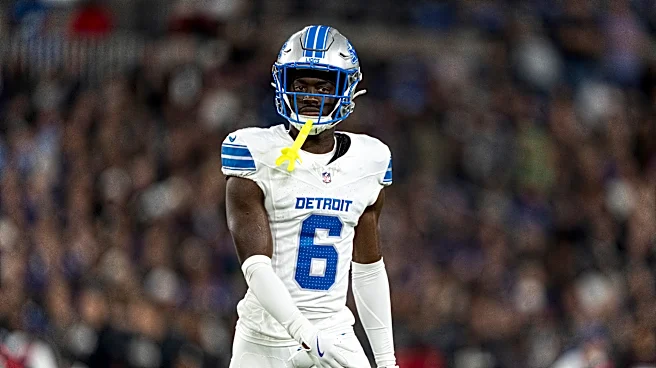
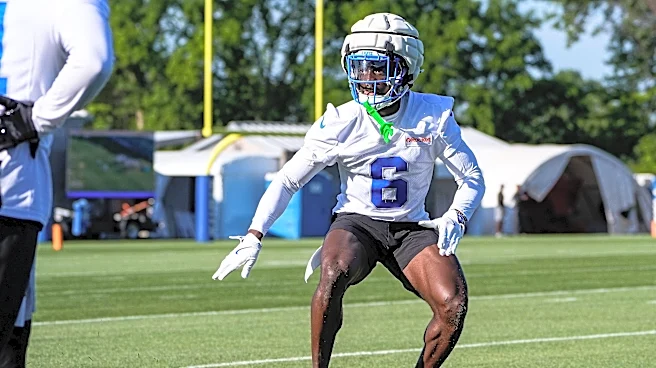
But then I went back to the nickel safety (circled above in red, newly acquired defensive back Christian Izien). While considered competitive in the run game, Izien is only listed at 5-foot-10 and 206 pounds, a sizeable difference from Emmanwori. Even if Brian Branch is tasked with this role when he returns from his Achilles injury, Branch is listed at just 6-foot and 203 pounds.
As shown above, Izien is aligned tight to the slot and immediately attacks the C-gap post-snap. As a result of the 5-technique crossing the face of the tackle, Sheppard puts Izien in a potentially more favorable position as an edge pressure compared to the B-gap penetration role Macdonald asks Emmanwori to play.
On the play below, second-and-one near midfield in the second defensive series, Detroit lined up in nickel despite Cincinnati running out 12 personnel.

Different offensive personnel. But the Lions ran the same 1- and 5-technique movement toward the tight end side. And again, the nickel safety was tasked as the C-gap run fit.
After this second play, that’s when I started wondering if the 1/5 movement, as opposed to the 1/3 movement, was utilized specifically to protect the smaller nickel player tasked with playing above his weight class.
My original thought before training camp was that McNeill and Williams would unlock more nickel by giving Detroit two interchangeable interior players who could move across gaps and disrupt offensive line assignments. That may still be true.
However, this adjustment not only plays to the Lions’ nickel players’ strengths, but this strategy also has the potential to increase the opportunities on the interior when the starters are in the lineup, as McNeill and Williams bring even more talent to the equation.