


For the first time since the 2022-23 season, the Washington Wizards will be trying to win games. That’s not an innovative endeavor in professional sports, though it’s not one the franchise has successfully implemented for…well…decades.
The team made a series of moves during the 2025-26 season and in the offseason to boost the overall talent level. The big additions are Trae Young (who appeared in five games last season before getting parked), Anthony Davis (zero games last season), and AJ Dybantsa,
the No. 1 overall pick in the 2026 NBA Draft.
Those three are — at least theoretically — massive talent upgrades. I say “theoretically” because of the health histories of Young and Davis and the perfectly normal “how soon does he get it?” questions about any 19-year-old, even enormously gifted ones like Dybantsa.
They further improved their big man rotation by trading for Deandre Ayton.
The front office made sure they had strong veteran leaders by bringing back Khris Middleton and Anthony Gill. And they shuffled some names at the end of the bench with a trade to absorb the contract of Tre Mann and the selection of Felix Okpara in the second round.
The roster is…interesting. In Davis, Young, Ayton, and Middleton they have a group that might have formed the nucleus of a good team 3-5 years ago. In Dybantsa, Alex Sarr, Kyshawn George, Bilal Coulibaly, Tre Johnson, and Bub Carrington they have a group of youngsters who could form a good team 3-5 years in the future.

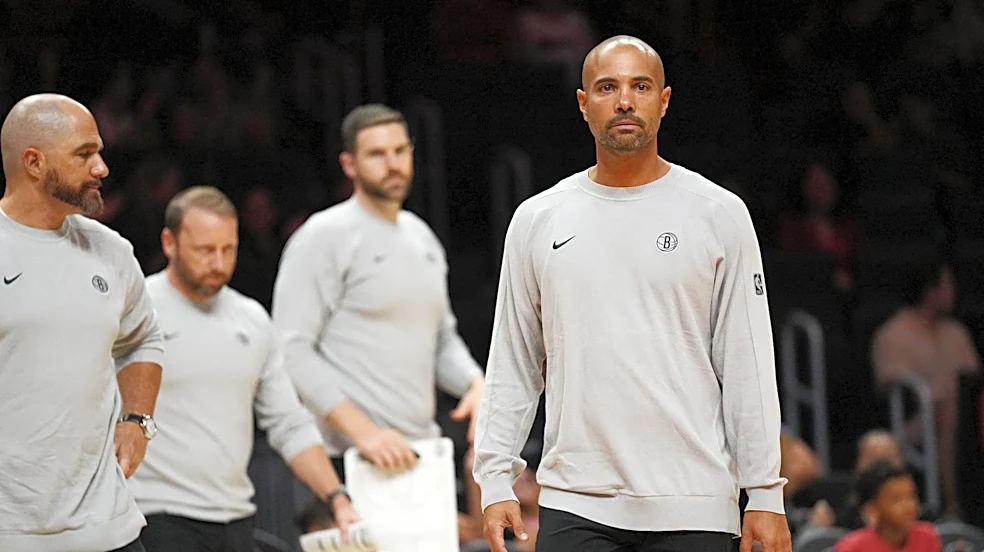
The new try to win strategy will increase scrutiny on Brian Keefe, who sports one of the worst winning percentages in league history. The team made some changes to the coaching staff, promoting Adam Caporn (well respected around the league, and also coach of the Australian national team) to lead assistant, Cody Toppert from his role coaching the Capital City Go-Go, adding Patrick Ewing as a big man coach, and former NBA head coach Steve Clifford as an advisor.
David Vanterpool, who’d been the lead assistant the past three seasons, moves into a front office job.
A Few Words on Minutes
This year’s forecast presented some unique challenges. Biggest of these was guesstimating minutes. For the holdover Wizards, past may not be prelude. More productive youngsters (Sarr, Coulibaly, George) likely missed games and saw reduced minutes because of the team’s commitment to losing — not because the various injuries and ailments would have kept them out of games if they’d been trying to win.
On the other hand, Carrington played more than 2,200 minutes (and all 82 games) in each of his first two seasons. Odds of him playing another 2,000+ minutes this season are minuscule.
Veterans like Young and Davis have missed time throughout the past few seasons due to injury, including huge chunks of last season. Both could have played more last season…if the Wizards had been trying to win. Both have fairly recent seasons with high minutes.
Davis played 2,700 regular season minutes in 2023-24. But he’s missed a lot of time since. Compounding the challenge is that he’s 33-years-old, which is when NBA players typically do two things: get injured and get worse. So, while I anticipate Davis will play more than he has the past couple seasons, I’d be surprised if he cracks 2,000 minutes. My guesstimate for him is 1,650.
Young, on the other hand, has been reasonably healthy. He played 2,739 minutes in 2024-25, and has appeared in less than 2,000 minutes just twice in his career. In one of them, he played 1,942 minutes. He surely would have played much more last year if wasn’t for The Tank. Bottom line: Young has been reasonably healthy throughout his career, and can probably be counted on to be available. I have him guesstimated at 2,375 this season.
2026-27 Player Forecasts
These forecasts use my Player Production Average (PPA) metric. PPA is an all-around rating tool that credits players for things they do that help a team win, and debits for things that don’t — each in proportion to how individual players contribute to NBA wins and losses. PPA is pace neutral and includes accounting for defense, role and the level of competition a player faces when he’s on the floor. In PPA, average is 100, higher is better, and replacement level is 45.
Below are results from four different forecast approaches: one using my Statistical Doppelgänger Machine (DOPP), another using a predicted PPA based on an age-adjusted career curve (dubbed MILK in honor of sports economist David Berri, who wore that NBA players, “…age like milk…”), a simple weighted three-year average PPA (SIMP) and another that applies an aging adjustment to that weighted three-year average (SAGE).
I estimated minutes by using a weighted average of each player’s minutes in recent seasons, as well as my best guess at each player’s role in the team’s rotation this season.
Key
- Last PPA = PPA last season
- DOPP = forecasted PPA using the Doppelgänger approach
- MILK = forecasted PPA using last season’s PPA and an age adjustment
- SIMP = forecasted PPA using a “simple” weighted three-year average PPA
- SAGE = forecasted PPA using a “simple” weighted three-year average and an age adjustment
- BLEND = forecasted PPA using an average of the four approaches above
The *** represents my best guess of which forecast is most probable for each individual.
Before getting into the forecasts, I’m dubious about the SIMP and SAGE approaches, at least for younger players. The SIMP approach (weighted three-year average) forecasts lower scores for young guys, who typically play their worst as rookies and then improve. The age adjustment in the SAGE method improves that estimate somewhat, but still has the same underlying issue.
My feeling based on having done these for a few years is that DOPP and MILK are probably going to be better for players in their first 3-4 seasons, and that SIMP and SAGE will be applicable to established veterans.
Trae Young

Sublime and inventive passer with a ton of skill and craft across his offensive game. Young’s penchant for jacking up long threes is something of a drain on his offensive efficiency, and his adventurous passing leads to a lot of turnovers. Still, he’s a dynamic offensive player, who has a history of generating a high number of trips to the free throw line.
He’s been one of the NBA’s worst defenders for eight seasons because he’s small, slender, and hasn’t played with much alertness or effort on that end. In Washington, he says he’s going to work harder, which seemed to be the case in preseason.
- Last PPA: 137
- DOPP: 131
- MILK: 134
- SIMP: 137
- SAGE: 134
- BLEND: 134***
Kyshawn George

Skillful and competitive player, who improved his shooting last season. He tries hard on defense, and he’s huge — at least 6-8 and getting stronger because of a borderline psycho offseason regimen.
The competitiveness has led to excessive fouling and turnovers, which have undermined his overall impact. He was named a starter at the beginning of trainging camp, and he had a great preseason.
Players most like George tended to improve at this point in their careers, though the improvement was somewhat modest. George seems primed for a major leap, however.
- Last PPA: 87
- DOPP: 88
- MILK: 100***
- SIMP: 68
- SAGE: 78
- BLEND: 84
AJ Dybantsa

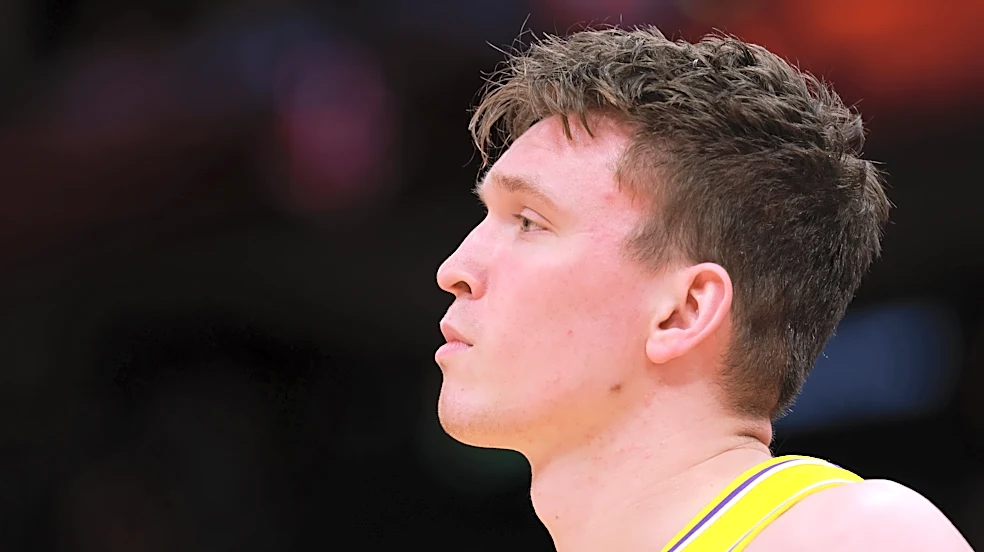
The uber talented, hyper-athletic forward was Washington’s prize for sustained losing. He was the No. 1 overall selection in a historically good draft, and he has all the tools to be an elite scorer for the next dozen years.
The Wizards may have to wait to see him in regular season action — he turned an ankle in the final preseason game and is listed as day-to-day. (My guess: he plays. He’s 19-years-old and is probably already fully healed.)
For forecasting rookies, I use a system based on production over the past decade from players in a similar draft position.
- Forecasted Rookie PPA: 121
Anthony Davis

Davis has been a great player, especially on the defensive end in the postseason. His regular season defensive impact has been more hit or miss, which could be said of his shooting away from the basket (though more miss than hit). And he’s tended to get hurt a lot. And he’s aging. And he wants a massive contract extension.
My guess is he’ll miss time again, though not as much as previous seasons. I don’t think he’ll appear in enough games to qualify for awards. The hope is that he’s healthy enough for long enough that Sarr and the other youngsters can learn from his defensive communication.
Don’t be shocked if he’s elsewhere by the trade deadline.
- Last PPA: 157
- DOPP: 143
- MILK: 130
- SIMP: 169
- SAGE: 140
- BLEND: 146***
Alex Sarr

The No. 2 overall selection in the 2024 NBA Draft, Sarr is another of Washington’s tanking prizes. After one of the least efficient offensive seasons in NBA history as a rookie, Sarr improved significantly at that end. He showed off a much improved post game, better shooting from everywhere, and even some passing chops.
His strength seemed to be on defense, where he held his own switching onto perimeter players and was a busy and effective rim protector. The presence of Davis and Ayton should alleviate some of the burden he had to shoulder, which could result in a more efficient and effective player.
Still just 21-years-old, Sarr could develop into a truly great player over the next few seasons. The next two are when NBA players typically make their biggest leaps.
- Last PPA: 132
- DOPP: 140
- MILK: 191
- SIMP: 116
- SAGE: 168
- BLEND: 154***
Bilal Coulibaly

This is a make or break season for French wing. Coulibaly is long, quick, fast, and bouncy, which helps make him into an effective and disruptive defender.
His offensive game has been an adventure. Passive at times, over-aggressive at others. His three-point shooting has been deficient, though defenders have had trouble staying in front of him when he decides to drive.
He’s improved each season of his career and is at a crossroads — he’s a restricted free agent at the end of the season, unless he unexpectedly reaches an agreement on an extension.
- Last PPA: 101
- DOPP: 112***
- MILK: 131
- SIMP: 88
- SAGE: 114
- BLEND: 111
Deandre Ayton

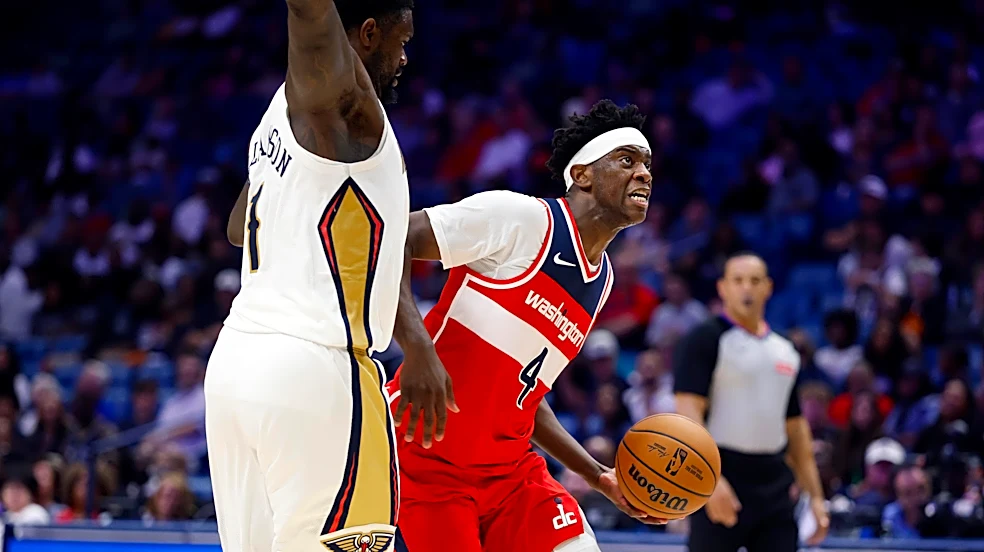
Acquired to be a backup big and an insurance policy against Davis’ frequent outages, Ayton is also at a career crossroads. He’s talented and fairly productive, and his teams keep wanting to get rid of him.
In Washington, he’ll primarily come off the bench for the first time in his career (assuming Davis plays) but should get plenty of minutes. If he buys in and produces, he’ll likely command at least an MLE-level deal going forward. If not, he could be relegated to minimum salary deals.
- Last PPA: 144
- DOPP: 140
- MILK: 141
- SIMP: 137
- SAGE: 134
- BLEND: 138***
Bub Carrington

Carrington has yet to miss a game in his two NBA seasons. He’s competitive and shot above 40% on threes last season. He’s likely to play less this season, and probably wouldn’t have played so much on a better team.
The quality of his play didn’t tick up despite the better shooting. He’ll need to get better at both ends to maintain a spot in the rotation.
- Last PPA: 61
- DOPP: 77***
- MILK: 88
- SIMP: 60
- SAGE: 87
- BLEND: 78
Tre Johnson

Good-maybe-great shooter. The question on Johnson is whether he can show more dimension to his game — some playmaking, a few more rebounds, better defense. It wouldn’t hurt to get a lot stronger, which may take some time since he’s still just 20-years-old.
- Last PPA: 61
- DOPP: 74***
- MILK: 67
- SIMP: 61
- SAGE: 67
- BLEND: 67
Khris Middleton

Entering his age 35 season, Middleton figures to be at the end of the team’s rotation. He’s the team’s elder statesman, and he’s seen it all — winning a title with the Milwaukee Bucks, missing huge chunks of seasons with a series of injuries, battling back to be productive even as he’s aged.
Odds are, Middleton’s days as a productive player are in the rearview mirror. He still has a lot of veteran savvy to contribute, and there will probably a game or three or five where he comes through big time for the team.
- Last PPA: 67
- DOPP: 67
- MILK: 50
- SIMP: 90
- SAGE: 50
- BLEND: 64***
Justin Champagnie

Good player the past couple seasons, but he appears to be the odd man out of the rotation — at least to start the season. My guess is he’ll still get more than a thousand minutes this season, and that he’ll be pretty good again. I would not be surprised to see him end up elsewhere as part of a multi-player and draft pick trade.
- Last PPA: 105
- DOPP: 106***
- MILK: 108
- SIMP: 104
- SAGE: 107
- BLEND: 106
2026-27 Prediction
The good news: this year’s Washington Wizards will be more competitive this season. At least some of the youngsters will improve — perhaps significantly — and the team has some skilled veterans with histories of high-level performances.
The bad news: they’re still not ready to be good. The youngsters are still a few years from their primes. The oldsters are likely past their primes already. That’s a statement that includes Young and Ayton, who are both entering their age 28 season, by the way.
The years of tanking have given the Wizards two potential stars in Dybantsa and Sarr, though both are likely several seasons from achieving that status. George and Coulibaly seem like probable rotation-level players. Davis, Young, and Ayton will outproduce guys previously on the roster, even if they fall short of their previous heights.
The various forecasting approaches yield the following forecasted wins totals:
- DOPP: 32.2 (last season’s forecast 15.6)
- MILK: 34.3 (15.2)
- SIMP: 28.3 (14.8)
- SAGE: 31.8 (15.2)
- BLEND: 32.3 (15.8)
While the above feels kinda disappointing, even the worst of these would mark significant improvement for the Wizards. Last season, they managed just 18 wins.
If everyone reaches their best-case forecast, I guesstimate the team could reach 36 wins. In an all-peaks scenario, they could get to 41.
My prediction is a season of significant improvement. I anticipate the older players will be good, though well short of their previous peaks and that the youngsters will continue improving. I would not be surprised to see a veteran or two departing midseason as the front office tries to position the team to arrive in the postseason as a contender.
Final Prediction: 34-48 and 11th in the Eastern Conference.